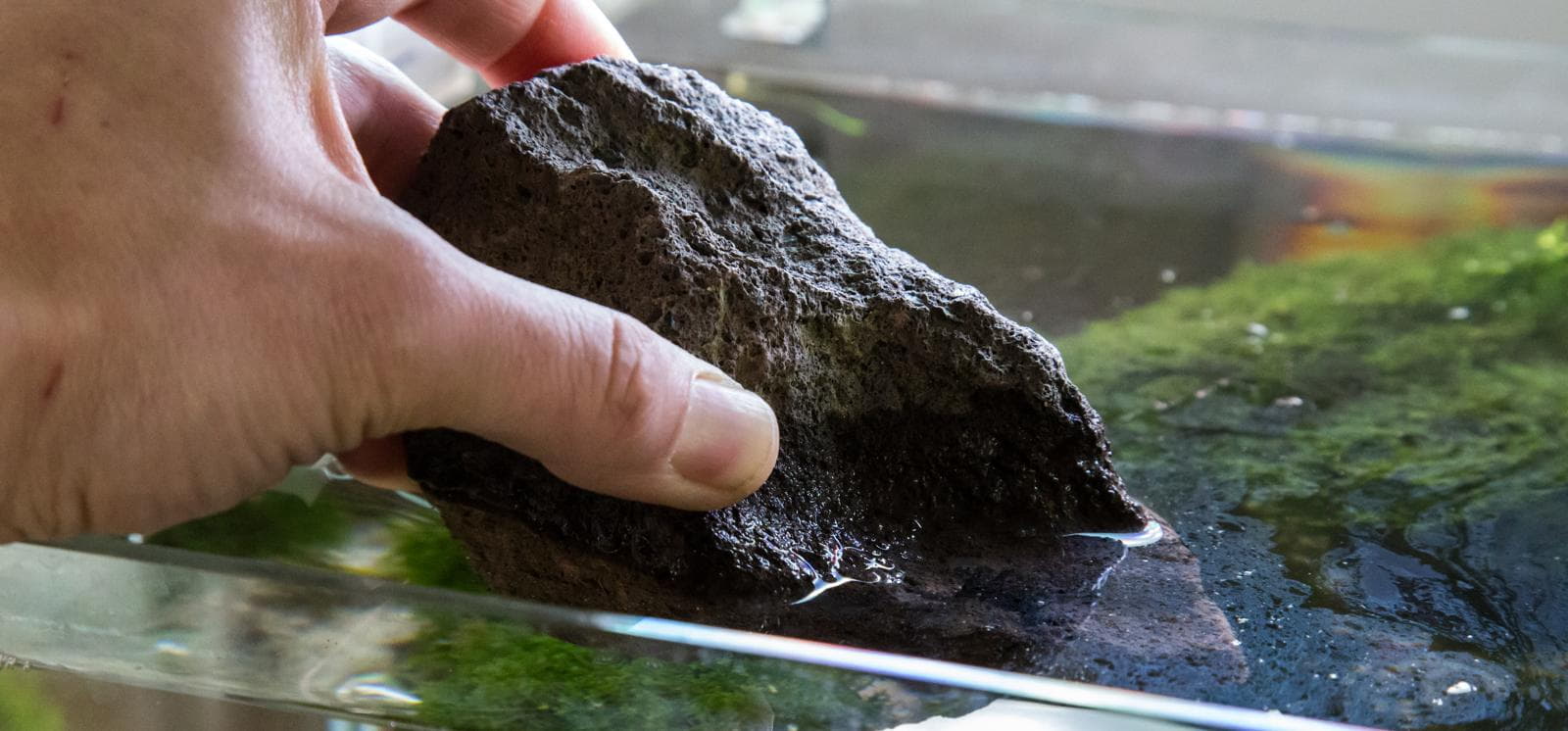
 Rebuilding an aquarium
Many aquarium owners particularly enjoy changing the design of their aquarium every now and then, either with minor touch-ups or with a completely new layout. Quite often the aquariums are redesigned while they are running. In this article, you will learn what to look out for.
Adding aquatic plants later
Even if the aquarium is already running and already has livestock, it can happen that the aquarium owner has not finished the design yet and, for example, wants to add more aquatic plants. This is generally not a problem, but there are a few things to keep in mind. To protect the inhabitants and the ecosystem, the aquarist should take care not to introduce any excess nutrients or even pollutants. The aquatic plants should be prepared accordingly. In addition, it depends a lot on the form in which the newly purchased plants were delivered. In-vitro plants offer great advantages here, because they are completely free of algae, foreign plants, accompanying fauna and germs. You only need to wash off the nutrient gel thoroughly so that you do not introduce excessive nutrients. You can find more information on preparing in-vitro plants here.
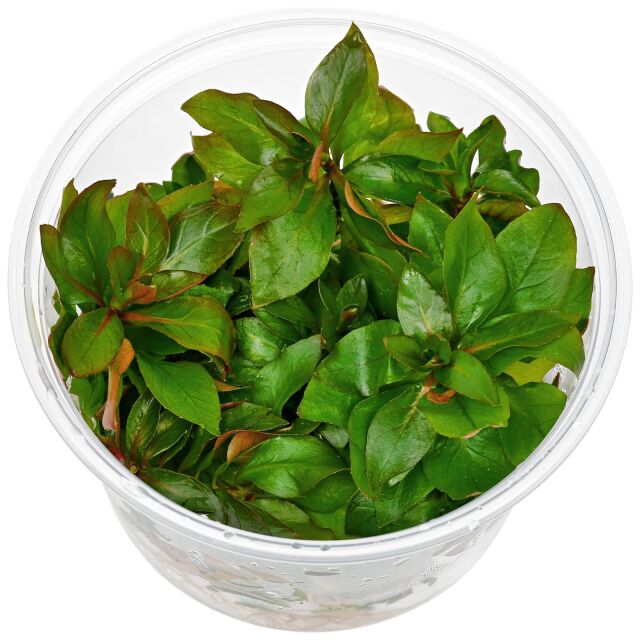
Potted plants are usually grown and kept emersed, so the risk of introducing algae and accompanying fauna (that survives in the aquarium) is rather low. However, the rock wool is very rich in nutrients and should definitely be removed thoroughly before planting. If you want to be on the safe side, we recommend soaking the potted plants for seven days before using them in the aquarium. This is strongly recommended especially for purely submersed potted plants such as Vallisneria. You can find more information on preparing potted plants here.
For submersed bunch plants, we also recommend soaking the plants for 7 days beforehand, and 14 days would be even better. The amount of adhering nutrients can be very high here and can sometimes become dangerous, especially for invertebrates such as snails and shrimp. Sufficient pre-soaking with appropriate water changes reduces this risk significantly. During the quarantine period you can also watch whether there are unwanted algae or pests on the plants after all, and remove them in a targeted way. You can find more information on preparing bunch plants here.
Adding hardscape later
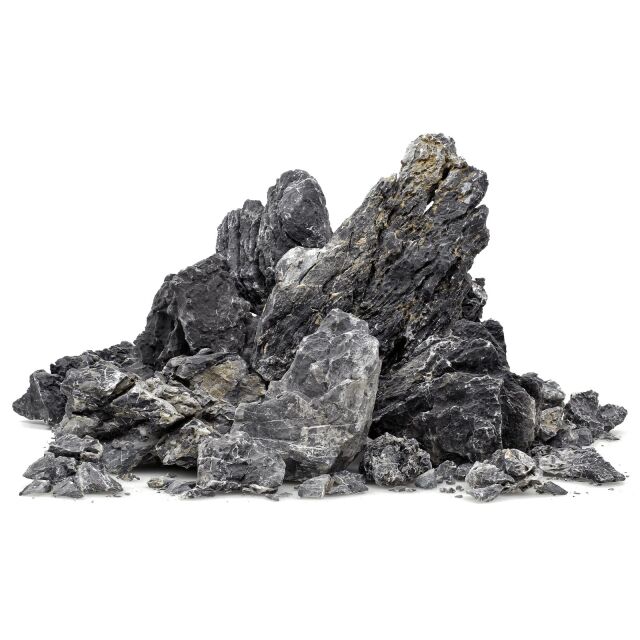
Hardscape such as stones or driftwood can usually be added later as well. This is generally not a big problem, especially if the materials are water-neutral. You should just keep in mind that adding more organic material (this includes driftwood, but also natural material such as leaves, nuts and wooden caves) puts a greater load on the water and the biological filtration in the aquarium, depending on the amount. If quite a lot of material is added at once, this can sometimes happen rather abruptly and temporarily overwhelm the ecosystem. You may then observe increased bacterial growth, for example in the form of milky water or slime on the wood. Above all, stronger ammonium or nitrite concentrations can occur. The aquarist should keep a close eye on these and, ideally, monitor them with appropriate tests. As a precaution, you can add bacteria starter to counter the load with additional beneficial bacteria.
Adding fresh driftwood can also turn the water brown, because the wood releases tannins. Using a water-clarifying filter material such as Seachem Purigen is highly recommended here to get clear water again.
If you have not chosen water-neutral decoration materials, you should expect changes in the water parameters in the medium to long term. One example is rock that contains lime. This causes the water to harden, meaning KH and GH rise. If a CO2 system is in use, this effect is amplified even further.
When installing the hardscape or during larger rebuilding work in the aquarium, the aquarist should make sure that the newly added elements get a good hold and stand securely. It is sometimes worth heaping up the substrate slightly in those spots or gluing the pieces to other hardscape. You should pay particular attention to bottom-digging fish and invertebrates such as shrimp and snails when you place individual decoration elements, so that you do not injure animals by accident or stress them too much. Very slow movements are a good approach.
Adding more substrate
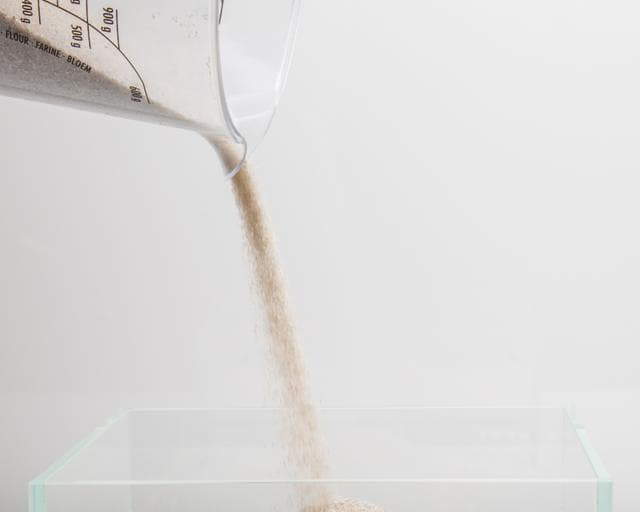
Sometimes the aquarist wants to add more substrate to parts of the tank, replace some of it or restore slopes. Because many sessile and beneficial bacteria that maintain the nitrogen cycle live in the substrate, interfering with this system carries certain risks. Of course, it depends a lot on the type of intervention and the size of the substrate area being moved. If only small amounts of substrate are added, there is usually no reason to worry, since the existing part of the old substrate stays intact and so does its share of bacteria. However, if part of the substrate is replaced, meaning old substrate is removed and new material is added, this can sometimes have noticeable effects on the microbiology in the aquarium. This can also be the case if larger amounts of old substrate are moved around, releasing and stirring up a lot of detritus. Above all, depot fertilizer layers lying beneath the decorative layer of substrate should not be exposed this way and come into contact with the open water.
It therefore cannot hurt to monitor the relevant water parameters (ammonium, nitrite, nitrate and phosphate) during this time and to observe the livestock very closely. Adding water conditioner and/or bacteria starters during this period can be good support for the ecosystem. If you want to move or replace larger amounts of substrate, please read the more detailed instructions in this article.
Here too, you should work very slowly and carefully when adding or moving substrate, so that you do not bury any inhabitants. Pay particular attention to snails, shrimp and bottom-dwelling fish.
Looking after the microbiology
In principle, every rebuilding measure in the aquarium also changes the biological environment. Even small measures can have effects that sometimes become noticeable, for example through a change in the water parameters. During rebuilding work, the aquarist should therefore look out for all inhabitants of the aquarium, including the tiny microorganisms you cannot see with the naked eye. They populate every surface in the aquarium and are very important for breaking down pollutants as part of the nitrogen cycle. To support the living conditions of these bacteria in stressful times such as a rebuild, care products such as water conditioner (to remove pollutants and nutrient spikes) and bacteria starter (to introduce fresh bacterial cultures) are a very good measure.
As mentioned above, it can pay off during this time to monitor nitrite and ammonium closely with water tests, to observe the livestock carefully and to provide sufficient aeration for the aquarium.
Looking after the livestock
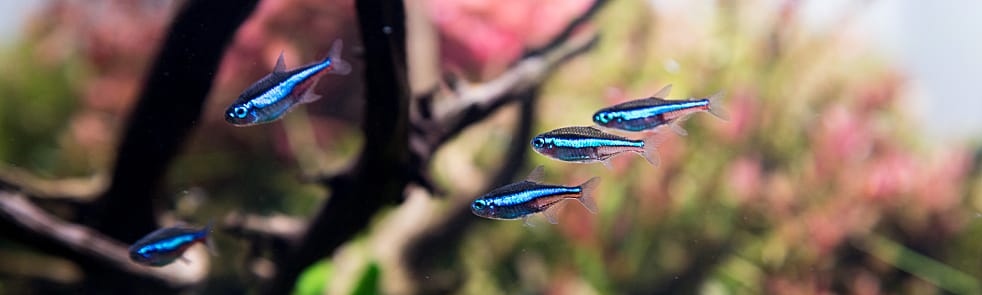
As already mentioned several times in the sections above, the animals should be treated with particular care during rebuilding work in a running aquarium. Since the aquarium inhabitants are not moved out, a redesign definitely means stress. The goal is to keep it as low as possible. So you should proceed carefully and with caution. Slow and calm movements when placing objects and adding substrate are important so that inhabitants are not buried or cornered. Frequent breaks also help to calm the livestock down again. This is especially useful when stirred-up detritus clouds the water and you can no longer see anything anyway. To filter any pollutants out of the water, using a water conditioner is advisable. Care products such as Oase LessStress or the liquid filter medium from Easy Life can also help reduce stress for the animals.
If you keep particularly sensitive animals, the aquarist can consider catching them beforehand and housing them in a well-cycled quarantine aquarium. If there are juveniles, sick animals or breeding ornamental fish in the aquarium, it is better to refrain from such rebuilding work anyway and to do it when the animals are in a more stable condition.