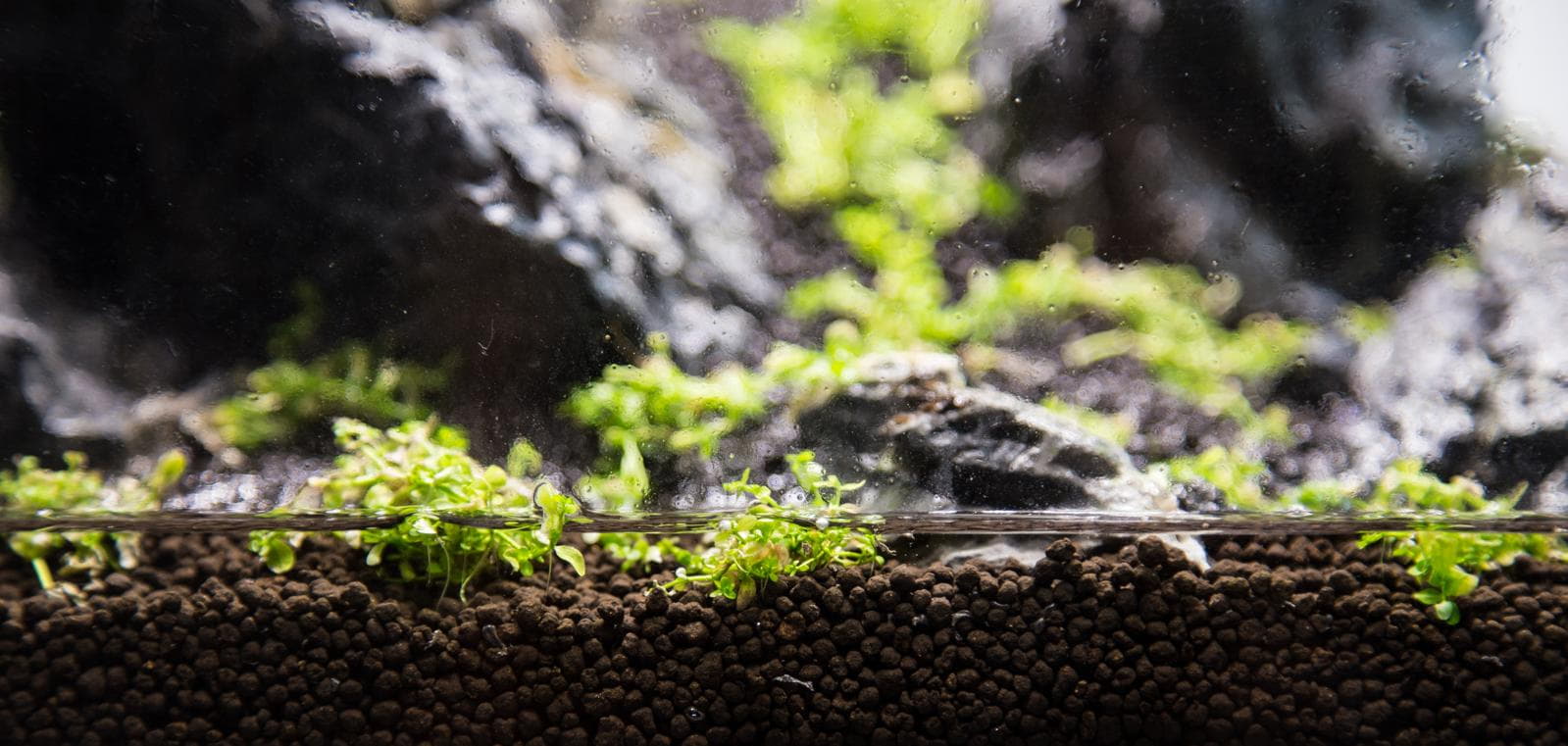
 Replacing the substrate in a running aquarium
In an aquarium that has already been running for a longer time, it may be necessary for various reasons to renew or replace the substrate. Perhaps you no longer like the look, the soil has lost its effect, or the organic load in the substrate has become too high. These are all typical reasons why the substrate is replaced. Now, however, we have an already running aquarium stocked with aquatic plants, ornamental fish or invertebrates. How do you best proceed here? We explain that to you in this article.
Sessile bacteria
The experienced aquarist of course knows that there are important bacteria in the aquarium for breaking down pollutants in the sense of the nitrogen cycle. These bacteria convert substances toxic to fish, such as ammonium and nitrite, into harmless nitrate and live sessile. This means that these microorganisms do not float freely in the water but settle on surfaces. Filter materials and substrate particles in particular offer excellent colonization surfaces. The larger the surface area of the structures, the more bacteria can populate them and the more effective the breakdown of pollutants is. In a healthy ecosystem in the aquarium, enough bacteria live there to prevent the formation of concentrations of ammonium and nitrite that are toxic to fish. The stock then lives in an environment that is harmless in this respect.

If you now replace the complete substrate, a lot of beneficial bacteria are removed in this way as well. The amount of bacteria living in the substrate is often underestimated here. Unfortunately, some time passes until the necessary microorganisms settle again in the new substrate. In principle, the aquarium then goes through a new cycling phase, and higher concentrations of ammonium and nitrite can occur. For the stock living in the aquarium, this means an immediate danger.
There are some aquarists who, in such cases, of course rely on the fact that there are still enough living bacteria inside the filter. Often, however, this is not enough to prevent the formation of toxic concentrations of ammonium and nitrite. If the animal stock then remains in the aquarium, the consequences can usually be felt the day after the substrate replacement, mostly in the form of poisoned or already dead animals.
This can sometimes happen even if you have used a so-called bacteria starter. A corresponding product does introduce new bacteria, but their amount is then often still not enough to establish a fully functioning nitrogen cycle immediately.
Suggested solutions
To keep the risk to the aquarium inhabitants as low as possible and to avoid poisoning as well as you can, there are some measures, which we present here.
Relocating the stock
Lucky is the one who owns a second aquarium into which the animal stock from the first aquarium can be moved temporarily. While the fish, shrimp and snails stay in their temporary home, the aquarium with the replaced substrate can get through its renewed cycling phase in peace. Of course, you can gladly speed up this process by adding bacteria products. The stock should only go back into the old aquarium, however, when the water parameters allow it and ammonium and nitrite are no longer detectable. It is therefore necessary to wait a few days or weeks in any case. When moving them back, it is also worth being careful and moving only a few fish back at first. After a few days, you can then gradually increase the number.
It is important to note that the temporary aquarium should of course also be fully cycled in terms of the nitrogen cycle. The necessary cycling time of a few weeks has to be taken into account when planning the substrate replacement in the other aquarium.
Conclusion: even though setting up and cycling a temporary aquarium takes time and some effort, this variant is the safest option for the animal stock.
Replacing the substrate step by step
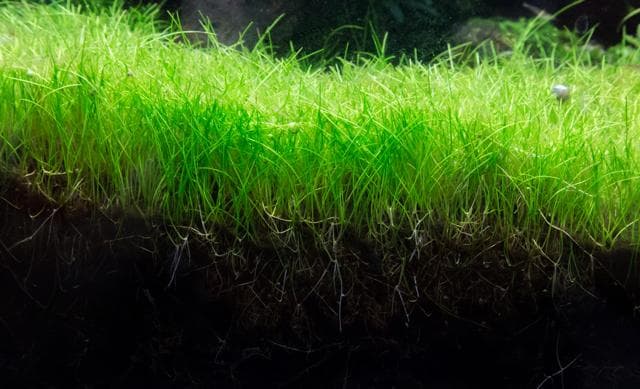
Another possibility can be to replace the substrate in the aquarium not all at once but gradually, in small steps over a longer period. Because only a small part of the important bacteria is removed, enough microorganisms remain with this measure to maintain the nitrogen cycle for the stock staying in the aquarium. In your mind, you divide the substrate into different areas, which you then provide with fresh substrate one after another. There should also always be enough time between the replacement rounds for bacteria to settle again in peace in the zones with new substrate.
The advantage of this measure is that you save yourself a temporary aquarium. There are, however, also certain disadvantages and uncertainty factors. For one thing, the effort of replacing the substrate several times is quite high and not easy either, because the substrate simply consists of many small particles. Mixing of the old and new substrate parts cannot really be prevented. To make matters worse, you have to do this, so to speak, flying blind, because the water often becomes impossible to see through when detritus and suspended particles are stirred up. Precise work becomes extremely difficult here. With regard to the microbiological aspects, it is also unclear how large such an area may be when you do a partial replacement. If you calculate the amount a bit too high, too many bacteria are removed and there is again a danger of fish poisoning.
Conclusion: a temporary aquarium is not necessary, but replacing individual substrate zones several times is laborious. Certain residual risks remain regarding the biological stability of the aquarium.
General notes
No matter which measure you choose, the well-being of the animals should come first. Replacing the substrate has a major influence on the microbiological situation. The aquarist is therefore advised to observe the animal stock closely during and after the rebuilding work and to check the ammonium and nitrite values in the water more regularly. The filter should not be cleaned immediately before, during and after the measure, so that at least there the important bacteria can keep working undisturbed. It cannot hurt to use a bacteria starter and to keep the organic load low by feeding less and changing water more often. Additional oxygen input through aeration or the use of an oxydator or Twinstar sterilizer to reduce germ pressure are also sensible supplementary measures.