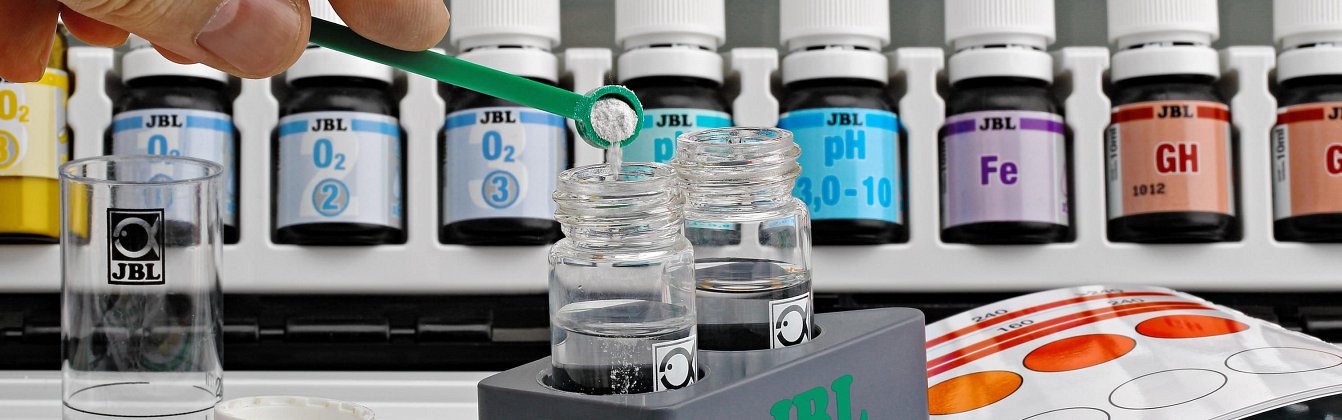
 Water parameters in the aquarium
Aquatic plants, aquarium fish, but also other aquarium inhabitants such as shrimp, crayfish or snails only feel at home and thrive under very specific water parameters, depending on species and origin. For good growth, creating an optimal environment for all the living things in the aquarium is therefore very important for you as an aquarist. In this article, we show you which water parameters matter for aquariums and what they mean.
General water parameters
First we look at the most common parameters of aquarium water, which are of great importance for the aquarium inhabitants and their well-being. These include water parameters such as temperature, water hardness and pH value. We will now introduce these parameters in a little more detail.
Temperature

Depending on their original habitat, ornamental fish, invertebrates and aquatic plants prefer very specific and often very different water temperatures. The right temperature is important for the well-being of your aquarium inhabitants. While some species need rather cool water (for example coldwater fish from temperate climate zones), some fish species, such as many Asian danio species from the subtropics, get by year-round with a room temperature of 20-22 °C. In these cases, heating the aquarium is often not necessary. To monitor the right temperature, though, you should definitely get a suitable aquarium thermometer. Tropical ornamental fish such as South American species, for example from the Amazon basin, or fish species from the African lakes, however, need higher water temperatures. In that case, installing a suitable aquarium heater is important. You can find more tips on proper heating in this article, by the way.
On the other hand, seasonal fluctuations in summer can make it far too warm for some aquarium inhabitants, so that the water in the aquarium heats up too much. The resulting oxygen shortage can become dangerous for the livestock. We describe in more detail how to cool aquariums properly in the article "Cooling an aquarium".
pH value
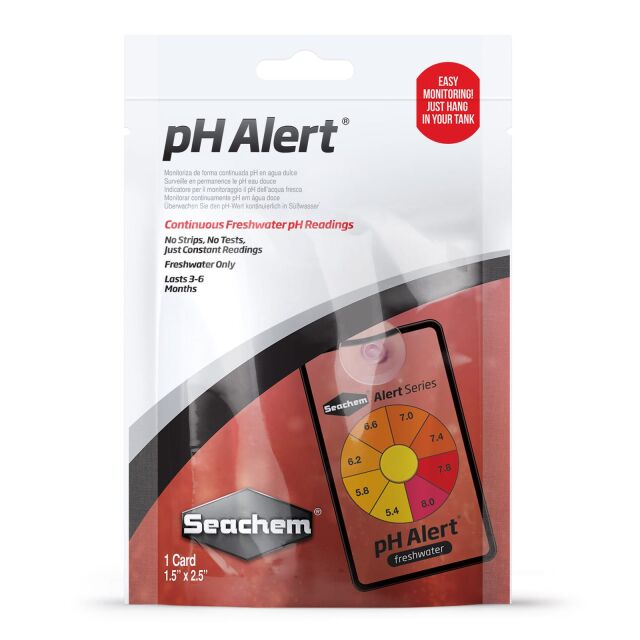
The pH Alert from Seachem is a practical continuous test for displaying the pH value.
You may remember pH value as a technical term from chemistry class. It is defined as the negative decadic logarithm of the hydrogen ion activity. Put more simply: the pH value serves as a unit of measurement for the acidic, neutral or basic character of an aqueous solution. A value of exactly 7 has been defined as neutral; below that the water becomes acidic. A pH value greater than 7 is called basic or alkaline. As with temperature, fish, aquarium plants and also invertebrates are used to very specific pH values because of their original biotopes. An aquarist's goal should therefore be to adjust the properties of the water in the aquarium so that the animals feel comfortable. This also includes a certain pH range. African cichlids from Lake Malawi or Lake Tanganyika, but also certain rainbowfish, need a rather basic pH value. Acidic water, on the other hand, is preferred by many fish species from South America and Asia, as well as by the popular bee shrimp.
Which factors influence the pH value?
To set the pH value to a specific range, you can use various aids. There are various water treatment and water care products on the market that influence the pH in the aquarium, such as JBL pH-Minus or pH-Plus. They are quite simple to use, but some of these care products have to be added by hand on a regular basis. Using products that stay in the aquarium longer and lower or raise the pH value over a longer period is somewhat less cumbersome. Soil substrates, using a CO2 system and filtering through peat are some popular ways to achieve an acidic pH (see also our wiki article "Lowering the pH value in the aquarium" ).
On the other hand, measures such as adding water-hardening stones or driving out carbon dioxide through a strongly agitated water surface (for example with a diaphragm pump with an air stone) are good ways to set a basic pH value. For particularly high alkaline values, certain hardening salts such as SaltyShrimp Sulawesi Mineral 8.5 can also be used.
You can determine the pH value in the aquarium very easily with liquid drop water tests or test strips.
General hardness
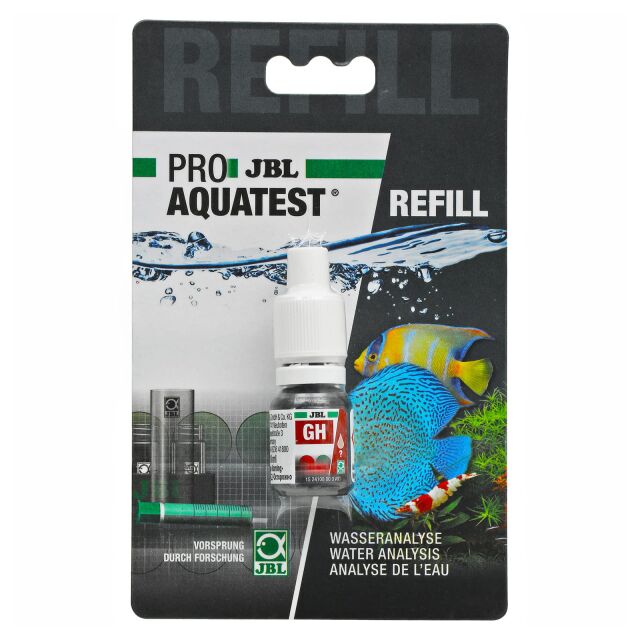
General hardness (GH) refers to the sum of the alkaline earth metal ions dissolved in the water. These are mainly calcium and magnesium, but also trace elements such as radium, strontium or beryllium. The German unit for the degree of hardness is °dH (degrees of German hardness); internationally there are other units such as ppm (parts per million), which then have to be converted. General hardness indicates whether water is classified as soft (below 8.4 dH°), medium hard (8.4 to 14 dH°) or hard (above 14 dH°).
Many dwarf shrimp and ornamental fish like soft and acidic water. If too many alkaline earth metals are dissolved in the water, this increases the osmotic pressure on the animals and metabolic disorders can occur. Particularly soft water is sometimes necessary, especially when rearing some species.
Softer water for the aquarium can be achieved, for example, by blending with rainwater or demineralized water. The latter can be produced by water treatment with a reverse osmosis system or a cation exchanger. Some care products, such as Discus Buffer from Seachem, also produce soft water by precipitating calcium and magnesium.
Nevertheless, as an aquarist you should make sure that the general hardness of the aquarium water is not so low that deficiency symptoms appear in animals and plants. For example, fish need calcium for bone formation, snails need it for healthy shell growth, and shrimp, crayfish and crabs need it for a stable carapace. Aquatic plants also need calcium, and likewise magnesium, which, like iron, is important for chlorophyll formation. Especially in combination with RO water, hardening with suitable salts such as SaltyShrimp Bee Shrimp Mineral GH+ is highly recommended. These add calcium, magnesium and important trace elements back to the water.
General hardness (GH) can be determined effortlessly with a suitable water test.
Carbonate hardness
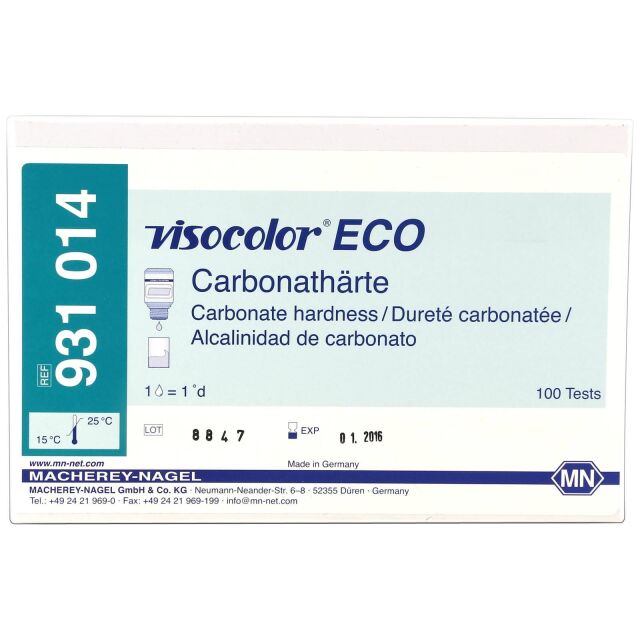
Carbonate hardness (KH) is also called temporary hardness. It represents a certain part of the general hardness and is given in Germany in the unit °dKH. If alkaline earth ions are dissolved in the water and bound to carbonates (CO32-) and hydrogen carbonates (HCO3-), they are defined as carbonate hardness. KH is also called temporary hardness because it can be removed by boiling the water. In the process, solids settle out in the form of magnesium and calcium carbonate.
But there are also other carbonate compounds that are not linked to alkaline earth ions, such as sodium hydrogen carbonate (NaHCO3). By definition, these are not part of carbonate hardness. But: KH water tests common in aquaristics detect all carbonate and hydrogen carbonate compounds, not just those bound to alkaline earth metals. Strictly speaking, such a KH test therefore measures not only the carbonate hardness but the total so-called acid-binding capacity (alkalinity). In aquarium practice, defining carbonate hardness as the equivalent of the acid-binding capacity has therefore become established.
Because of the well-known carbonate-carbonic acid equilibrium, the carbonate hardness, the pH value and the CO2 content of the water are linked and influence one another. In aquaristics, carbonate hardness serves primarily to keep the pH value stable and to buffer it. This prevents pH crashes or extreme rises. If you as an aquarist want very alkaline water parameters, for example to keep African cichlids, a correspondingly high pH value goes hand in hand with a higher carbonate hardness. Conversely, acidic pH values can only be achieved with a low KH. Care products that can be used, for example, to lower the pH value often contain acids such as oak extract. These first destroy the hydrogen carbonates and carbonates of the KH that act as a buffer, which releases carbon. Once, beyond a certain point, no more buffering salts are present, the acid directly affects the pH value and lowers it.
For an aquascape or a planted aquarium, a slightly acidic pH value of about 6.5 to 6.8 is usually preferred, because nutrient uptake of the aquatic plants is significantly better in a slightly acidic environment. In addition, we want optimal CO2 levels for our aquarium plants in the range of 20 to 30 mg/l. Depending on the desired pH range and the targeted CO2 concentrations, according to the common conversion tables a KH of 4 to 6 is a good starting point for keeping all values within the target ranges. Significantly higher carbonate hardness is therefore less beneficial for a planted aquarium.
KH can also be found out with special water tests.
Important water parameters for the cycling phase
In the so-called cycling phase of a newly set up aquarium, a stable microbiology of important bacteria and other microorganisms has usually not yet been established. In particular, the bacterial strains needed for the nitrogen cycle, such as Nitrosomonas and Nitrobacter, are not yet present in sufficient numbers, so nitrogen compounds that are toxic to aquarium animals, such as ammonium and nitrite, can form in higher concentrations.
Ammonium (NH4)
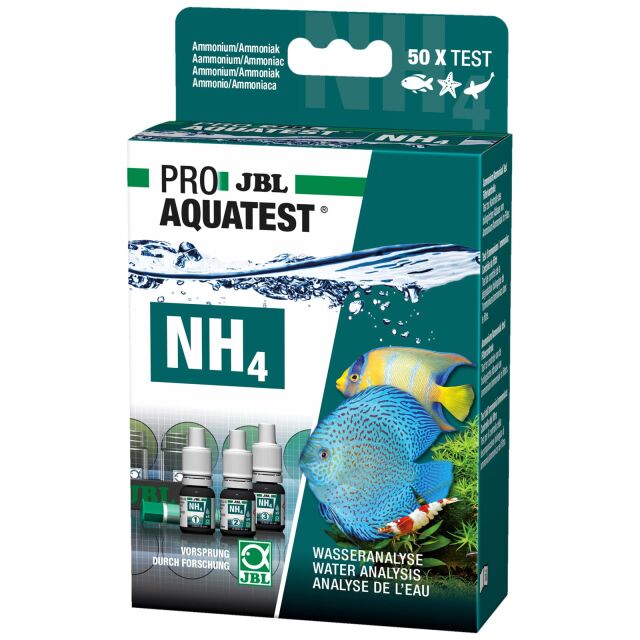
In the aquarium, ammonium is always considered together with its conjugate partner ammonia (NH3). Whether ammonium (acid) or ammonia (base) is present depends on the pH value of the water. The two forms are toxic to our aquarium inhabitants to different degrees. What is important for you as an aquarist is that ammonia is far more toxic to fish than ammonium and that it occurs in higher concentrations at alkaline pH values above 7.
Ammonium and ammonia are waste products in the aquarium that arise when proteins are broken down. Fish excrete these compounds through their gills. In the water, ammonium is then oxidized further to nitrite by bacteria such as Nitrosomonas, which is also toxic to fish. Higher levels of ammonium / ammonia are common above all in newly set up aquariums during the so-called cycling phase. A stable bacterial environment has not yet developed here, and above all there are not enough microorganisms to break down all the pollutants promptly. During this period there is therefore often an extreme rise in ammonium levels, which, by the way, can be determined with a suitable liquid drop test. This is called an ammonium peak. After the concentration in the aquarium water has dropped, a nitrite peak with correspondingly high nitrite values very likely follows. After the cycling phase is complete, both parameters should ideally be back in the undetectable range (below 0.01).
If your aquarium animals show signs of poisoning and you can measure correspondingly high values, you should take suitable countermeasures. A larger water change can help as immediate relief, but only with fresh water that has a pH value well below 7! If you change with water that has a higher pH value, you suddenly drive the ammonia concentration up, which can quite easily cost your livestock their lives. Water conditioners and water care products such as Seachem Prime remove ammonium and other toxins from the aquarium water. Much more important, however, are tackling the cause and long-term measures. Aquatic plants preferentially take up the nitrogen compound ammonium. Your aquarium plants thus help you establish a more stable ecosystem. To strengthen and support the bacterial environment, you can add filter sludge from another aquarium that has been running for longer, or appropriate products such as JBL Denitrol.
Nitrite (NO2)
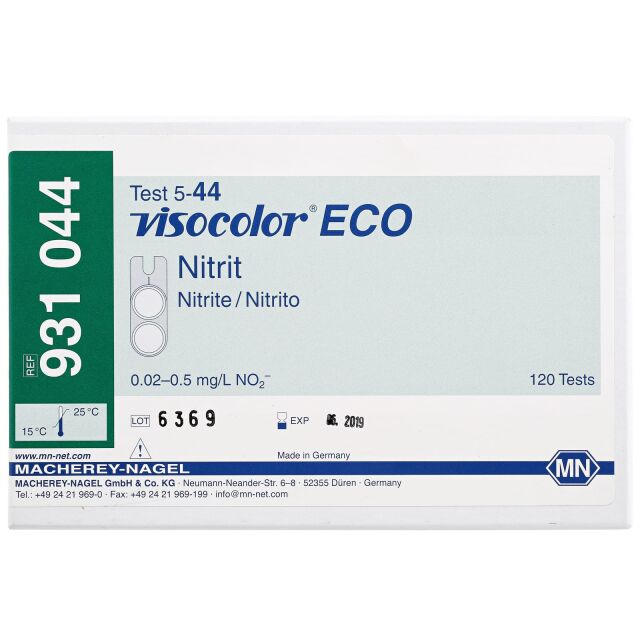
In the nitrogen cycle, ammonium is respired to nitrite by certain bacteria. Nitrites are salts and esters of nitrous acid. Depending on the pH value, they are toxic above all to fish and other aquatic animals. Nitrite ions bind, among other things, to the hemoglobin in the animals' red blood cells, which then can no longer transport oxygen. Typical symptoms in fish are therefore shortness of breath, gasping and staying at the water surface. Nitrite can be determined with a suitable liquid drop test. In normal aquarium operation, NO2 should preferably be undetectable. For all freshwater fish species, acute toxicity (LD 50) for nitrous acid is reached at 0.01 mg/l. In seawater, by the way, nitrite is much less toxic.
Immediate countermeasures for nitrite poisoning: as an immediate measure, large water changes or the use of water conditioners such as Seachem Prime are often recommended, which directly reduce the nitrite content in the aquarium water. Unfortunately, the success is often only short-lived, because the concentration can rise again within the next few hours. Tackling the cause is therefore much more important. In the cycling phase, a high NO2 value is often due to the fact that a sufficient bacterial environment has not yet developed - some of the so-called filter bacteria process nitrite further to nitrate. Strengthening the microbiology with suitable bacteria products such as Microbe-Lift Nite-Out II gets to the root of the problem. Adding detritus from an already well-cycled aquarium can also help increase the population of beneficial microorganisms.
Important water parameters for assessing the pollutant load
To determine the degree of water pollution from organic waste in a normal community, fish or shrimp aquarium, the parameters nitrate and phosphate serve you as an aquarist. If clearly elevated values are present here, this is a warning sign that you should carry out appropriate maintenance such as a water change.
Nitrate and phosphate are evaluated very differently in a plant-focused aquarium or aquascape. Here these substances are important macronutrients for the plants, without which healthy growth is not possible.
Nitrate (NO3)
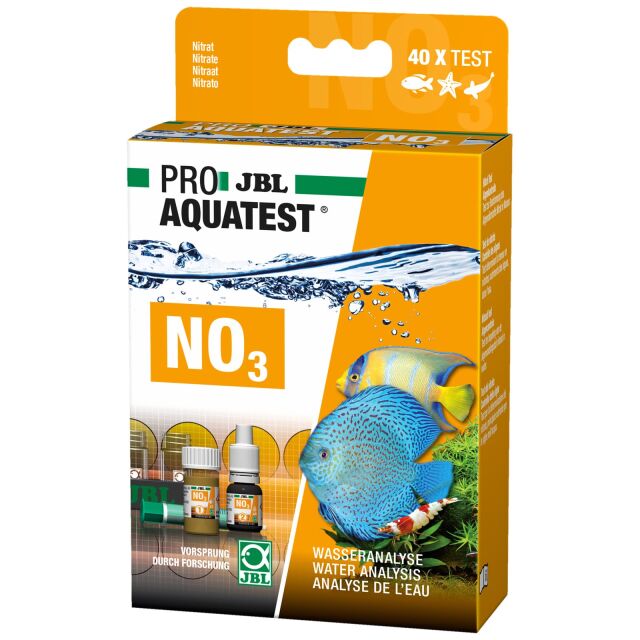
Nitrate (NO3) is the final product in the breakdown chain of the nitrogen cycle and is far less dangerous to the aquarium inhabitants than its precursors ammonium and nitrite. In pure fish aquariums or in a shrimp breeding setup, there is often a lot of nitrate in the water simply because of the high amount of excretions. Here the concentration of NO3 indicates, so to speak, the degree of water pollution. With very high levels, appropriate measures such as water changes should be taken (see also "Lowering the nitrate level in the aquarium"). Especially when breeding dwarf shrimp, a higher nitrate concentration can lead to molting problems, so special attention must be paid to this water parameter in this branch of aquaristics.
Nitrate plays a completely different role in aquascapes and densely planted aquariums. Nitrogen is an essential macronutrient for aquatic plants that is needed in larger amounts. Besides ammonium or urea, plants can also use nitrate as a nitrogen source. Here NO3 can even run short because of the aquatic plants' high nutrient consumption. This shows in unhealthy plant growth (see also "Deficiency symptoms in aquatic plants"), for example yellow leaves and necrosis. In these cases, additional nitrogen fertilization makes a lot of sense. Many nitrogen fertilizers for aquarium plants therefore contain nitrate, such as Aqua Rebell Makro Basic Nitrat.
NO3 can be determined with a suitable liquid drop test. While the nitrate content should be kept as low as possible in breeding aquariums for fish and invertebrates such as dwarf shrimp, in a heavily planted aquarium it is advisable to aim for a minimum level of about 10 to 15 mg/l NO3.
Phosphate (PO4)
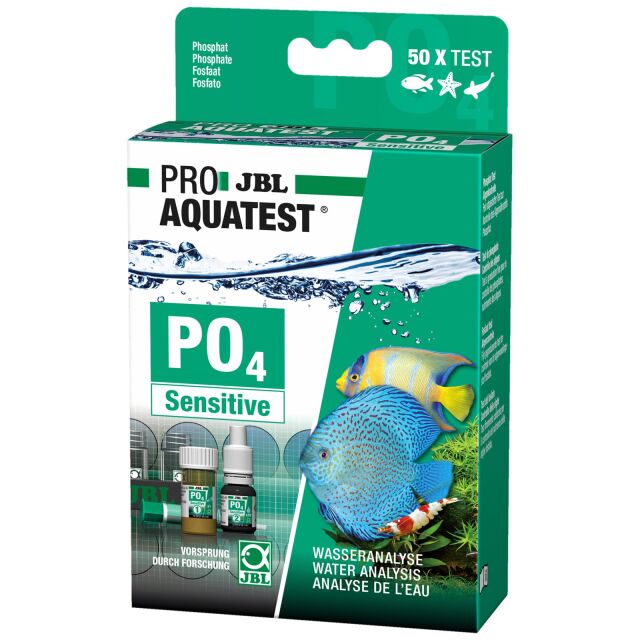
Like nitrate, phosphate is also a waste product, or rather an end product, of the metabolism of organic material such as fish excrement and dying plant parts in the aquarium. However, it also enters the aquarium water by other routes. Like nitrate, it can sometimes already be present in tap water (water suppliers sometimes use so-called polyphosphates to protect the pipes). A not inconsiderable part of phosphate also enters the aquarium through food input, especially through the addition of dry and frozen food. Although phosphate itself, even in higher concentrations, is not immediately toxic and therefore poses no direct danger to the aquarium inhabitants, very high PO4 values should still be regarded as a sign of water pollution. In that case you should take appropriate measures such as a water change. With permanently elevated phosphate concentrations, you can also use so-called phosphate removers as filter material (more on this in the article "Lowering the phosphate level in the aquarium").
In an aquarium focused on aquatic plants, phosphorus in the form of phosphate is to be regarded as an important macronutrient. If this nutrient is present in insufficient amounts, deficiency symptoms can appear in the aquarium plants. A suitable phosphate fertilizer then provides a remedy and can bring this water parameter into the desired range in a targeted way. For example, our house brand Aqua Rebell has a fertilizer called "Makro Basic Phosphat" in its range.
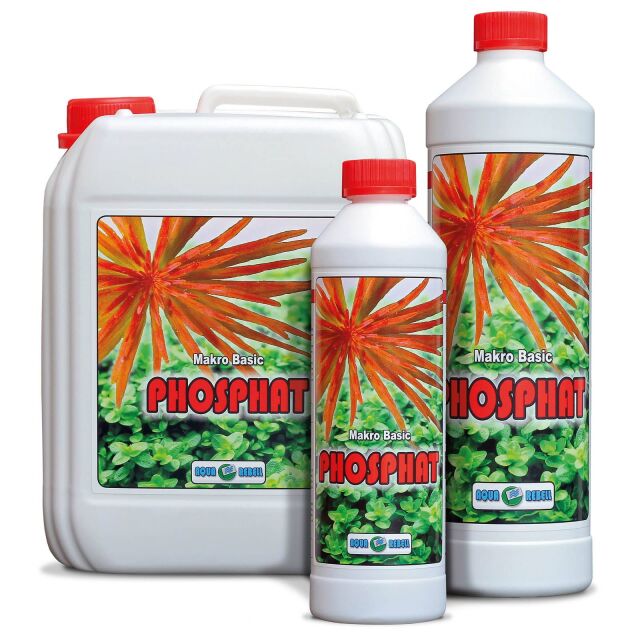
The phosphate content of the aquarium water (PO4) is most easily determined with a suitable liquid drop test.
In aquariums focused on keeping ornamental fish or invertebrates such as shrimp, crayfish and snails, it is advisable to keep the phosphate content as low as possible through regular maintenance. It is different in planted aquariums: here, as a rough guideline, detectable phosphate values in the range of 0.1 to 1 mg/l PO4 are recommended to maintain healthy plant growth.
Water parameters of particular interest for planted aquariums
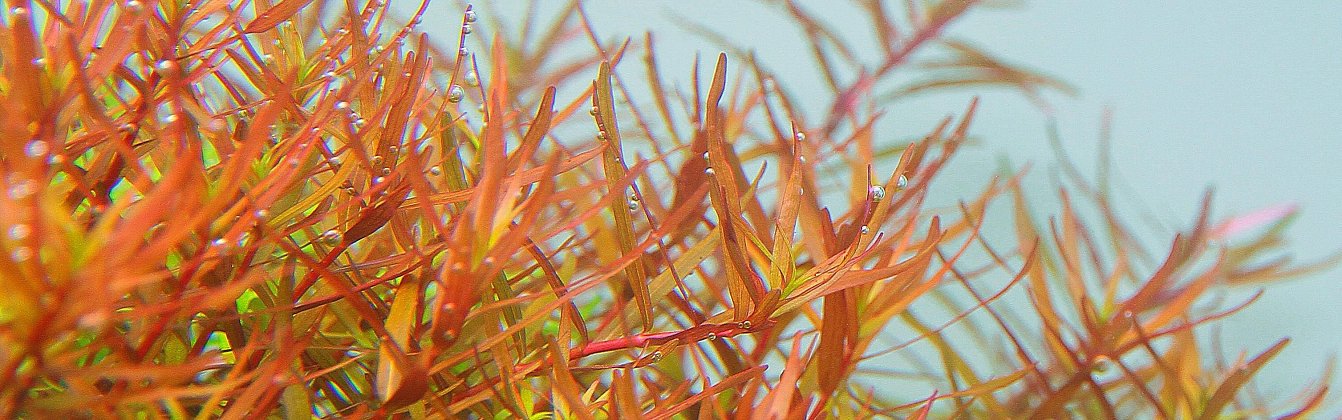
When it comes to water parameters, an aquascape or planted aquarium has very different requirements than aquariums focused on breeding and keeping fish or shrimp and crayfish. Aquatic plants need a number of further nutrients for a vital appearance and healthy growth (see also "Fertilizing a planted aquarium"). Otherwise, damage from malnutrition can occur, such as yellow leaves or stunted growth.
Besides the macronutrients phosphate and nitrate, which we have already introduced in the sections above, further water parameters are therefore important in the planted aquarium.
Carbon dioxide (CO2)
For healthy and fast growth of aquatic plants in particular, suitable carbon fertilization is of essential importance. As a rule, this nutrient is supplied by adding carbon dioxide (CO2) with a CO2 system. To monitor the concentration of the dissolved gas in the water, various CO2 drop checkers are available on the market, filled with a suitable indicator solution. It can display the concentration of carbon dioxide in the aquarium water by color. Optimal CO2 concentrations for a planted aquarium are about 20 to 30 mg/l CO2 - in this range the indicator solution is colored green.
You can find more information on carbon fertilization in the articles "Fertilizing a planted aquarium" or "Sukei Research: CO2 supply".
Iron (Fe)
Along with other trace elements, iron is an essential micronutrient for aquarium plants. Without enough iron, chlorophyll formation is disrupted and not enough leaf green can be produced. With iron deficiency, aquatic plants are often pale and yellowish, and the shoot tips can in some cases turn very light to transparent.
To supply an aquarium with aquatic plants with enough iron and other trace elements, a so-called complete iron fertilizer that covers all of these important nutrient elements is best suited. One example worth mentioning here is Aqua Rebell Mikro Basic Eisen.
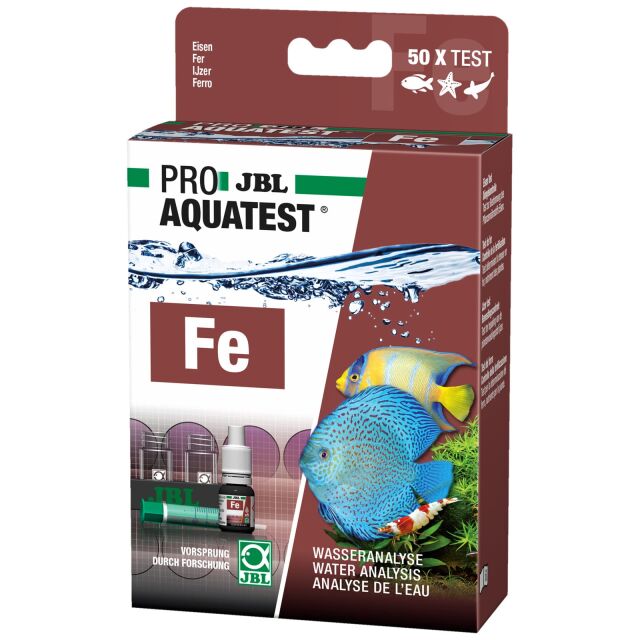
The nutrient iron (Fe) can be measured very easily with a suitable water test. Concentrations of up to 0.1 mg/l Fe are often recommended as rough guide values for a planted aquarium. In fact, though, the iron content does not have to be permanently measurable or kept at a specific value on a continuous basis. You can learn more about this topic in part 3 of our article series "Fertilizing a planted aquarium".
Potassium (K)

Besides phosphorus and nitrogen, potassium (K) is also one of the so-called macronutrients for plants that are needed in larger amounts. Unlike nitrate and phosphate, the nutrient potassium does not arise as an end product of organic water pollution in the aquarium. Typical complete fertilizers therefore often also contain some potassium to close this nutrient gap. Pure potassium fertilizers or ready-made NPK mixes, but also nitrogen fertilizers such as Aqua Rebell Makro Basic Nitrat, contain this important macronutrient as well. With them, the level can be raised in a targeted way to a specific value, which, very roughly outlined, should be in the range of 5 to 10 mg/l K.
If deficiency symptoms for potassium still appear, you as a planted-aquarium keeper should look more closely at potassium fertilization and determine the exact concentration in the aquarium water with a suitable water test.
Magnesium (Mg)
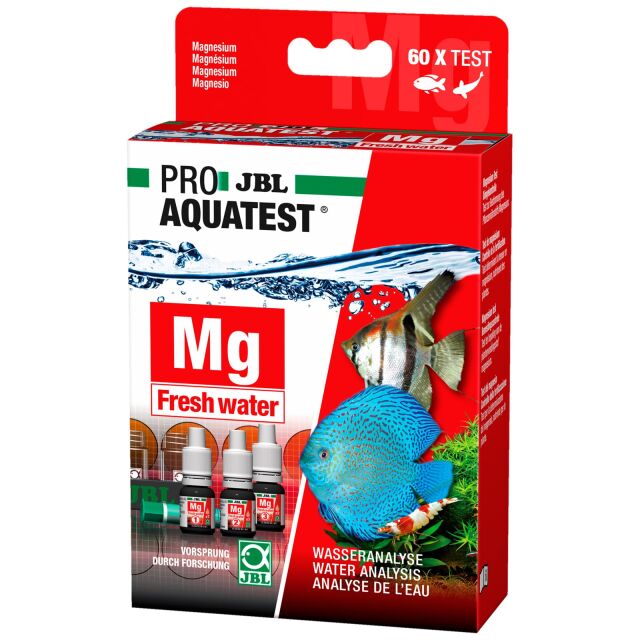
The macronutrient magnesium should also be mentioned for the advanced planted-aquarium keeper or aquascaper. Together with calcium (Ca) and other alkaline earth metals, magnesium (Mg) makes up the general hardness of the water. While calcium occurs in large amounts above all in harder tap water, magnesium is often present in insufficient concentration. But magnesium, like iron, is an important basic building block for aquatic plants in forming leaf green, or chlorophyll. In planted-aquarium keeping, one therefore ideally pays attention to a specific ratio of calcium to magnesium, which is often given as 4:1 or 3:1 (Ca:Mg) (see also "The calcium-magnesium ratio"). The magnesium content of the aquarium water can be raised quite easily by adding Epsom salt.
Suitable magnesium water tests are now also available for freshwater aquaristics.