 Interpreting your drinking water analysis
The majority of aquarists in Germany will surely use tap water for their aquariums. Depending on the region, water parameters differ greatly. The predominant share of water suppliers offers its customers a very detailed drinking water analysis. These are often available as a download on their websites, or you can request them by phone. This analysis is very extensive but provides a good indication of whether the tap water you intend to use is suitable for aquaristics. We give a few tips on this.
Getting an overview
First of all, such a drinking water analysis is quite extensive. Besides details on hardness and pH value, you will also find details on trace elements, electrical conductivity and other elements. Not all water parameters are of interest for aquaristics. Below we have listed the most important values and explain what they are about.
General parameters: pH, KH, GH
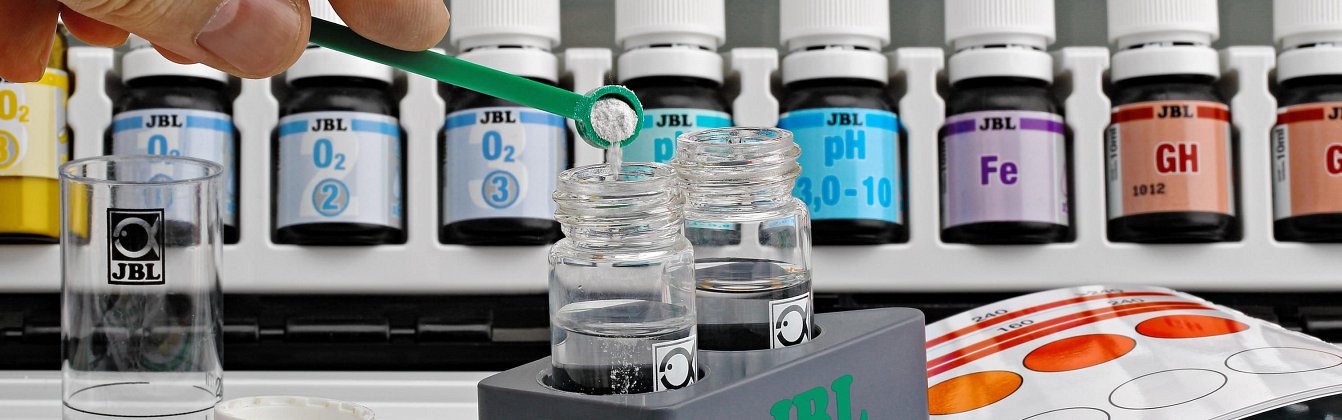
In aquaristics, general water parameters such as the pH value, as well as general hardness (GH) and carbonate hardness (KH), are of particular interest. Depending on the size of the parameters, the water can be classified as rather soft and acidic or hard and alkaline. This is very decisive if the focus is on the livestock. Many tropical ornamental fish from South America, for example, are used to rather soft and acidic water. African cichlids, on the other hand, prefer a more alkaline pH value and sometimes harder water. In the drinking water analysis, the KH and GH values are therefore of particular importance, since they show whether the tap water is well suited for aquaristic purposes. The pH value of the tap water, on the other hand, is not so important. It is usually kept in the slightly alkaline range by the water suppliers anyway in order to protect the pipes. Otherwise, slightly acidic water could attack the metals. In the aquarium, the pH value changes once more anyway, since many different substances can influence it. It is therefore much more realistic to determine the pH value in the aquarium water with a suitable water test.
Silicate

The term "silicate" is sometimes used somewhat loosely in aquaristics; what is meant is rather the concentration of silicic acid, which chemically corresponds to the form SiO2 (silicon dioxide). This can also be measured with a water test and is also often listed in a drinking water analysis. Ideally, the SiO2 content, both in the aquarium and in the tap water, should be as low as possible, close to zero. Higher concentrations can otherwise in individual cases lead to increased formation of diatoms (brown algae). If you have problems with brown algae and a silicate value in the aquarium that is too high, you can find out about suitable remedial measures here.
Trace elements
Trace elements will generally be found in tap water in only very low concentrations. These include many important plant nutrients such as iron, which the aquatic plants need. The input through tap water is therefore generally not enough here. To get around this, a so-called complete iron fertilizer is used in aquaristics to fertilize micronutrients, which can close these gaps reliably and safely.
Macronutrients: N, P, K
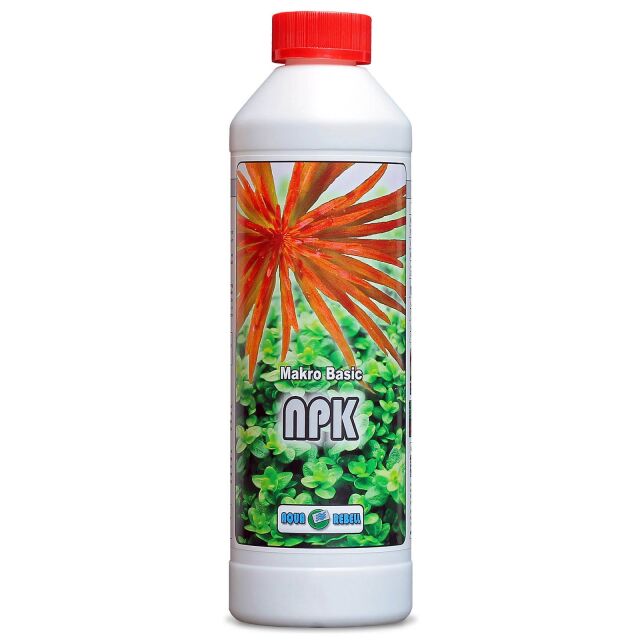
The NPK macronutrients are of particular importance above all in planted-aquarium keeping. In aquariums with a very heavy fish load, nitrate and phosphate can also arise through metabolic processes (for example as end products due to water pollution), potassium cannot. The potassium value of the tap water is therefore very decisive for getting a certain foundation for healthy plant growth. German tap waters are normally not very rich in potassium and are often in the range of 0 to 5 mg/l K. A value of approx. 5 to 10 mg/l potassium should be aimed for, however. This substance can then be added by liquid fertilizer or water-hardening salt.
Nitrate is on the one hand also seen as a macronutrient for aquatic plants; on the other hand, as the last stage of the nitrogen cycle, it is also an indicator of water pollution in aquariums with a lot of fish. A drinking water analysis often also determines the precursors ammonium and nitrite, but these are generally below the limit values in tap water. A higher nitrate content can certainly occur in individual cases depending on the supply area and is sometimes caused by agricultural use (presumably slurry applied to fields). The limit value here is 50 mg/l NO3. Having some nitrate in the tap water is definitely an advantage for a planted aquarium, since nitrogen is consumed by aquatic plants in quite large amounts. In a pure fish aquarium, a high NO3 concentration is not to be regarded as directly dangerous, but it can take the picture of water pollution to higher dimensions. By adding aquatic plants or nitrate-reducing filter media, however, this value can be brought back under control. Especially when breeding fish and also sensitive shrimp, a low NO3 value is preferable. If you want to lower your nitrate content, we give further tips on this here.
Phosphorus (P) is likewise an important macronutrient for the plants in the aquarium. In aquaristics, it is generally expressed as phosphate (PO4) and can be determined by suitable tests. Like nitrate, phosphate can also arise as a result of water pollution, in particular through the corresponding food input. Feeding a lot of frozen food in particular often leads to higher PO4 concentrations. Since phosphate is quite reactive (and can, for example, sometimes lead to precipitation with iron), values that are too high should be avoided even in a planted aquarium. Concentrations in the range of 0.1 to 1 mg/l PO4 are ideal. Certain concentrations of phosphorus can sometimes be present in drinking water, which then have to be taken into account. Other details and forms of phosphorus, such as orthophosphate, polyphosphate or total phosphate, may also be listed here. Aquatic plants cannot use all forms of phosphorus, however. For them, but also for other organisms and for aquaristic water tests, the form PO4 for phosphate is then probably of decisive importance in practice. If phosphate concentrations are too high, they can sometimes be reduced through increased maintenance, less food input, more aquatic plants or even by adding a phosphate adsorber. You can find more information on this here.
The calcium-magnesium ratio
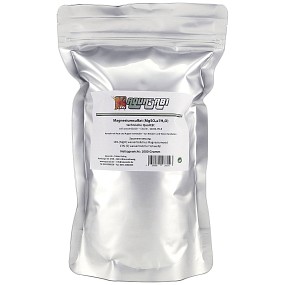
Of particular interest within general hardness is the ratio of calcium to magnesium. Both elements are alkaline earth ions and make up the largest part of general hardness (GH). To create ideal conditions for aquatic plants, a special ratio of about 4:1 or 3:1 calcium to magnesium is advocated in planted-aquarium keeping. Unfortunately, German tap water is often quite hard and has a high calcium share but little magnesium. With Epsom salt, though, you can bring the ratio of these two substances back to the desired values quite easily. In this article you can learn more about this topic.
Substances toxic to fish?
Tap water can generally be used well in the aquarium. Under certain circumstances, however, it may contain chlorine or copper, which at certain higher concentrations can become dangerous for the inhabitants of aquariums. Chlorine, for example, is often used as a cleaning agent for the pipes and may be used now and then. A permanent chlorine load is found rather rarely in Germany; in other countries it is sometimes more common. Chlorine compounds can be detected with a suitable water test. To prevent chlorine from getting in, using appropriate care products such as water conditioners, which can neutralize chlorine, is recommended.
Copper is a metal to which invertebrates above all, but also aquatic plants, can react sensitively. It can occur in tap water in rare cases but is also contained in some ornamental fish medications or anti-algae products. A suitable copper (Cu) water test can detect this element in aquarium water. To remove copper or as a precaution, the aquarist can best use suitable water conditioners that render the copper harmless.
Copper is also contained in aquatic plant fertilizers, above all in complete iron fertilizers, since this element counts among the micronutrients. Here, however, the concentration is extremely low, and such complete fertilizers also generally contain appropriate chelates. These complexing agents mask the copper with a kind of protective shell, so that in this form it is less dangerous for the inhabitants of the aquarium. Liquid fertilizers such as Aqua Rebell Mikro Basic Eisen are therefore safe for shrimp and other invertebrates.