 Filter flow rate in the aquarium
An aquarium filter describes its flow rate in its specifications with the l/h value. We explain here what that is about and how you can maintain or even improve the flow rate.
Flow rate
The flow rate of a filter is usually given as a value in liters per hour (l/h = liters per hour). Depending on the manufacturer, this value is also listed as delivery rate, flow rate or pump capacity. The l/h specification is the same for all makes, however. The value determines how many liters the filter's pump can force through the filter housing within an hour. Consequently, it also yields a value for the current in the aquarium. It is a useful value for comparing different filter models with each other. This can be very useful when considering the purchase of a new aquarium filter. If you also relate the flow rate to the filter's power consumption (in watts), you get the efficiency. This lets the aquarist see how energy-saving a filter is for their aquarium.
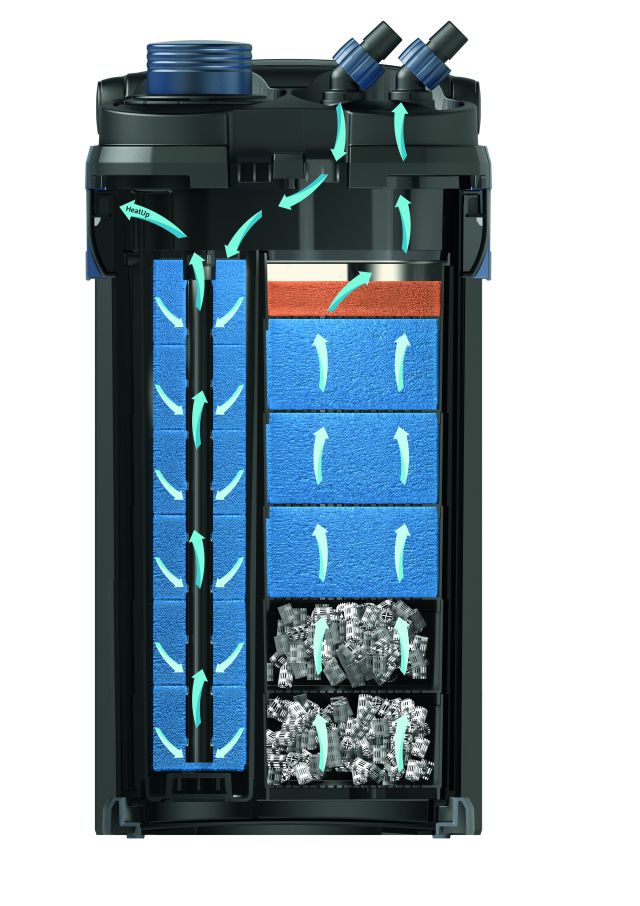
Certain things are decisive for the flow rate, such as the number and type of filter media. It is worth looking at the fine print in the instruction manual, because with some manufacturers the l/h value refers to an empty filter without filter media. Others, on the other hand, base the filter flow rate on the value of the filter with its standard fill, that is, when the filter materials included are used. So that you can compare certain filters directly with each other, you should find out how exactly the manufacturer defines the l/h.
Change in flow rate with longer running time
The aquarist sometimes does not notice a change in the flow rate immediately. Noticeable consequences often only become apparent after a longer time. You notice this, for example, when the current in the aquarium decreases significantly. Filter outflows with a skimmer, for example, react particularly sensitively to it. When the flow rate declines, the float of the surface skimmer is no longer pulled down well, so the water surface is not cleaned. A higher noise level can also be a reason why the flow is disturbed. Because of dirt, for example, the filter draws in significantly more air, and these air pockets then create the louder noises. In any case, the degree of contamination is very decisive for the flow rate, which we cover in the next chapter. Some filters have their own warning systems that can measure the flow and then let the aquarist know in an analog or digital way that a check is needed.
Contamination
The degree of contamination has a large influence on the work and the water flow of an aquarium filter. The more dirt accumulates inside a filter and settles in the hoses, the more resistance the water meets. Consequently, the flow rate drops as well. It therefore makes sense to clean the filter every now and then to maintain the flow rate and thus the function of the filter. The filter hoses (and also filter tubes and lily pipes) can be cleaned with suitable hose brushes. These are available in various sizes and should be chosen to match the hose diameter.
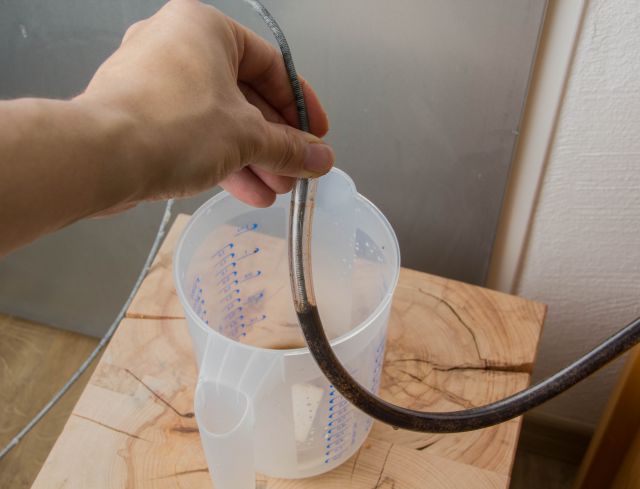
Cleaning the filter affects not only the flow rate but also the entire microbiology of the aquarium. Since many beneficial bacteria that are important for breaking down pollutants live in the filter, it is important to keep a good balance when cleaning the filter. Cleaning too often or too thoroughly can lead to too many good bacteria being removed, which can have a negative effect on the ecosystem. This can result in increased algae growth or even a rise in substances toxic to fish such as ammonia and nitrite. You should therefore not rinse out the filter material too thoroughly and should always clean only part of the filter media. Because a certain portion stays untouched, the bacteria in it are also left in peace, so the balance of the microorganisms is not disturbed too much.
Other filter media
If you use other filter materials than the standard media that came with the filter, this often changes the flow rate as well. If you are an advocate of minimal filtration, in which only little filter media is used, this can noticeably increase the flow rate. If, on the other hand, significantly more material or materials with finer pores are used, the filtration in the sense of cleaning is strengthened, but the flow rate is rather weakened. If you want additional current in the aquarium, using a circulation pump makes sense.
Replacing the impeller
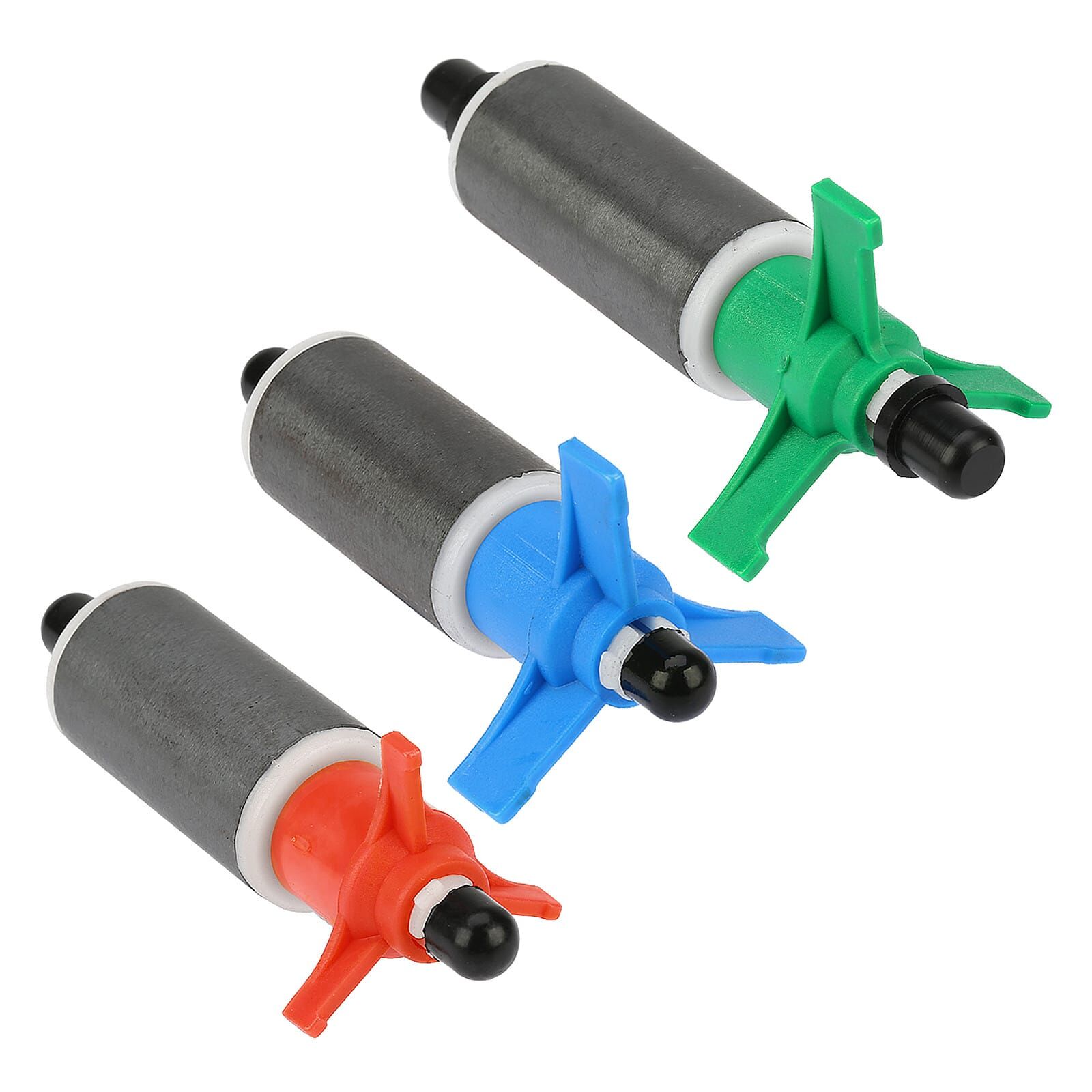
One way to influence the flow rate with relatively little effort is to replace the impeller. These are the small vane wheels inside the filter head that are responsible for the water movement. The replacement applies primarily to the CristalProfi external filters from JBL and mainly concerns the models e402, e702 and e902. JBL offers various impeller models here with vanes of different sizes. They can also be told apart by color. Smaller impellers produce a lower flow rate, larger ones more current. By replacing the impeller, the aquarist can influence the flow rate in these cases. It should be mentioned that this has no effect on power consumption.