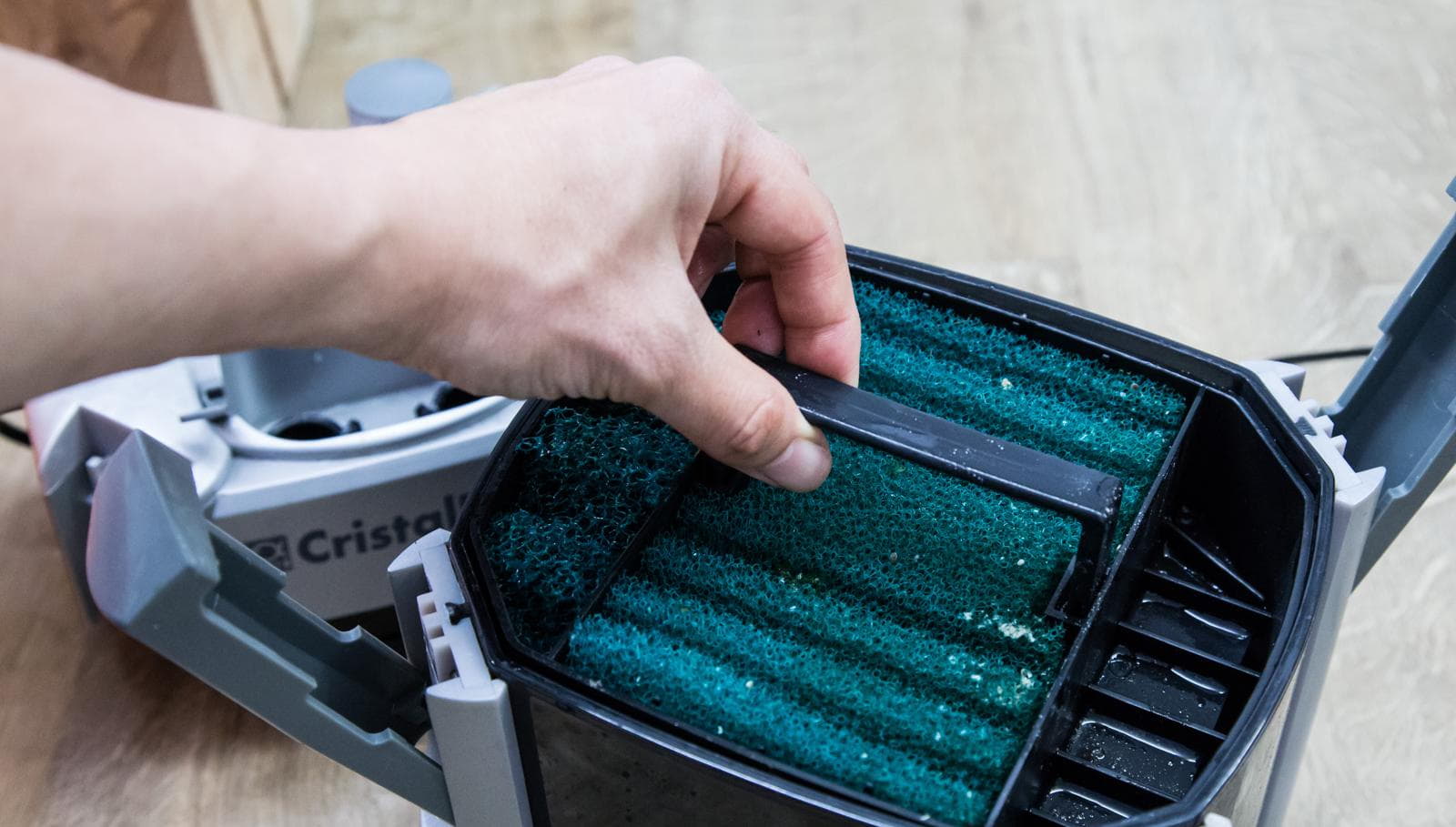
 Cleaning the aquarium filter
From time to time, the aquarium filter should be cleaned. In this short guide, we explain how, when and why you should carry out cleaning work on the aquarium filter.
Why should the aquarium filter be cleaned?
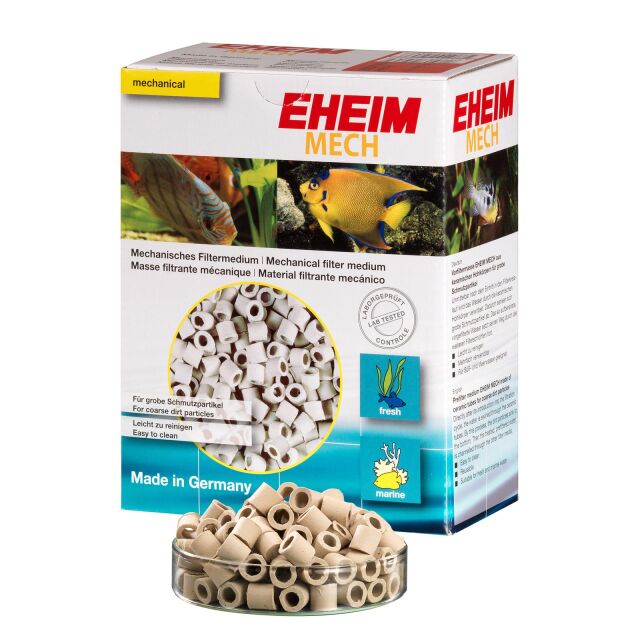
The filter of an aquarium, no matter whether it is an external filter, hang-on-back filter or internal filter, serves not only to create flow but also to break down pollutants and retain dirt particles. Biological pollutant breakdown is part of the nitrogen cycle in the aquarium and happens through the activity of bacteria - tiny organisms that have settled in the filter material. So-called biological filter media in particular offer bacteria a suitable home. Dirt particles are retained in the aquarium filter mainly by so-called pre-filter media such as filter floss or filter foam, but also by other mechanical filter materials such as Eheim MECH.
When should the aquarium filter be cleaned?
Over time, filter sludge increasingly accumulates in these media, so that the flow and performance of the filter decline more and more. Deposits also form in the hoses and pipes, reducing the flow (you can find out how to clean them here). At the latest when the water flow and current noticeably decrease, it is high time for a filter cleaning. Less current, both in the aquarium and in the filter, also means less transport of oxygen and nutrients. This can end in poorer aquatic plant growth, algae formation or disturbed microbiology.
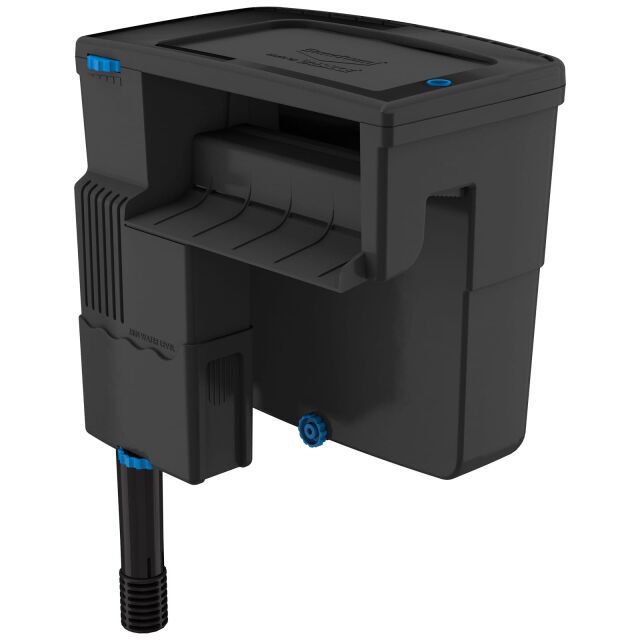
Some filter types even have a dedicated built-in warning system for filter cleaning (for example the Seachem Tidal filter).
Otherwise, the principle for filter cleaning is: the filter is only ever cleaned as often as is just necessary. If it is cleaned too often, too intensively or at too short intervals, this can have serious drawbacks. Replacing or rinsing the filter materials always removes large amounts of beneficial bacteria, which first have to build up again. If this happens too often or too intensively, it can have negative effects on the microbiology and on pollutant breakdown through the nitrogen cycle in the aquarium. In the worst case, increased ammonia or nitrite formation occurs, which can then become dangerous for the aquarium inhabitants. Correct filter cleaning is therefore crucial for a well-running, stable aquarium.
How should the aquarium filter be cleaned?
As is well known, many beneficial bacteria live inside an aquarium filter. During cleaning, some of them are removed. To keep this to a minimum, it is advisable not to clean all the filter media at once but only a part of them each time. That way, enough microorganisms remain active in the older filter materials so that the ecosystem stays intact at the bacterial level. The filter media are rinsed out in a water bath or under running water. The water should be at about room temperature. A water bath in old aquarium water (for example after a water change) is even better suited for this, because tap water can potentially contain chlorine, which would kill the remaining bacteria in the filter media.
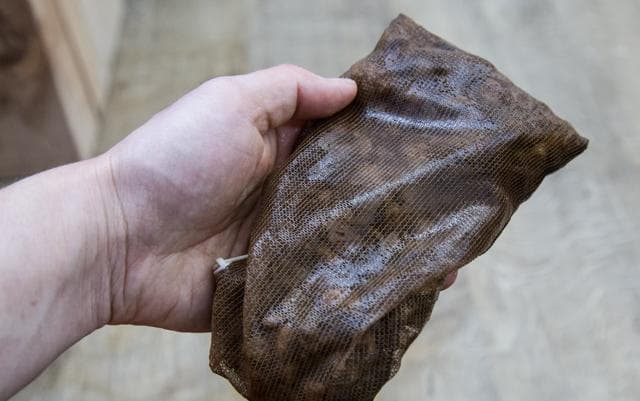
For the same reason, the materials from the filter should not be cleaned too thoroughly. A certain residual amount of "dirt" is welcome to stay, since the sessile beneficial bacteria that metabolize organic pollutants from the water live in it. Only very fine filter media such as filter floss or fleece can be cleaned thoroughly so that good water flow is possible again. In some cases, it is even easier to replace them with new media.