 Aquarium filters
What role does the filter actually play in an aquarium? What types of aquarium filters are there? What do I need as filter material? We answer all these questions here in this article about filtration in the aquarium or aquascape.
What are filters for?
The filter system in the aquarium has several tasks. Like an aquarium pump, a filter provides the corresponding water movement. This current circulates the water in the aquarium, which delivers nutrients better and carries pollutants away better. Above all, oxygen, which is vital for all living things in the aquarium such as fish and invertebrates, but also aquatic plants and microorganisms, is distributed better by the water movement. Depending on their original habitat, different animal species prefer different current strengths. These can be achieved with different filter outlets (see also the article "Lily Pipe").
Another very important task of the aquarium filter is breaking down pollutants. In natural flowing waters and even in many still waters in the wild, there is a constant supply of fresh water. Water pollution caused, for example, by animal excretions or dying plants is thus continuously flushed out. An aquarium, on the other hand, is a closed system in which, by nature, there is usually no constant supply of fresh water and where pollutants can therefore accumulate. This problem can be solved, however, through the aquarist's maintenance measures and the use of appropriate filter technology.
How aquarium filters work

In principle, a filter for an aquarium consists of two technical parts. First, we have a motor-driven pump that is responsible for the water movement. It draws in the aquarium water and then passes it on to the second part: the filter housing, which contains various filter materials. The water is now forced through these by the power of the pump. In the process, suspended particles are caught in the different filter media, and waste substances are bound or broken down. The cleaned water is finally returned to the aquarium.
Filter media
An aquarium filter can be filled with different materials. In principle, a distinction is made between mechanical, biological and chemical filtration, which can be implemented with the corresponding media. Depending on the type, dirt, suspended particles, discoloration, pollutants, medication residues or cloudiness are removed from the water. The water parameters can also be influenced by the targeted use of certain filter media.
Mechanical filtration
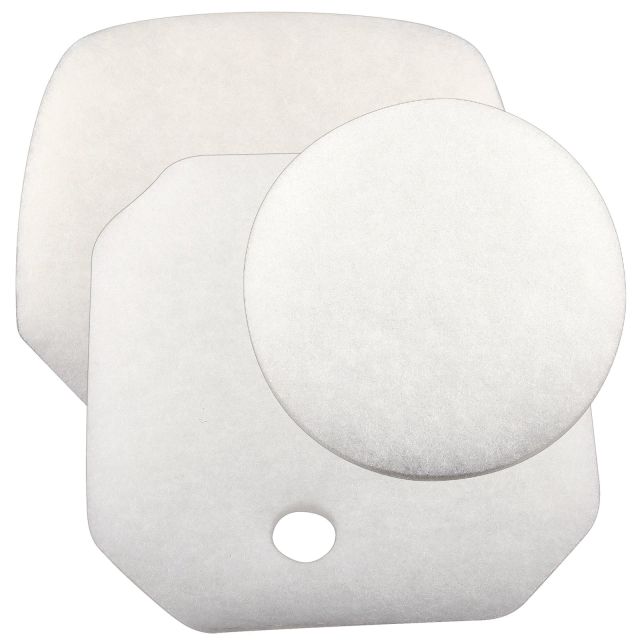
The purpose of mechanical filtration is first of all to retain coarse dirt and suspended particles in the filter, ensure clear, untroubled water and protect the filter media behind it from heavy contamination. In addition, detritus formation shifts more into the inside of the filter and takes place less in the aquarium itself. Consequently, filter material for mechanical cleaning should also be rinsed out regularly, since quite a lot of detritus and other coarse dirt accumulates there, which over time affects the filter's water flow. Fine-pored materials such as floss, fleece or sponges are often used here as prefilters. But ceramic tubes such as JBL Cermec also count among the mechanical filter media.
Biological filtration

Biological filtration is probably the most important part of breaking down pollutants in the aquarium. Biological filter media are characterized by a particularly large surface area; they consist of extremely porous material such as sintered glass. In the aquarium filter, these surfaces are colonized by beneficial nitrifying bacteria, which convert harmful nitrogen compounds such as ammonium and nitrite into much more harmless nitrate through various breakdown chains. The latter is used by the aquatic plants as a nutrient or removed from the aquarium by water changes. For their work in the so-called nitrogen cycle, the sessile bacteria need quite a lot of oxygen. The microorganisms therefore need zones with good flow so that they are continuously supplied with oxygen-rich water. This is also the reason why biological filter material consists of fairly large individual pieces. This also creates larger gaps, which allow better water flow.
The sessile bacteria also settle on all other surfaces in the aquarium (in the substrate, on the aquatic plants, the hardscape and the glass panes), but thanks to the biological filter materials, conditions inside a filter are particularly good for them.
Chemical filtration
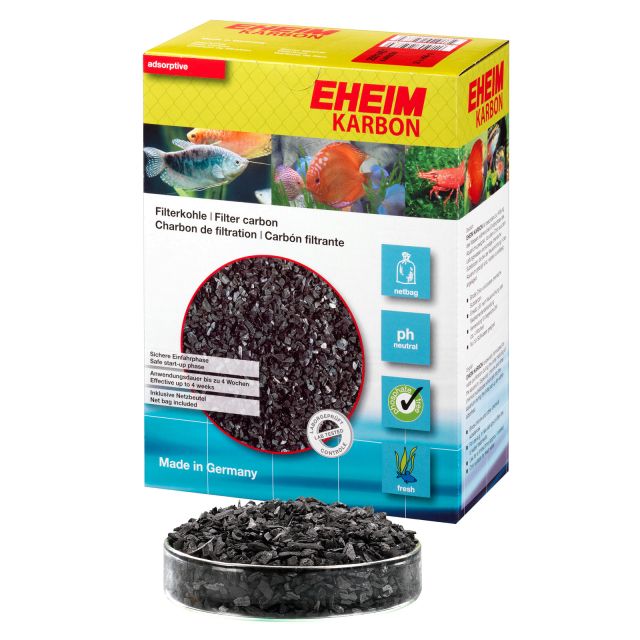
Depending on the material, a chemical filtration influences the water in the aquarium so that individual parameters can be changed in a targeted way as desired. By using JBL Tormec activ, for example, you can lower the pH and the hardness. The water in the aquarium becomes acidic and soft without laborious water treatment beforehand. Many aquarium animals and aquatic plants prefer these water parameters. Nitrate removers and phosphate removers such as Seachem PhosGuard or JBL NitratEx reduce the content of NO3 or PO4 in the aquarium water. In sparsely planted tanks with heavy fish stocking, algae can otherwise benefit from the high nutrient levels and increase their growth up to an algae bloom. In aquascapes or typical planted aquariums, such adsorbers tend to be counterproductive, since they remove important nutrients from the plants. Activated carbon is a very versatile adsorber medium that can filter not only yellowing compounds and suspended particles but also medication residues out of the aquarium water. The carbon can also bind other organic compounds such as urea and humic substances, as well as various trace elements, and thus remove them from the water. The storage capacity of activated carbon is limited, however. Once it is saturated, the material has to be replaced.
Activated carbon should therefore not be used as a permanent filter medium in the freshwater aquarium, but only to fix a specific problem or to rid the water of medications after a medication treatment.
Filter types in the aquarium
Depending on the size and shape of the aquarium, but also on its location, different filter models are suitable as aquarium equipment. In principle, a distinction is made between external filters, internal filters and hang-on-back filters. All filter models have their very own advantages and disadvantages, which we will now look at in a bit more detail.
Internal filters
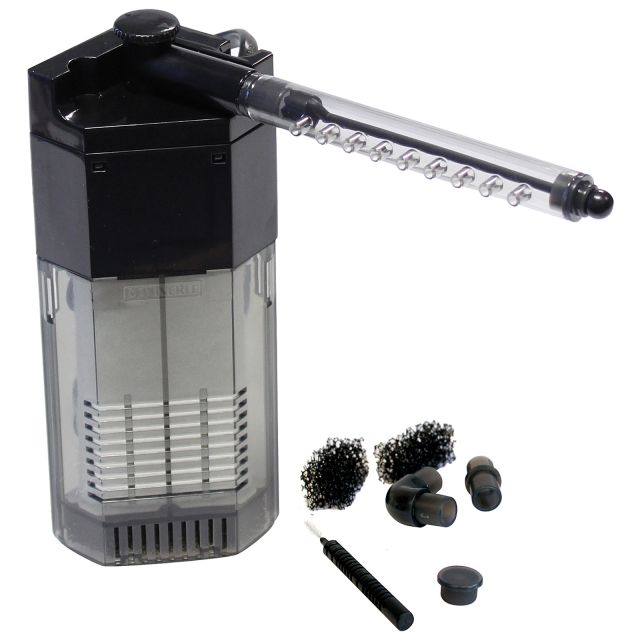
Internal filters, as the name already suggests, are operated inside an aquarium. They are an excellent solution if there is no room outside the tank for larger aquarium equipment such as filters and pumps. This can be the case, for example, if there is no base cabinet and the aquarium stands on a desk. Many aquarists also choose an internal filter because no water can leak out in the event of a defect or leak in the filter equipment. In other words: if the filter ever leaks, the escaping water stays in the tank.
The disadvantages are mainly visual, because an internal filter takes up quite a lot of space in the aquarium and bothers the viewer's eye. You can of course hide it behind aquatic plants and aquarium decoration, as we explain in this article, but its operation should not be restricted by this. In other words: leaves of aquatic plants should not cover the filter inlet, and driftwood and stones should not obstruct the water flow at the filter outlet. The filter should also be easily accessible for the regular cleaning work. This is more difficult if the equipment is hidden with little clearance behind hardscape structures.
External filters
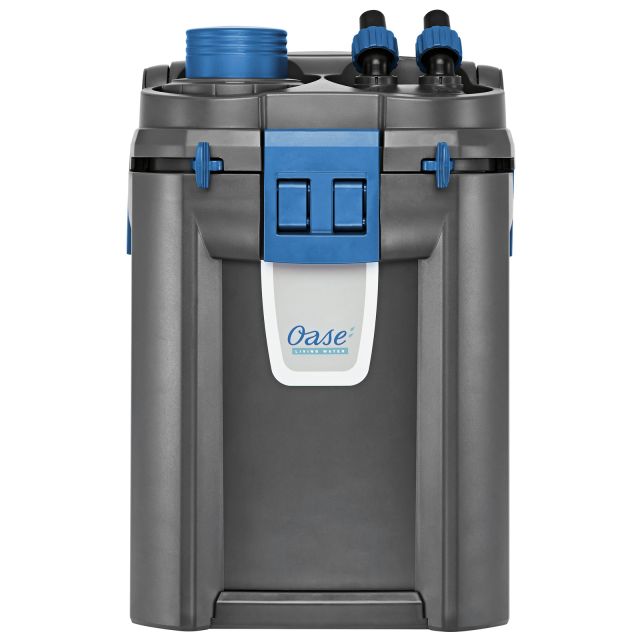
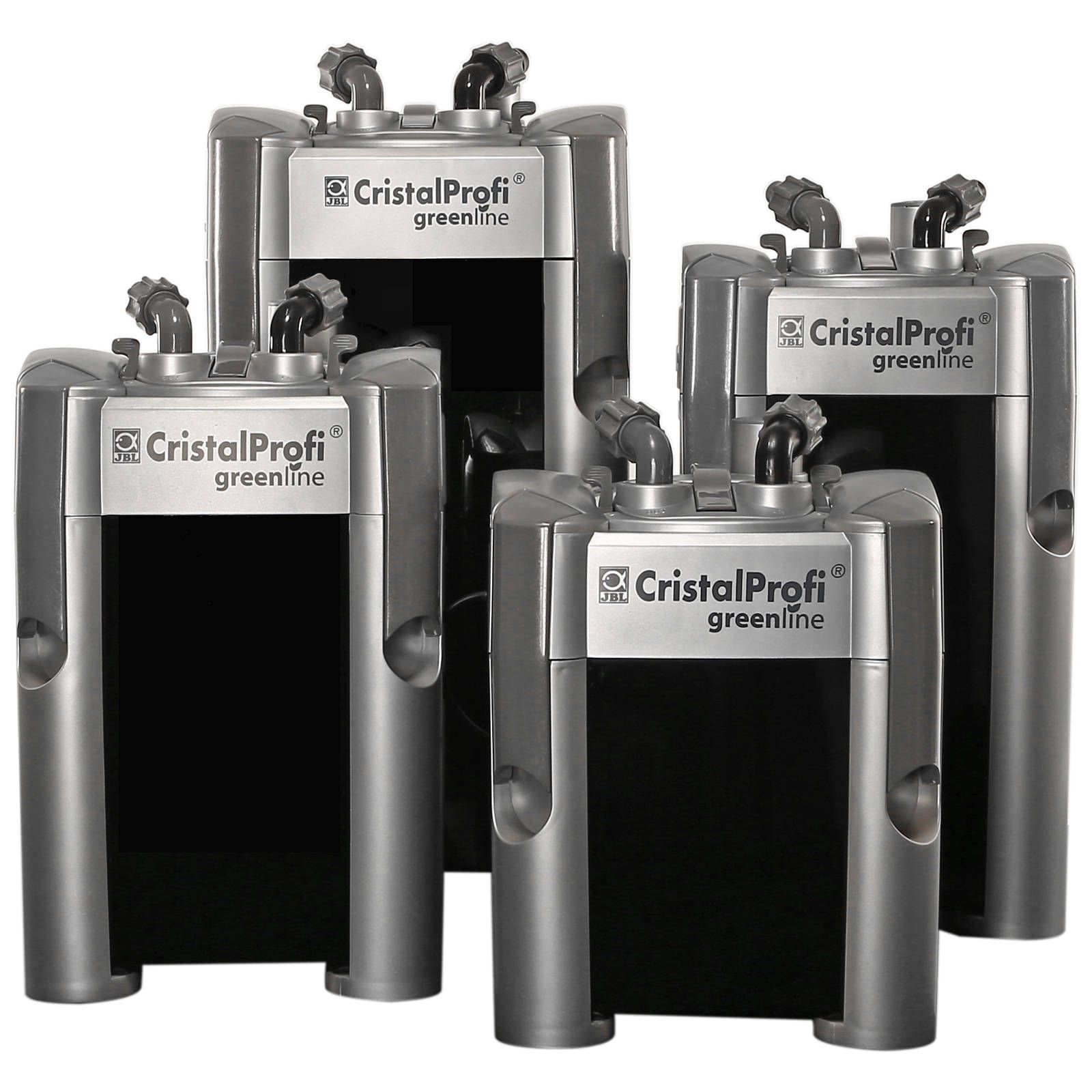
With an external filter, the filter body including filter media and pump is located in a housing outside the aquarium. This type of filter is therefore also called a canister filter. An inlet and an outlet are connected to the filter via flexible hoses, creating a separate water circuit. The aquarium water is drawn in through the filter inflow and led into the filter. There it is cleaned and led back into the aquarium via the outflow. The advantage is that you can position such an external filter completely outside the aquarium, preferably and inconspicuously in an aquarium base cabinet. This way, practically no space in the tank itself is used up by equipment. Only the hoses and the filter inflow and outflow are visible, but they too can easily be installed hidden behind decoration or aquatic plants.
In aquascaping in particular, transparent filter hoses and so-called lily pipes are preferred – filter inlets and outlets made of high-quality glass. This makes these technical components almost invisible. Particularly easy-care materials such as stainless steel are also used often.
Hang-on-back filters
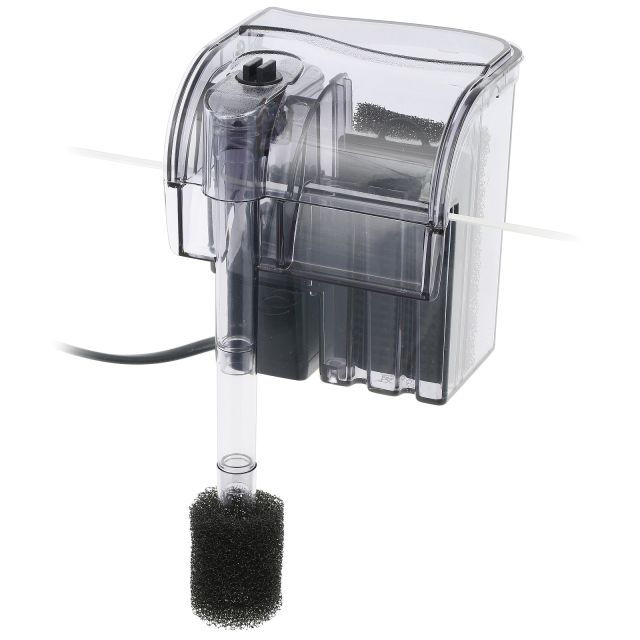
Hang-on-back filters or HangOn filters are simply hung over a pane of the tank. Inside, only the filter inflow and possibly the filter outflow (usually a cascade) are visible. Outside the aquarium is then the filter housing with the pump and the filter materials.
Hang-on-back filters combine the advantages of internal and external filters. They take up no space in the aquarium, leaving more freedom for design. But no base cabinet is needed either, since the equipment stays right at the tank. However, a HangOn filter is of course also clearly visible, unlike an external filter, which you can hide better. In addition, the cascade as a filter outflow often produces a stronger splashing sound.