 Easy aquarium plants
Do you want to replant your aquarium, or are you new to the aquarium hobby and facing your first setup? You don't have a CO2 system and need robust and healthy plants? Then you've come to exactly the right place. In this little guide, we have put together a list of easy-to-keep aquatic plants that are quite undemanding and hardy.
Why aquatic plants?
Even if your aquarium is not an aquascape or a plant-heavy Dutch tank: even in aquariums focused on animal stock, aquatic plants are not just mere decoration but also play a not insignificant biological role for the ecosystem. Aquarium plants produce oxygen and, through their growth, metabolize water pollutants and nutrients that the aquarist would otherwise have to remove from the aquarium by hand to a greater extent through water changes. Plants in the aquarium also serve to structure it; the animals use them as hiding or spawning places or claim certain zones as their territories. Even when conditions are not optimal for aquatic plants (no carbon supply, little or no liquid fertilizer), there are still many easy-to-keep aquarium plants that hold up well under these conditions.
Requirements of aquatic plants
Plants for the aquarium need various nutrients to grow healthy. These include sufficient light (for photosynthesis), so-called macronutrients (such as nitrogen, phosphorus and potassium), micronutrients in the form of iron and other trace elements, as well as carbon (which in the aquarium is often added by a CO2 system. Many different aquatic plants are available in the aquarium hobby, and they have quite different requirements. Especially well suited for normal aquariums such as a classic community aquarium are so-called shade plants, which get by with little light and otherwise make no great demands. Many aquatic plant nurseries such as Dennerle or Tropica have therefore introduced a traffic light system for their aquarium plants (red, yellow, green), where plants with the green label stand for easy-to-keep aquatic plants. This makes the decision easier for the aquarist when buying new plants.
The following types of aquarium plants are to be classified as particularly undemanding and hold up bravely in the aquarium even without liquid fertilizers and without a carbon supply. These are often strongly root-feeding plants that benefit from a nutrient-rich substrate. Nutrients can be added to the substrate, for example, with fertilizer balls or with a long-term fertilizing substrate placed under the decorative gravel.
Easy background plants
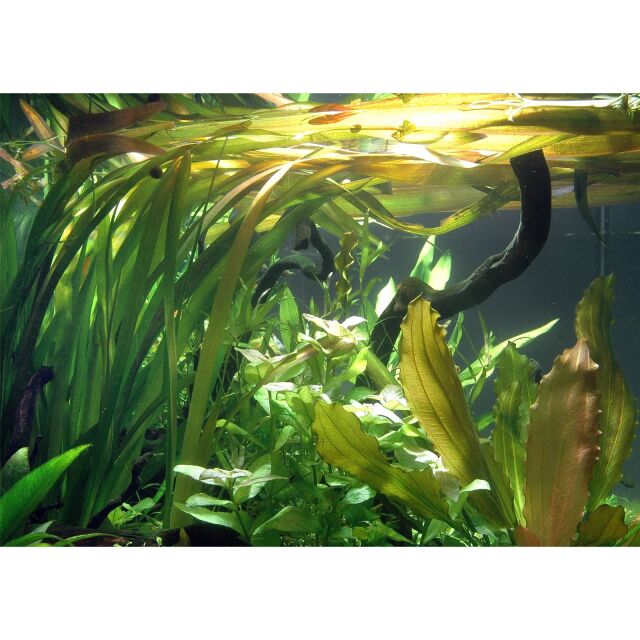
The background of an aquarium is often planted with taller-growing plant species, which readily cover the entire rear pane of the aquarium and can thus also conceal equipment attached to it, such as aquarium heaters. Vallisneria australis has established itself here as a classic in the aquarium hobby. This is a quite undemanding but fast-growing plant that can also be very prolific and spreads by runners. Its narrow and long leaves give the background a rather grass-like look (see photo above, left side).
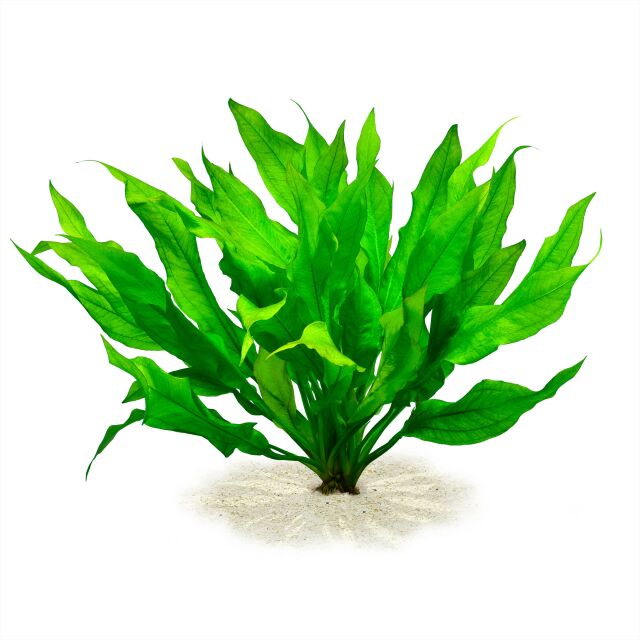
Tall-growing cryptocorynes are also suitable for the background, such as Cryptocoryne crispatula var. balansae, which has nicely narrow, bumpy leaves. For a look more reminiscent of the Amazon, various Echinodorus species are a good option, growing correspondingly taller and bushier. Echinodorus grisebachii 'Bleherae', a large-growing Amazon sword plant, is used as a classic in discus aquariums, for example.
Among the bulb and tuber plants, species such as Crinum calamistratum (long, thin, curly leaves) and tiger lotus forms (red or green) are a good choice of undemanding species for the rear area of an aquarium.
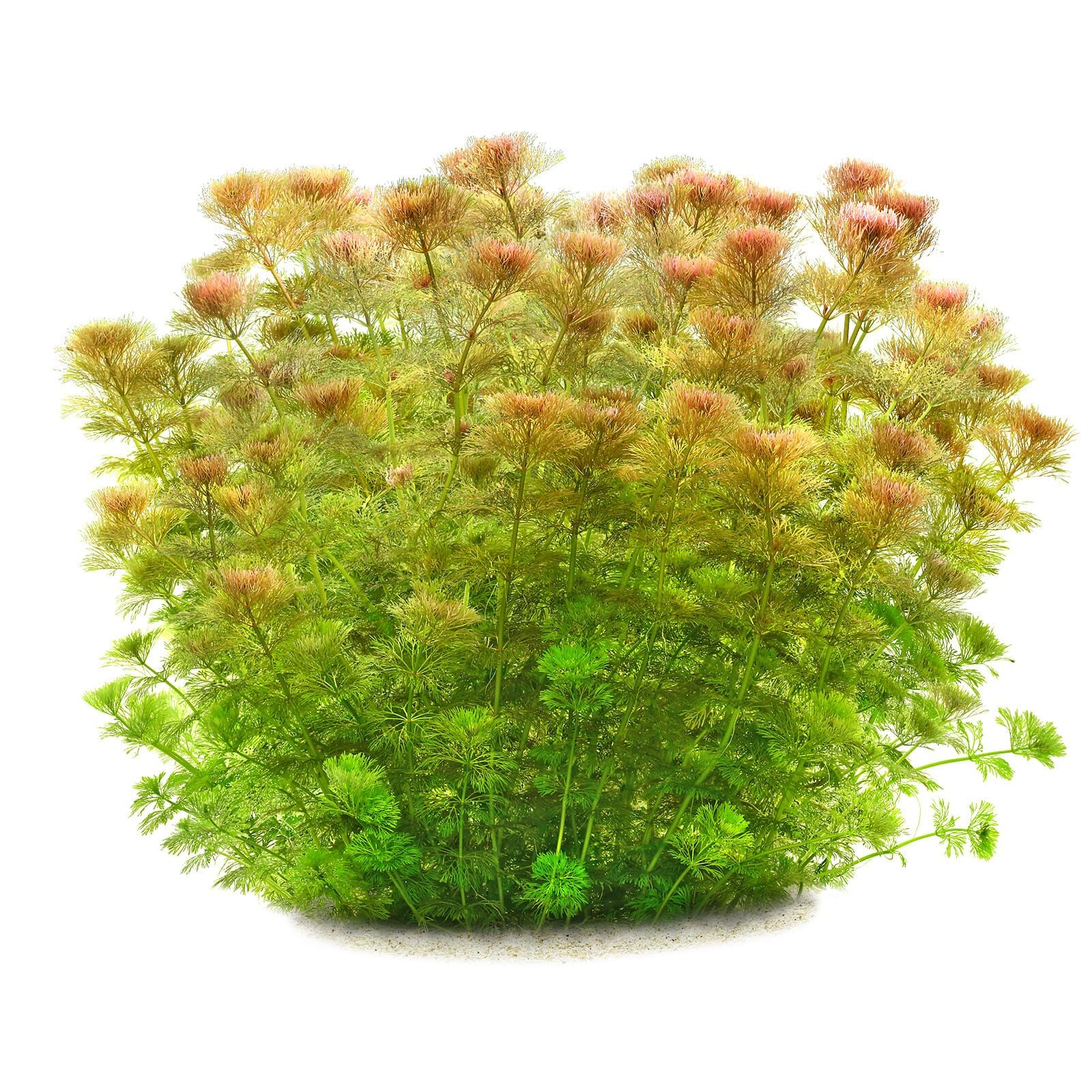
For those who think more in terms of classic stem plants, which owing to their fast growth often also need somewhat higher nutrient supply: here too there are some specimens that are considered easy to keep. Above all the classics such as waterweed or hornwort, but also species such as Hygrophila corymbosa.

By the way: In our online shop you can also sort aquatic plants by their requirements. In the tab on the left side, besides origin, light, etc., there is also the selection category "Difficulty level". Under the rating "very easy" you will find many more plants with similarly low requirements. Just give it a try!
Midground plants
The midground of an aquarium is the design level between the foreground and the background, which is often planted with tall-growing aquatic plants. Mid-height aquarium plants with a low to moderate growth rate are particularly suitable for the midground. In combination with aquarium driftwood and stones, special epiphytes can be used, which we present further below in a chapter of their own.
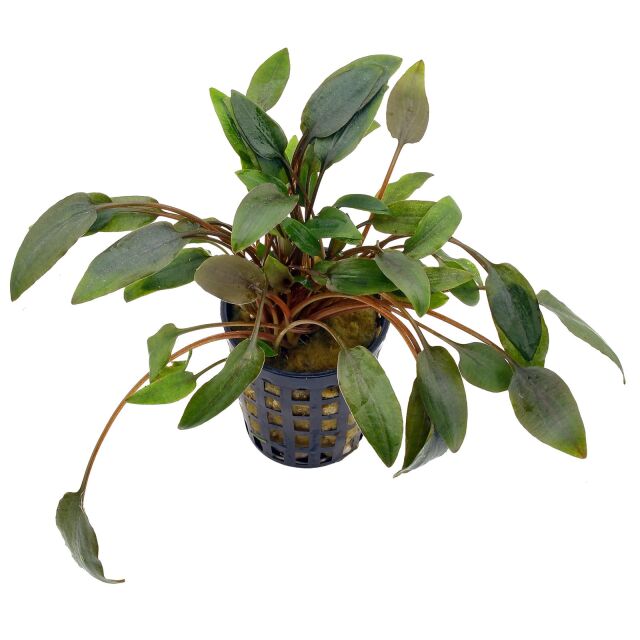
Among aquatic plants, mid-height cryptocorynes in particular are predestined for use in the midground. They are rosette plants and therefore do not multiply as strongly by runners and side shoots as, for example, ground-covering plant species. Cryptocorynes can thus be kept well in check and used as so-called solitary plants. Plants of the genus Echinodorus that do not grow too tall are also well suited for the midground. However, because of their very broad leaves in particular, these plants visually suit larger aquariums better.
Epiphytes
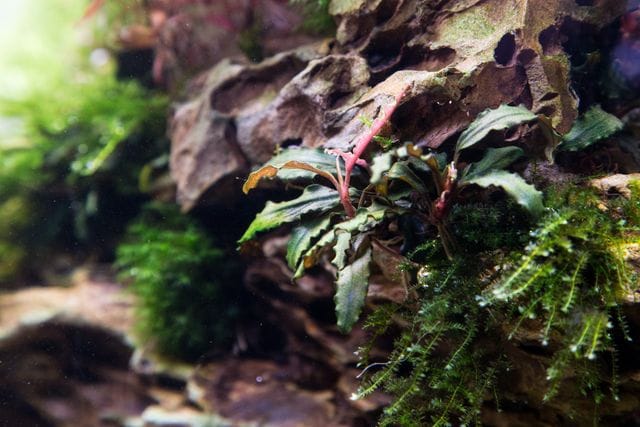
In the aquarium hobby, epiphytes are plant groups such as ferns, anubias or Bucephalandra, which cling with their adhesive roots to objects such as stones and driftwood. They are generally not planted into the substrate like a classic stem plant but fixed onto the so-called hardscape. This can be done by simply wedging them in, tying them on or even gluing them on (you will find more detailed instructions here). Most of these rhizome plants are very frugal when it comes to nutrients and are also extremely robust to cichlid-proof. The species of the genus Anubias in particular have exceptionally hard and durable leaves. Most epiphytes are also very slow-growing aquatic plants, which makes maintenance work in the aquarium considerably easier.
Mosses
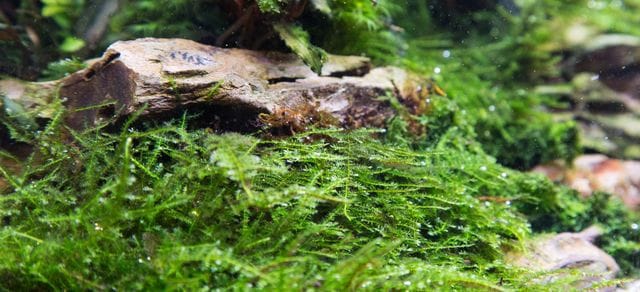
Mosses in principle also count as epiphytes, because many moss species attach themselves to surfaces with their rhizoids. It looks very natural when mosses overgrow decorative items such as driftwood and stones in the aquarium. They also captivate with their dark color and fine-leaved structure. Young fish in particular, but also dwarf shrimp, use these filigree plants as hiding places and grazing areas. Generally, most aquarium mosses are quite undemanding. Here we want to present particularly robust and easy species.
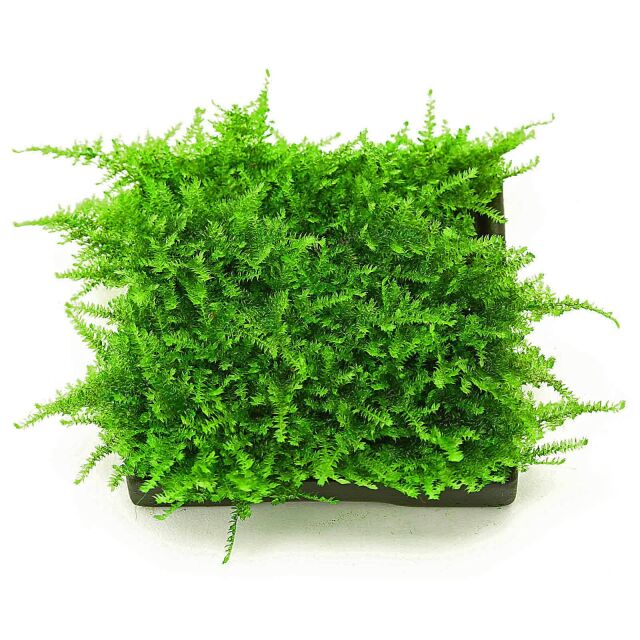
Certainly the best-known and most widespread type of moss in the aquarium hobby is Java moss. Extremely undemanding and densely branched, this plant is a real eye-catcher in any aquarium. Spring mosses such as Fontinalis sp. "North Thailand" have a visually quite different growth habit with longer and thicker fronds. Also extremely robust and easy, but somewhat coarser in appearance, is Monosolenium tenerum. This liverwort forms dense cushions and has a very special look.
Easy foreground plants
Getting a true underwater lawn with only very weak lighting is indeed a challenge, because owing to the distance traveled, not as much light reaches the bottom of the aquarium as in the upper areas near the water surface. Nevertheless, there are aquarium plants for the front area here too that cope well with these conditions. It should be mentioned, however, that with very weak light, spreading in particular, that is, area growth via runners, can indeed be very slow. To get a nice, densely overgrown foreground, the plants should therefore be planted quite close together right at setup.
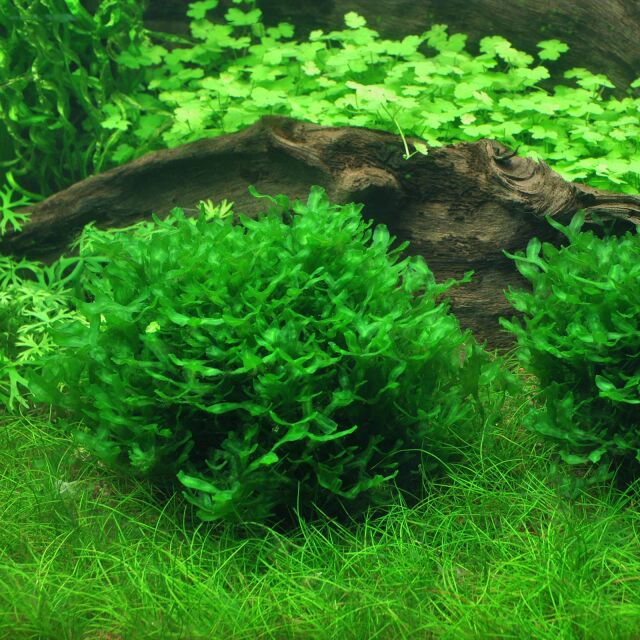
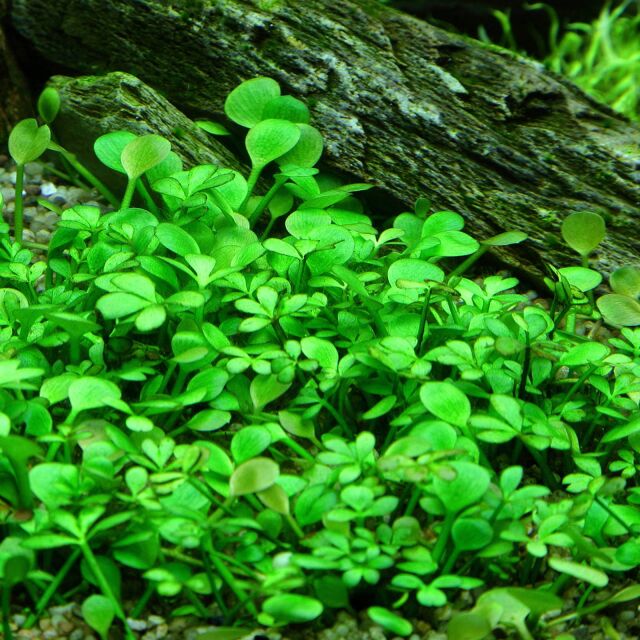
Small-staying cryptocorynes (such as Cryptocoryne parva) can also be used for the foreground of an aquarium. Also recommended are Helanthium tenellum "parvulum" and the somewhat larger-growing Helanthium bolivianum "quadricostatus". Both are often also declared as Echinodorus in the trade and are grass-like ground cover plants with light green blades. The robust Brazilian micro sword (Lilaeopsis brasiliensis) has a similar look and similar requirements. Marsilea hirsuta (see photo) provides nice dark green leaves reminiscent of clover.
Mosses as easy ground cover plants in the aquarium
Especially for smaller nano aquariums, mosses can also be repurposed as ground cover plants. Thanks to their filigree look, they give the foreground planting a much finer appearance. For this, the aquarist can simply sink fully planted pads into the aquarium or tie or glue portions of moss onto flat stones and then lay out the foreground of the tank with them. You will find further tips on sinking moss cushions and a presentation of further aids here.