 Using old aquarium water
A water change is usually one of the regular maintenance tasks of an aquarium. A portion of the water is removed and replaced with fresh water. This is a very sensible measure, but what do you do with the so-called old water? We have a few suggestions.
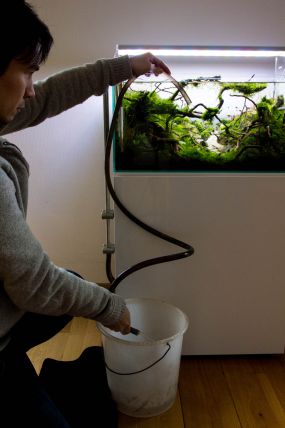
The so-called old water (as opposed to fresh water) is the liquid you remove from an aquarium during a water change. Instead of pouring it straight down the drain, the aquarist can consider reusing the water for other purposes. This has certain savings effects on water consumption.
Watering ornamental plants
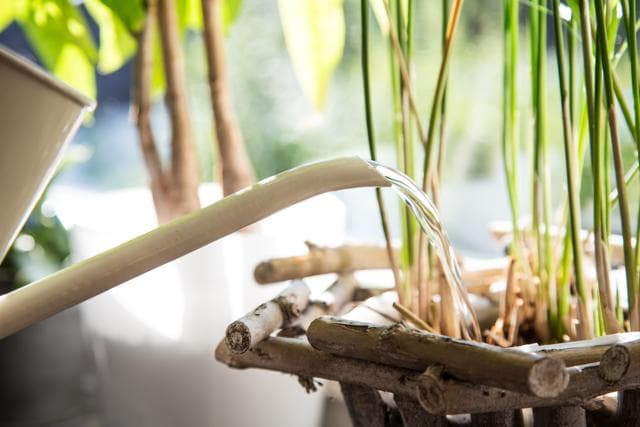
Old water from the aquarium is often enriched with macronutrients such as phosphate and nitrate. If it comes from a planted aquarium, it can also contain further nutrients such as potassium and trace elements such as iron. It is therefore considerably richer than tap water and can be a well pre-fertilized water that you can use to water your ornamental plants at home. Some caution is advisable, however, if the nitrate content is extremely high or the water has a high hardness. Some houseplants can react negatively to the high nitrogen content or the many minerals caused by the water hardness. As a rule, though, most ornamental plants are happy about the nutrient-rich water and grow considerably better as a result.
Watering the garden
Just like your houseplants, you can also supply the ornamental plants in the garden with the old aquarium water. As with indoor plants, you should give some consideration to water hardness and nitrate content as to whether the plants in the garden tolerate it well. Especially in summer, at corresponding temperatures, the plants in the garden have a higher need for watering. The old water from the aquarium can be used well here. Preferably, you don't water the flowers with it in the direct heat of midday, because the evaporation effects are then too strong. Somewhat shadier times such as morning or evening would be better here.
For use in a garden pond, such water is sometimes too rich in nutrients and is therefore better suited for ordinary garden plants.
The old-water aquarium
Another possibility would be to do without fresh water as far as possible, in order to achieve savings and also a reduction in work. This brings the concept of the old-water aquarium into play. Here, little to no water is changed. To compensate for the cleaning effect and the benefits of a fresh water exchange, you should take a few steps. For example, a certain amount of water evaporates from time to time. You should top it up, preferably with demineralized water, so that the mineral content in the aquarium does not rise any further. Correspondingly well-reinforced filtration, above all with biological filter media, makes sense to optimize the breakdown of pollutants in terms of the nitrogen cycle. Filter materials such as Purigen or special water conditioners that can be added from time to time also help to improve water quality. Excess nutrients such as nitrate and phosphate, which arise as end products of certain metabolic processes in the aquarium, can be consumed by skillfully introduced aquarium plants. They also produce oxygen through their photosynthesis and contribute greatly to the biological balance of every aquarium.
To lower the germ pressure in the old-water aquarium, appropriate sterilizers such as the products from Twinstar, an oxydator or a UV-C clarifier are recommended. In some cases they also raise the redox potential by introducing oxygen and thereby increase the self-cleaning effect in the aquarium.