 Tips for Long-Running Aquariums
An aquarium is a living biotope - and just as in nature, entirely individual processes develop over time in our glass tanks too. The longer an aquarium has been running, the more serious the effects of changing conditions can be: bacterial cultures stabilize, plants grow together more densely, but algae, detritus and nutrient imbalances can also make themselves felt. Anyone who runs a tank for many months or even years should therefore keep a few basic things in mind. In this article, you will learn what matters for long-running aquariums, which challenges can arise and how to keep your aquascape healthy and stable in the long term.
Exhausted soil
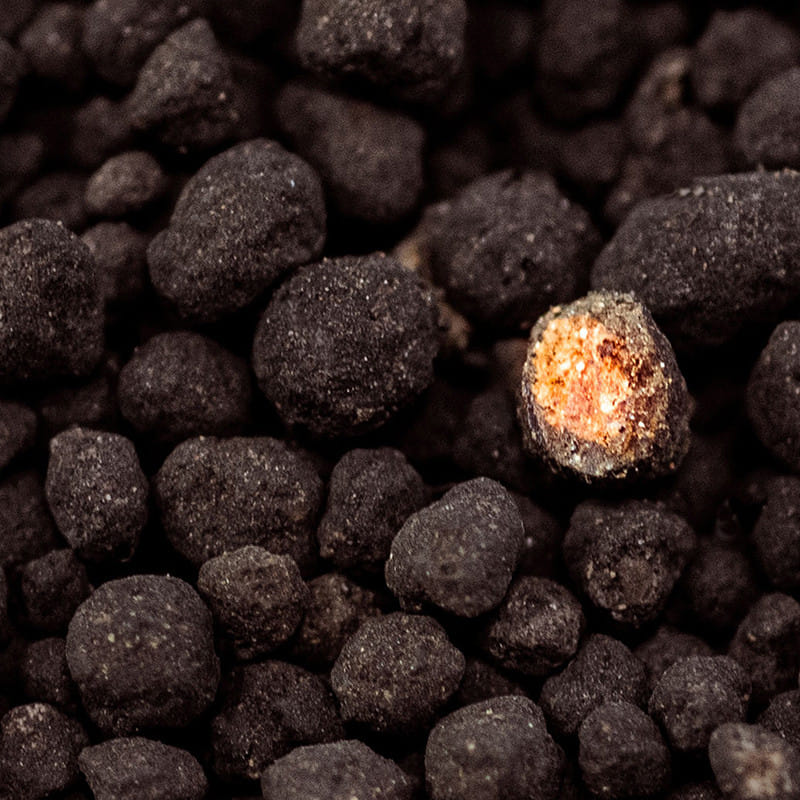
Aquarium soils actively release nutrients (mainly nitrogen and trace elements) into the water during the first weeks to months. After a long running time, this supply is exhausted - the soil is "spent". The result is then often: plants show deficiency symptoms, growth stagnates, and algae can take hold more easily. It is then advisable to first measure all important nutrient parameters with water tests. As suitable measures, we recommend countering this with targeted liquid fertilization and substrate fertilizers (for example fertilizer balls or fertilizer tabs). If the substrate is very old and compacted, a partial replacement of the soil can make sense.
Adjusting fertilization
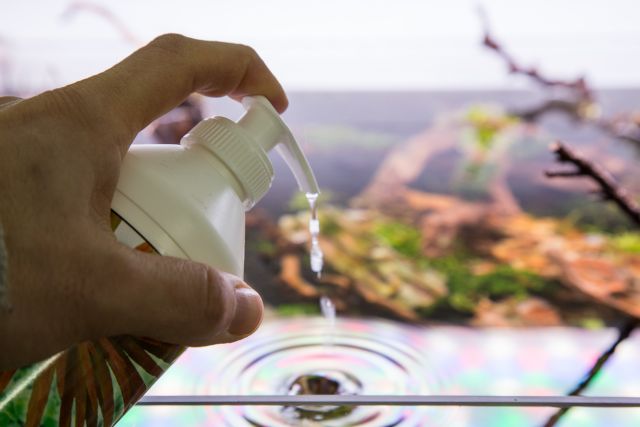
The nutrient balance changes over time. Plant mass, food input and stocking work together. Above all, the stock of aquarium plants becomes denser and therefore hungrier and hungrier for nutrients. Signs that an adjustment is needed are deficiency symptoms such as yellow leaves (often a nitrogen deficiency or a lack of carbon dioxide). We therefore recommend checking the water values at regular intervals and adjusting the liquid fertilization accordingly. It is also better to fertilize small amounts more often rather than large doses irregularly.
Trimming / replacing plants
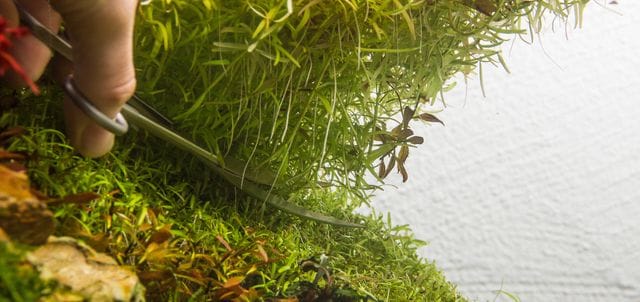
In older tanks, stem plants in particular often become senescent: the lower areas go bare while only the shoot tips stay healthy. These are usually removed during trimming, though. Cutting back the plants is important so that plants sprout anew and grow bushier. From time to time, though, you should also rejuvenate a plant bush. In doing so, old, unsightly plant parts are removed consistently and the top cuttings are replanted. Effect: the aquarium stays vital and light-permeable, and algae have less to attack.
Detritus / filter
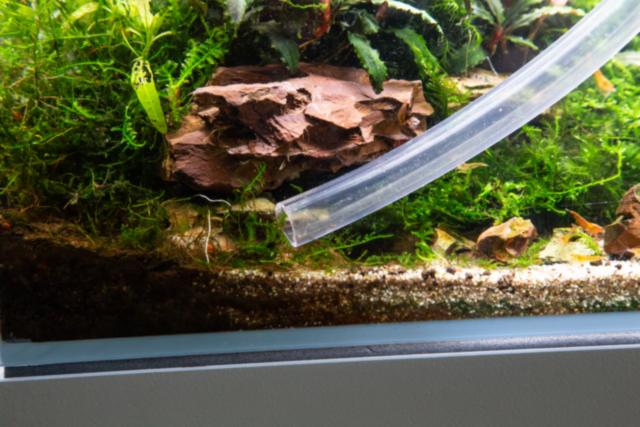
Over the years, a lot of organic material (detritus) accumulates in the substrate and filter. Detritus is useful for an aquarium in moderation (as a nutrient source and microfauna), but a burden in excess. During the water change, you should therefore siphon it off in a targeted way, especially in "dead zones" where there is little current. This also applies to plant and food remains. These should likewise be removed to avoid a heavier water load.
Regarding filter cleaning: rinse the filter media regularly, but never replace or clean all of them at once. It is recommended to clean them only in aquarium water. To preserve important bacterial cultures, you should always replace or clean only a portion of the filter materials. Tip: keep an eye on the filter's flow rate - if it drops, cleaning is needed, especially of the hoses and pre-filter media.
Stocking
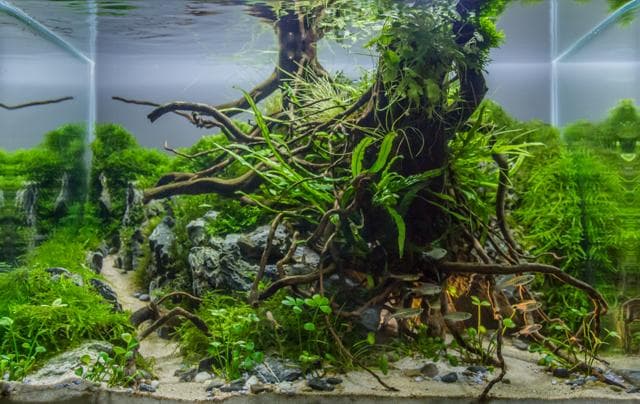
As running time increases, the animal stock also ages. One consequence of overaging in the aquarium can be that older animals become sick or die over time. Old fish are more susceptible to disease and die more often, which can lead to sudden load peaks. It is therefore important to remove carcasses in good time and to top up the fish stock with new ornamental fish.
Another important topic is reproduction. Some species (for example Neocaridina shrimp or guppies) breed prolifically - this raises the biological load in the tank, because more animals also need more food and produce more waste. You should therefore better avoid overpopulating the aquarium and, if necessary, give some animals away to, for example, fellow aquarists.
Regarding feeding, too, you should adjust the amount of food regularly to the current stocking in order to avoid overfeeding and nutrient surpluses. You should always add only as little fish food as the animals can eat within a few minutes. Leftover food should then be removed from the aquarium. Also provide varied food and a few fasting days to strengthen the vitality of the aquarium inhabitants.