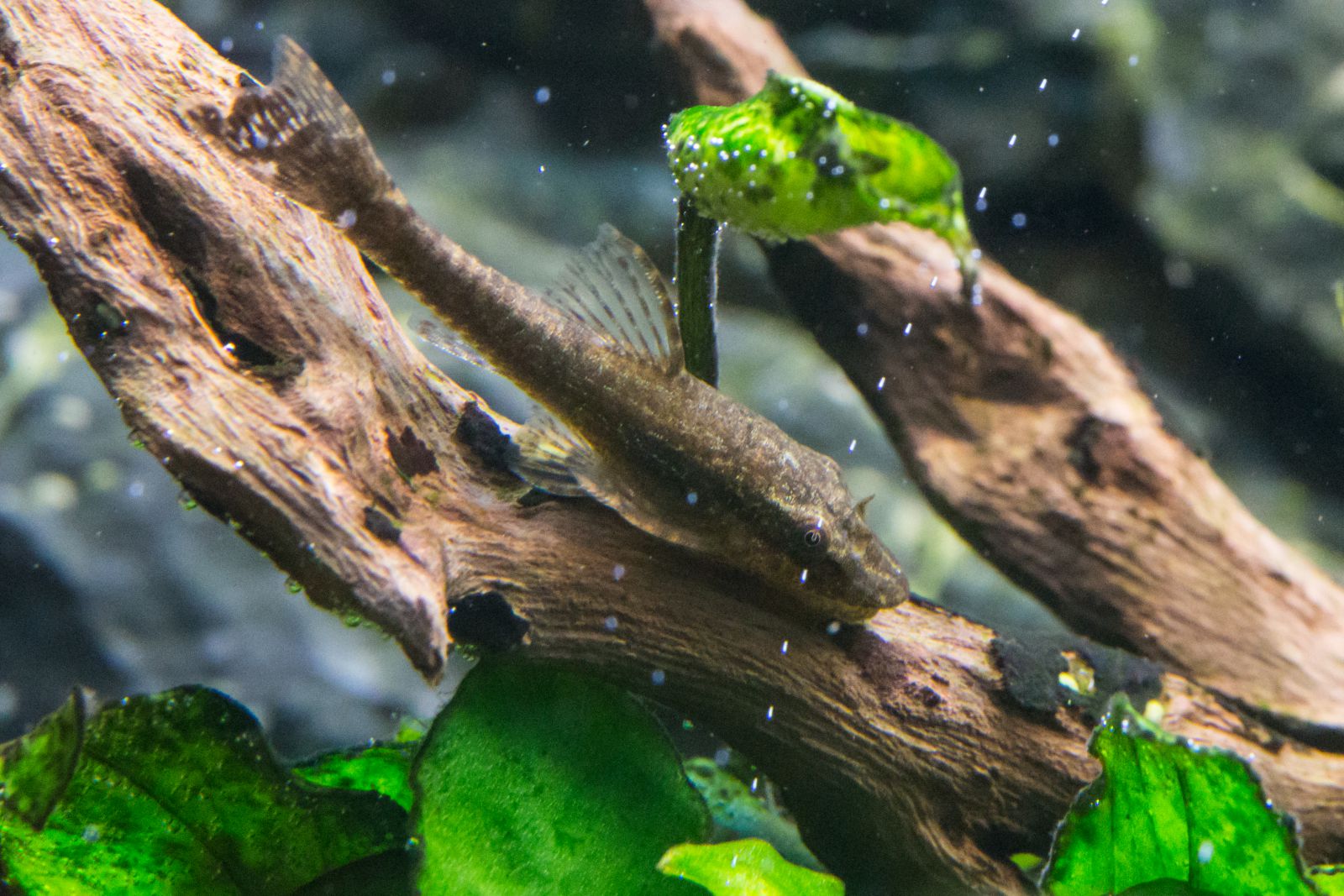
 The catfish aquarium
Catfish are simply part of an aquarium. Plecos in particular are often part of a South America aquarium, but catfish are also part of the typical stock in classic community aquariums as peaceful bottom fish. Catfish are extremely diverse. There are around 3,400 species, divided into various families. These include, for example, Corydoras, the popular armored catfish, which we described in more detail in a separate article. In the article that follows, however, we want to focus rather on the "suckermouth catfish", such as the popular Ancistrus. So here we are primarily dealing with the so-called plecos. The family of armored suckermouth catfish (Loricariidae) is particularly rich in species and contains many different ornamental fish, mainly from Central and South America.
Keeping plecos in the aquarium
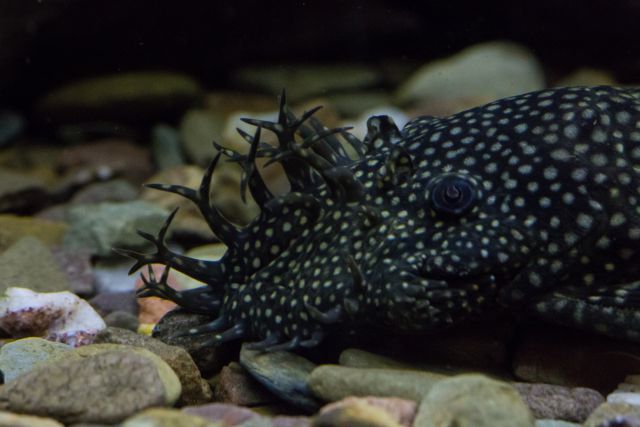
Plecos are very popular ornamental fish in the aquarium hobby. They have a typical sucker mouth with which they can hold on to the glass or to hardscape such as driftwood in the aquarium. The catfish also often graze on biofilms on these objects, and some are considered excellent algae eaters, such as the well-known otocinclus. However, not all plecos are pure plant eaters, and they have quite different dietary requirements in some cases. Likewise, there are sometimes great differences in aquarium keeping. Besides diet, this has to do in particular with the adult size to be expected and which water values the animals are used to. Many catfish are above all bottom dwellers and appreciate a fairly generous floor area in the aquarium, rounded off by a few hiding places.
Quite a few species from South America are used to fairly warm water. In addition, it should as a rule be as soft as possible and have a slightly acidic pH value. Adding humic substances is also beneficial to increase the animals' well-being and keep conditions as natural as possible. The water should be as low as possible in germs and pollutants. This requires regular maintenance measures such as water changes, but also good biological filtration, to provide the catfish with good conditions. Depending on the species, certain catfish also love current and appreciate suitable water movement near the bottom. This can be implemented with a circulation pump.
Catfish are often very sociable animals and should therefore be kept at least in pairs or even in a group. They are generally peaceful inhabitants of an aquarium; at most, territorial disputes can occasionally occur within a species. Many catfish species are rather nocturnal and go looking for food at dusk. During the day they often lie hidden in their caves. Plecos can generally be kept well with tetras and cichlids that also come from South America, as they then prefer similar water values. Catfish are rather bottom animals, while tetras and dwarf cichlids occupy the upper and middle water layers. With some consideration for the size and feeding habits of the various animals, such a combination can generally take place without problems.
Decoration in the catfish aquarium
When keeping plecos, sharp-edged objects should be avoided as far as possible to prevent injuries. Some species also have sensitive barbels that could otherwise be injured. A fine and correspondingly soft substrate with rounded particles is preferable. This includes types such as sand, gravel, but also soil. Most catfish species need hiding places in the form of caves or driftwood for their well-being. Suitable driftwood in particular additionally serves to structure the aquarium and supplies important humic substances. Some catfish species also need wood for their diet. Without wood, or corresponding food with a wood content, digestive problems can otherwise occur in catfish. The reason is the lignin contained in wood. This is broken down in the animals' intestinal tract by special bacteria, which then supply important vitamins, amino acids and essential fatty acids as products of their metabolism. These are vital for the suckermouth catfish. Besides driftwood in the aquarium, leaves can also be offered as suitable food, in order to make the environment in the aquarium natural and to provide suitable plant-based food.
Aquatic plants can be present but don't have to be. Large-leaved aquarium plants such as Echinodorus are typical for a South America aquarium, but suckermouth catfish in particular sometimes help themselves to them as a food source. Feeding damage is then often visible on such aquatic plants. The risk can be reduced by targeted supplementary feeding with sufficient fresh plant-based food. It cannot be ruled out entirely, though, that the catfish go after aquarium plants. If you still want to green up the aquarium, "cichlid-proof" varieties of aquatic plants are also well suited for a catfish aquarium. These include above all anubias but also some ferns. However, many of these plant species are native to Africa, so the aquarist cannot create a "true" South American biotope when it comes to planting.
Feeding catfish correctly
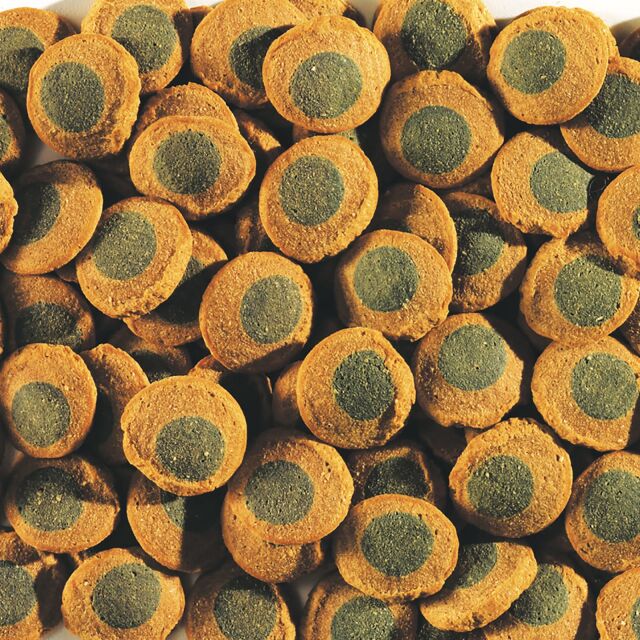
No blanket statement can be made about the diet of plecos. Many species feed on plants and should be fed accordingly. Besides catfish tablets with, for example, spirulina, fresh plant-based food, for instance in the form of cucumber pieces, zucchini or blanched spinach (all organic quality), is a welcome variety in the fish food. Leftover food should be removed straight away, however, to keep the water load low. For many catfish species, food with a wood content or the presence of driftwood in the aquarium is important to maintain healthy digestion with an intact gut environment.
There are certainly some species of catfish that need meaty supplementary food or even feed predominantly carnivorously. Appropriate to the size of the animals, the usual live and frozen foods can be used here, preferably those that sink to the bottom and can be taken up there by the catfish. But dry food such as granules, tablets or sticks is also gladly accepted.
Breeding & reproduction
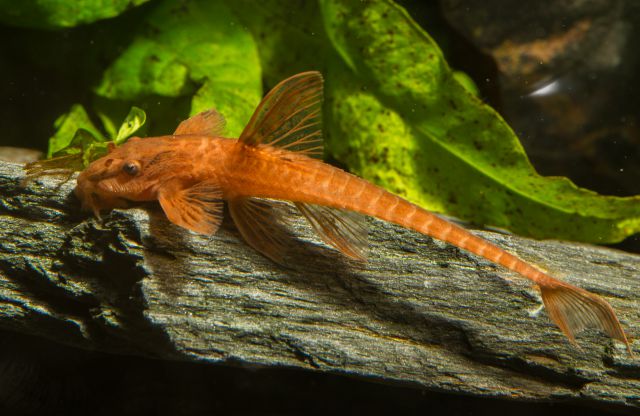
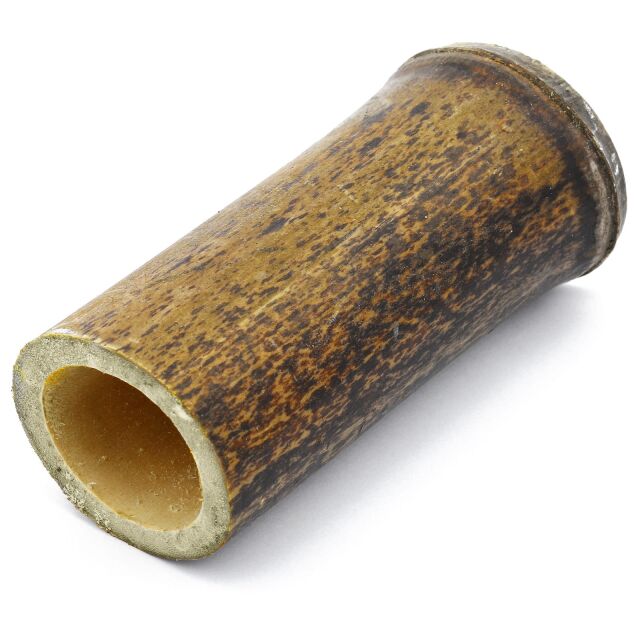
Breeding catfish is not always considered easy. Catfish often react to stress and rearrangement in the aquarium in such a way that pairing can sometimes require a lot of patience. Some plecos, however, such as the blue bristlenose pleco, even spawn spontaneously in a community aquarium when conditions are right. This above all includes suitable water values with an acidic to slightly acidic pH and low hardness. This depends strongly, however, on the needs of the respective species. Caves are gladly accepted as spawning sites (or even dug out themselves), as are hiding places made of stones and driftwood. Suitable caves are often tubes closed at one end, of a length matching the animals. Until the young hatch, most catfish species provide brood care, usually the males.
After the young hatch, they usually live off the yolk sac for a few more days. After that, the young catfish can be fed with infusoria, powder food, Artemia nauplii or other mouth-sized food that sinks well to the bottom. The young only take food that is in their immediate vicinity. Targeted local feeding is helpful here, as is housing the young in, for example, hang-on breeding boxes, so that feeding can be controlled for the first period. With increasing age, size and vitality, feeding the young catfish becomes less complicated, and more ordinary food can then be used.