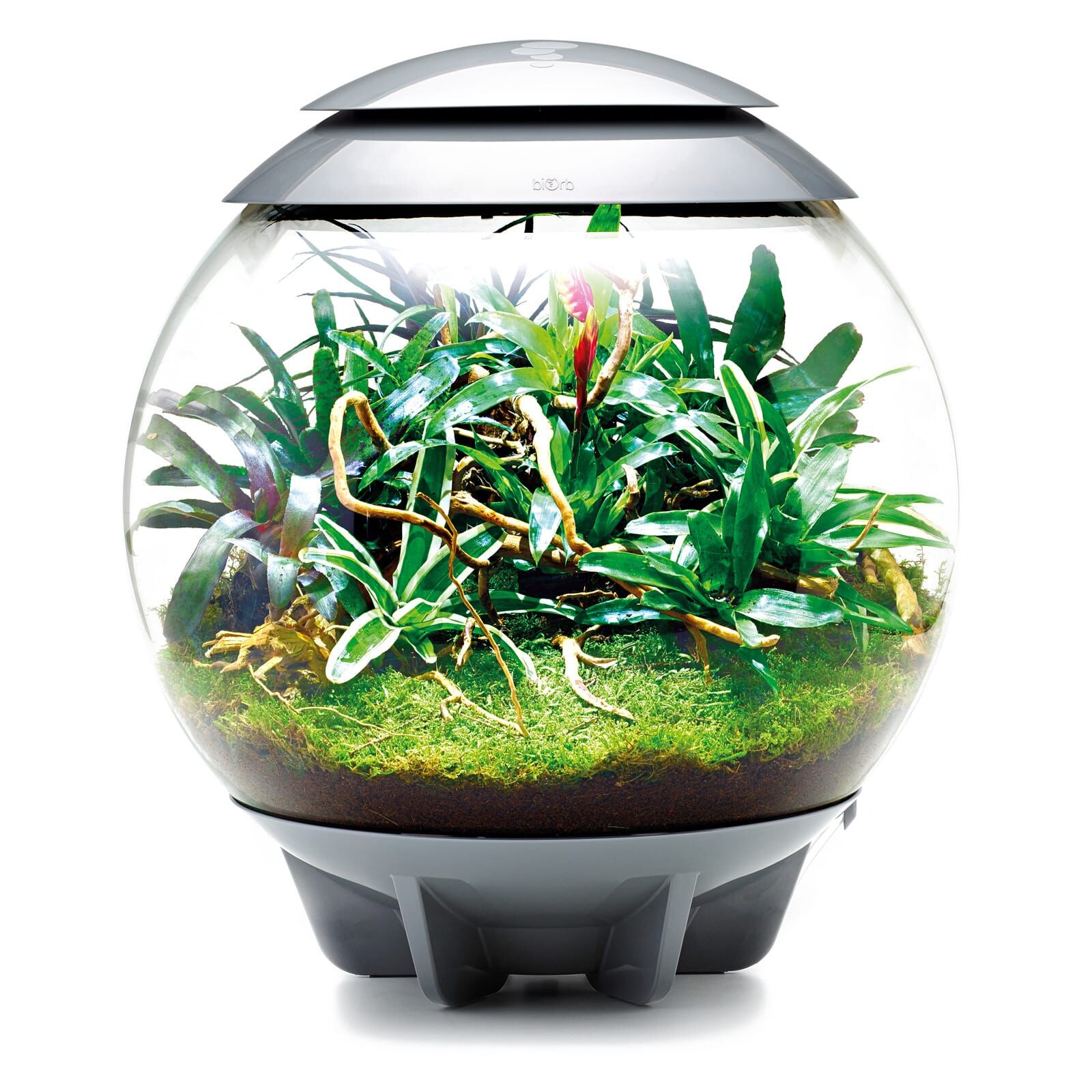
 Terrascaping
What is terrascaping, actually? Aquascaping may be a familiar term for many, and terrarium keeping surely is too. With the rise of Wabi-Kusa and other similarly attractive-looking designs of aqua-terrariums, the term terrascaping came about. In this article, we explain it in more detail.
What does terrascaping mean?
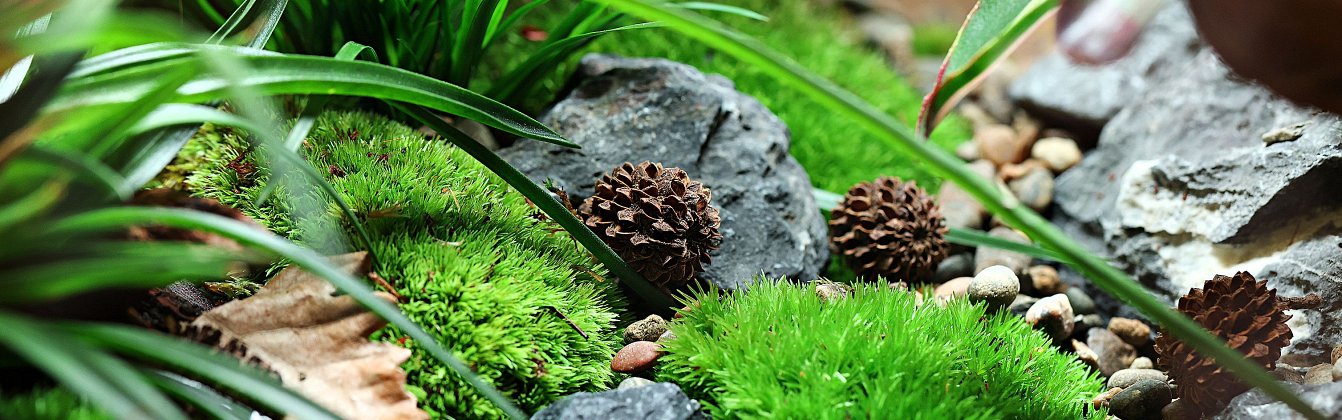
Designing terrariums under the aesthetic concepts of aquascaping - that could be summed up under the heading of terrascaping. As in an aquarium, the aim is to combine natural decorative materials such as driftwood, stones and caves with substrate and above all plants into a successful, harmonious-looking composition. As in aquascaping, aids and stylistic devices such as working with the golden ratio or creating a sense of depth are often used here. Of course, the needs of the inhabitants and of the plants used should also be taken into account in the design.
The name terrascaping is also derived from aquascaping, which is short for "aquatic landscaping". This means creating landscape scenes underwater. Terrascaping would then be the short form of "terraristic landscaping", which thus stands for designing landscapes in a terrarium.
Aqua-terrariums
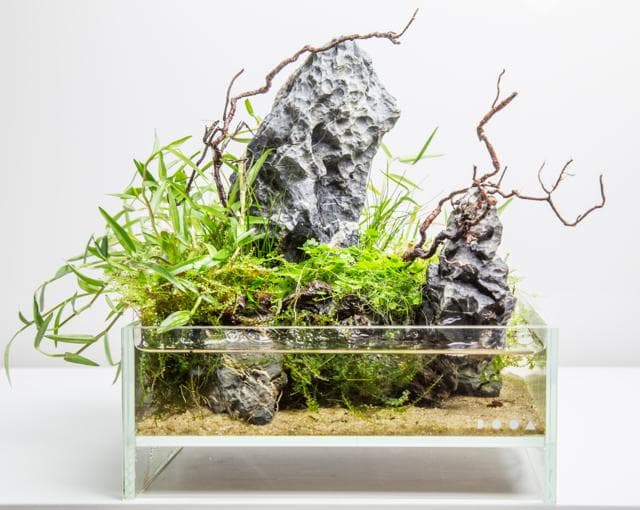
Aqua-terrariums hold a certain special status. These are terrariums that also contain an underwater section in addition to the terrestrial one. A more precise distinction is made here between paludarium (swamp aqua-terrarium with high humidity), rivarium (stream aqua-terrarium), riparium (riverbank aqua-terrarium) and insularium (aqua-terrarium with an island-forming land section). Paludariums serve above all to keep tropical amphibians and reptiles. A high, rainforest-like humidity is aimed for here. In a rivarium, frogs, newts or other amphibians are often kept.
Through the Wabi-Kusa introduced by Takashi Amano and ADA, a trend was created that originates from aquascaping and deals more with keeping aquatic plants emersed in an aqua-terrarium. Under the subsidiary brand DOOA, stylish glass containers and accessories were designed here that correspond to the aesthetic principles of ADA Amano. Products like the Terra Base or the Neo Glass Air aqua-terrariums stand out strongly in their innovation. Very small glass containers for aqua-terrariums, which basically correspond to a nano aquarium, are also implemented stylishly by manufacturers such as DOOA, Bioloark or ONF.
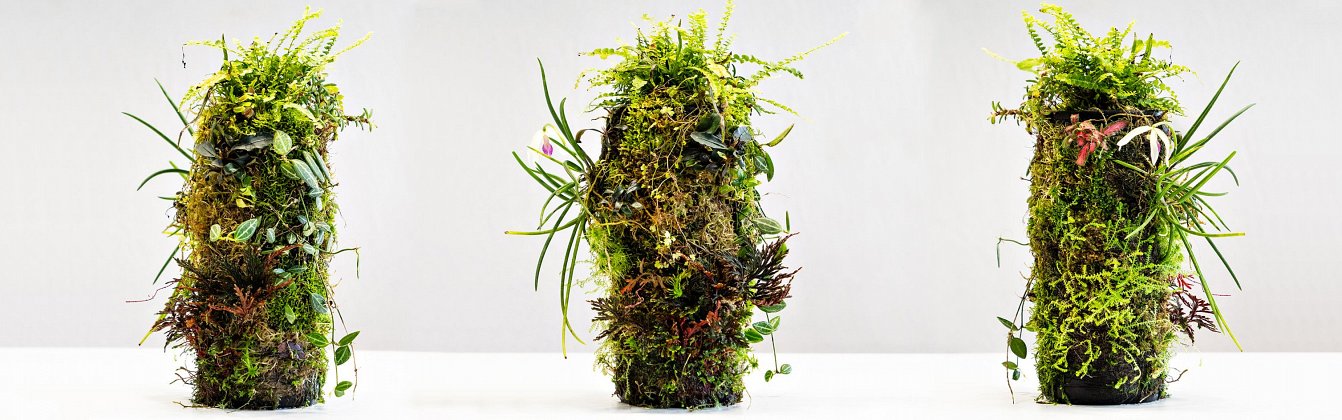
Plants for terrarium keeping
Aquatic plants
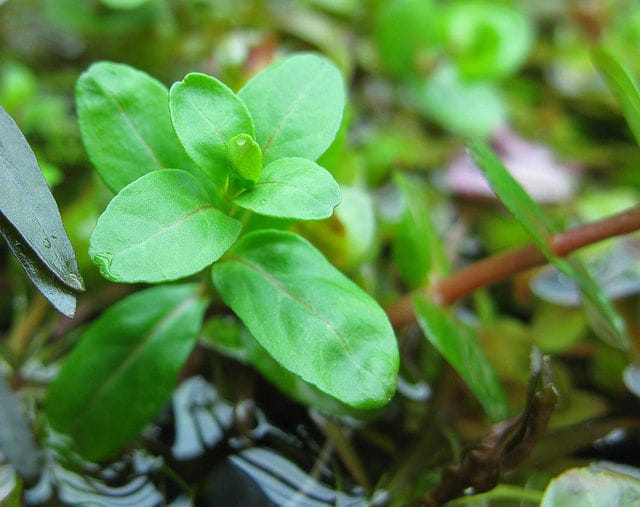
Classically, aquatic plants are used in an aquarium. If an aqua-terrarium has a corresponding water section, the plants can be used there submersed. Beyond that, aquatic plants in their emersed state can also be used well for the transition zone at the bank, or for the land section as greenery, if sufficiently high humidity is present.
Mosses
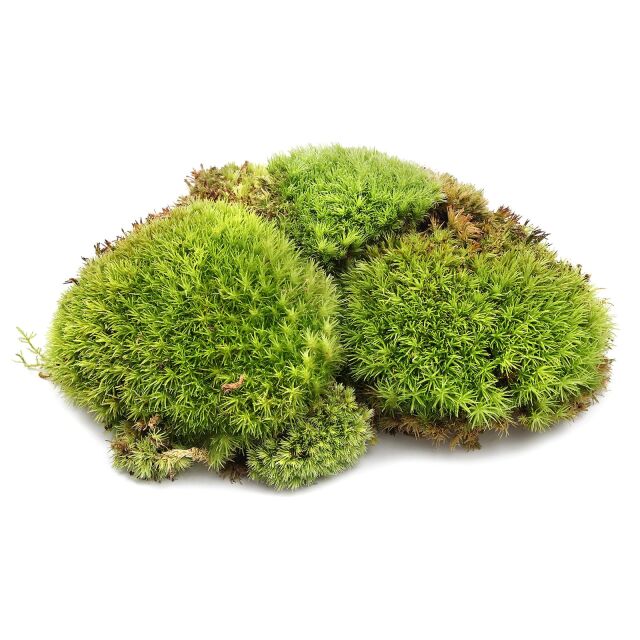
Mosses such as cushion moss are a good option for the natural-looking decoration of a terrarium. They make good moisture reservoirs and are very easy to keep. They can also simply be placed as cushions on the ground or tucked in between hardscape. In addition, you can, for example, tuck epiphytes quite well into moss cushions to give them hold and moisture that way.
Epiphytes
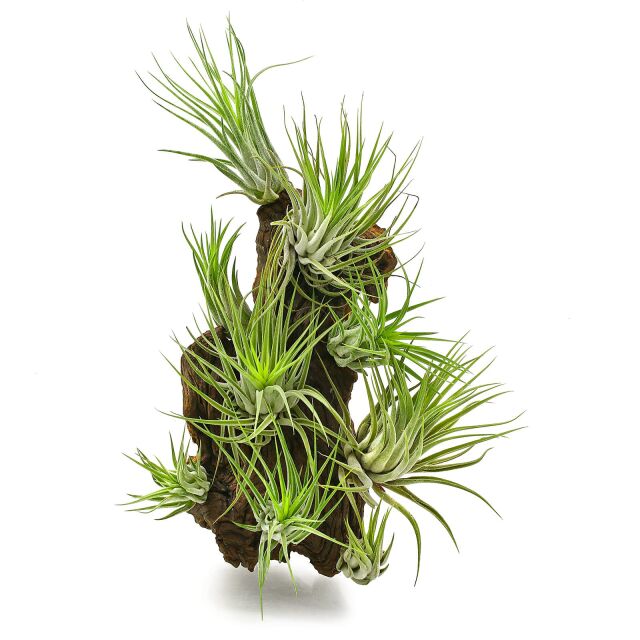
Epiphytes are not planted in substrate but grow on stones or wood in the terrarium. Epiphytes are widespread especially in tropical zones. The so-called epiphytes include, for example, air plants (Tillandsia), bromeliads and orchids. The roots of epiphytes often serve as attachment organs and ensure a stable hold.
Ground plants
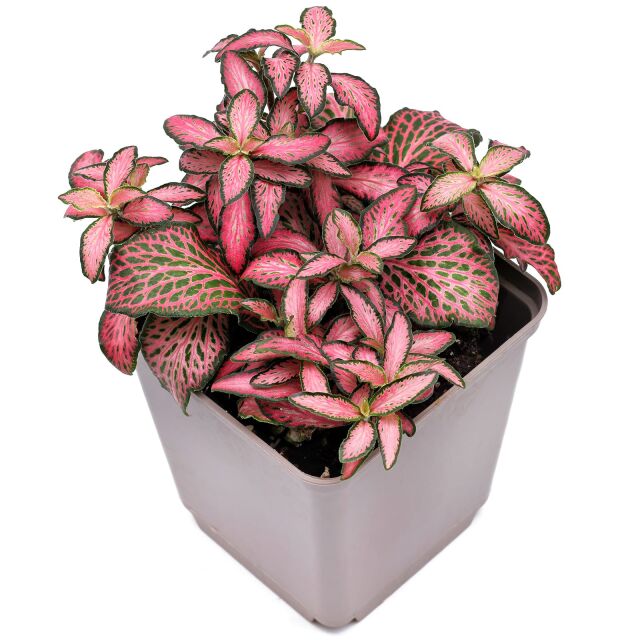
Suitable terrarium plants for the ground exist for different climatic conditions. Often small-staying and herbaceous plants are used here. Certain ground plants can also be used as accents for terrarium back walls, such as the colorful jewel orchids. As a rule, ground plants don't need a great deal of light because of their location.
Woody plants
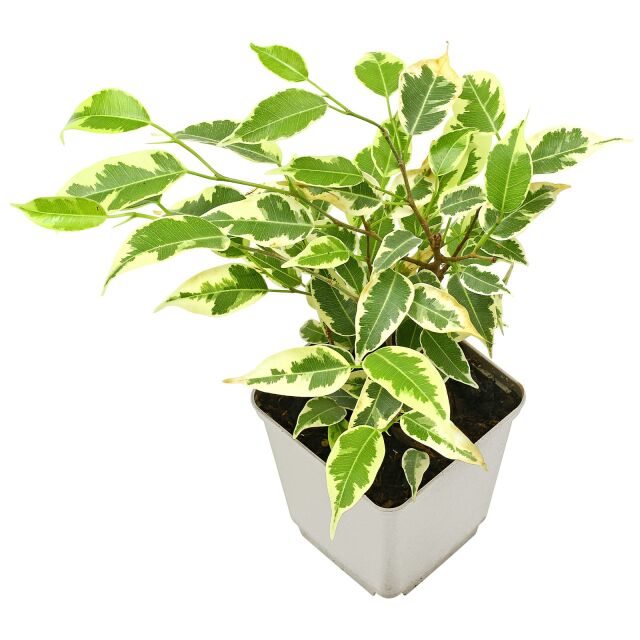
So-called woody plants form a long-lived, lignified shoot axis and count among the trees and shrubs. Examples include the rubber tree, croton or various Ficus species. Woody plants are suitable for different kinds of terrariums and can be kept small and in shape by regular trimming.
Carnivorous plants
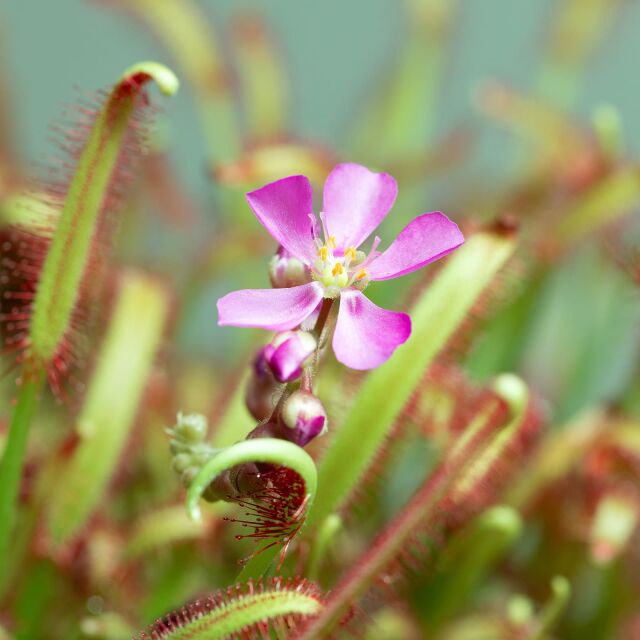
Carnivorous plants such as the popular sundew are referred to as carnivores and can be kept well in a terrarium. These plants mostly need acidic and moist soils that are rather low in nutrients. A mixture of peat and sand is often the preferred choice here. Strong lighting is also recommended. Carnivorous terrarium plants are of course a very interesting choice in terms of their nutrition. They also form beautiful color contrasts and in some cases very pretty flower stalks.
Marsh plants
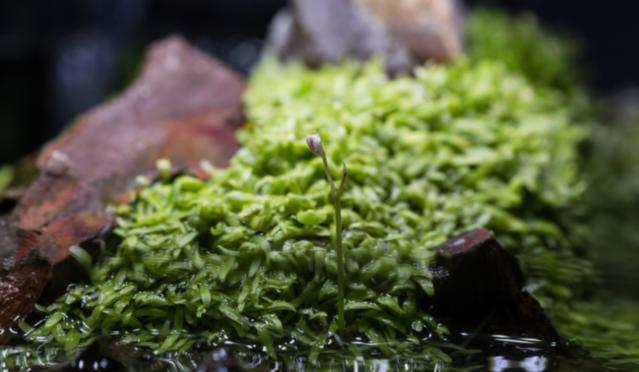
Marsh plants are well suited for wet soils. These include many aquarium plants, since besides the underwater form (submersed) they can also develop an above-water form (emersed). Examples of marsh plants are various bladderwort species or the popular variegated grassy-leaved sweet flag.
Climbing plants
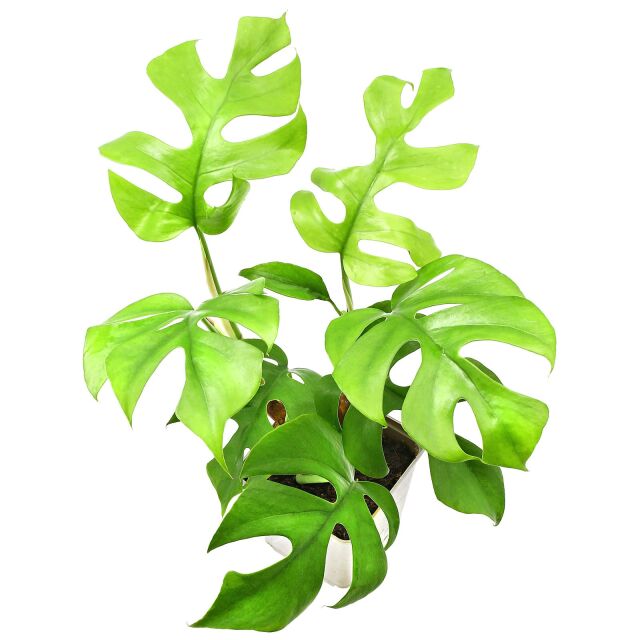
Climbing plants are a great enrichment especially for larger terrariums and create the right "jungle feeling". Climbing plants include numerous varieties of pothos or Monstera, among others. As a rule, these plants need quite high humidity and a support structure. This means, for example, a piece of wood to which the plant can attach itself and climb up. In some cases, climbing plants can also be planted in loose substrate.
Succulents
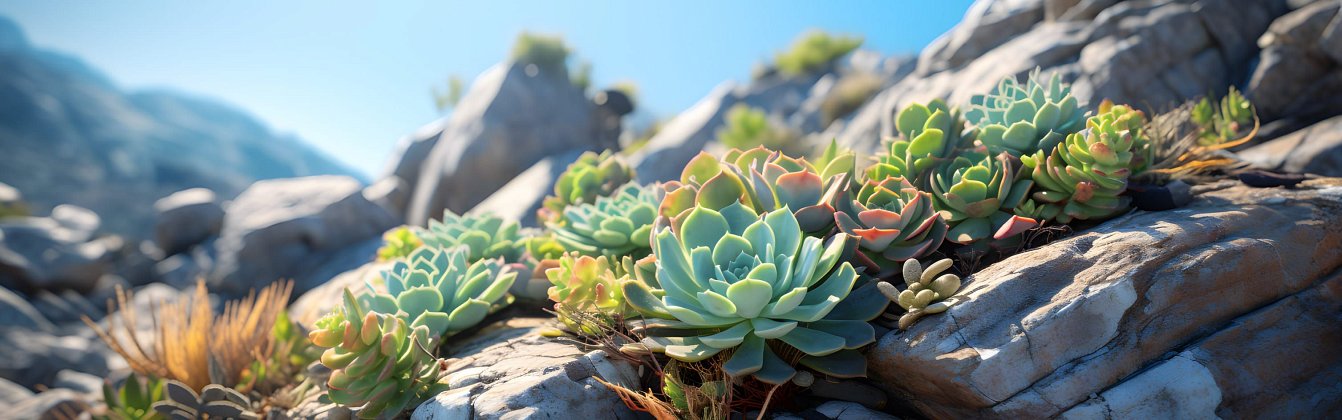
If a design should be a bit "drier" for once, so-called succulents are suitable. These plants can store water well, are therefore juicy and thus get by with relatively little watering. This also includes some tropical cactus species such as the coral cactus. Depending on the species, succulents can be used in loose, sandy soil or even as epiphytes on wood or stone.
Terrariums and accessories
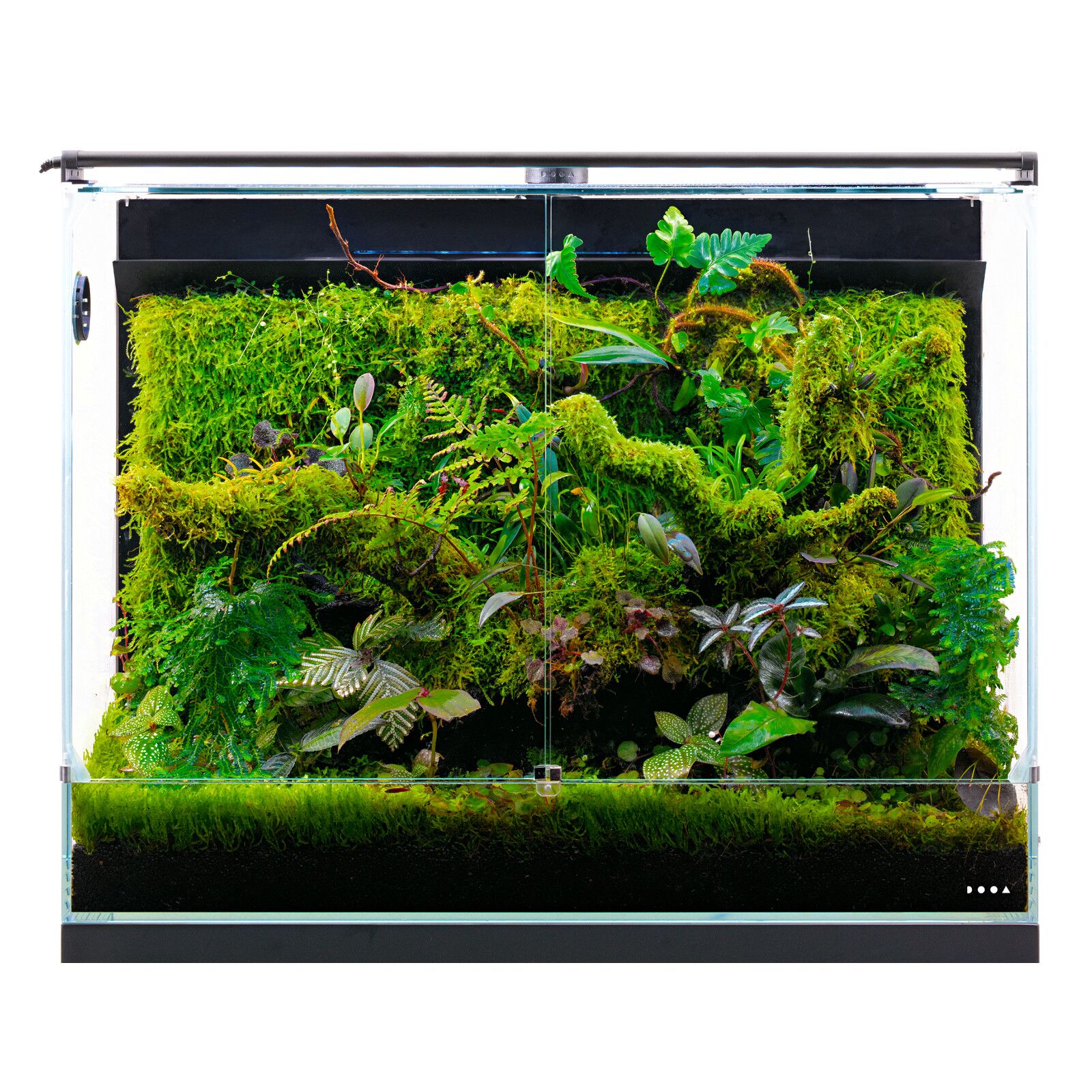
Besides the matching plants, in our shop you will also find terrariums, aqua-terrariums and other planters for your next emersed project. Our terrascaping section also offers the right substrate and decorative materials, as well as terrarium equipment. This includes, for example, lighting, pumps, and options for ventilation and humidification of a terrarium.
Looking for inspiration?
No problem, our Aquascaping Wiki also offers some great articles about terrascaping, such as a presentation of the biOrb Air 60. Designs in the Neo Glass Air can be found here and here.
What exactly is a paludarium? We answer this question in detail in this article. We also introduce some well-known terrascapers, such as Jonas Loose in our interview.