 Small terrarium plants
Small terrariums have recently become more and more popular. These glass containers, which in terms of size belong more in the nano to pico range, make a stylish home for terrarium plants and emersed aquatic plants (keyword: Wabi-Kusa). The stylish glass containers from Bioloark or the DOOA Glass Pot SHIZUKU are especially popular. To find suitable plants for terrariums of this size at all, we have created this guide.
Macodes
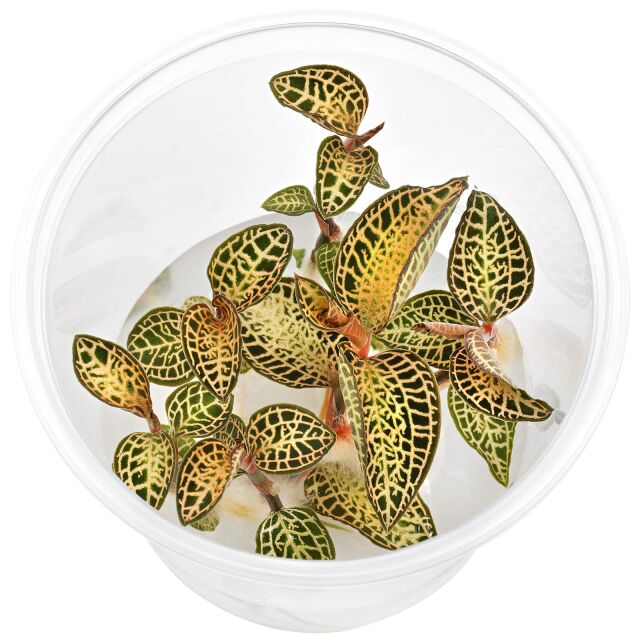
Macodes plants are also known as jewel orchids. They are impressive terrarium plants that stand out above all for their glossy, decorative leaves. They come in various color variants, such as "Goldnetz", "Silbernetz" or "Firebird". These small, ground-dwelling orchids are native to the humid, shady rainforests of Southeast Asia. They reach a small size of only around 15 cm and are therefore well suited as a solitary eye-catcher for small terrariums.
A Macodes needs a loose substrate for cultivation, ideally consisting of a mixture of orchid bark and sphagnum moss. Alternatively, it also grows in other air-permeable substrates or directly in cushion moss. This plant thrives especially well at constantly high humidity and is therefore excellently suited to terrariums or similar planters. It is not strictly necessary for the containers to be covered. The jewel orchid prefers permanently warm temperatures and should not be exposed to temperatures below 15 °C.
Cushion moss
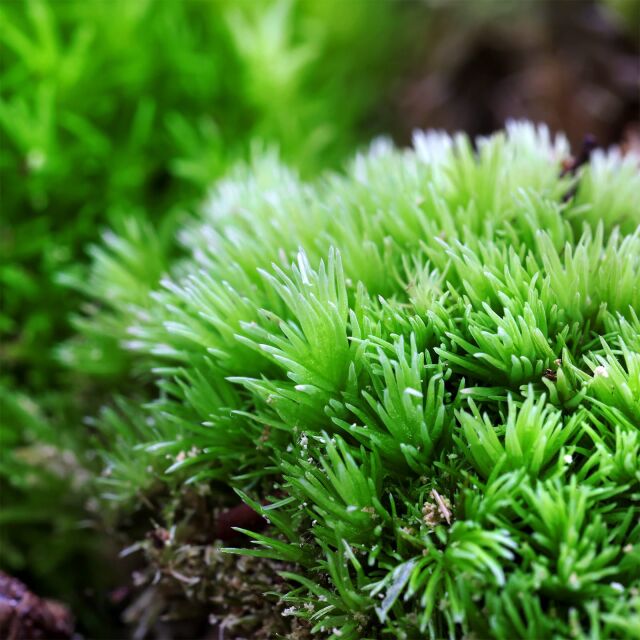
Of course, moss must not be missing in a small terrarium either. It forms an ideal basis for the design and serves as a moisture reservoir. It also creates a very natural impression. Certain plants can even be tucked into cushion moss as a substrate substitute. Cushion moss refers to the cushions of the white cushion moss or pincushion moss (Leucobryum glaucum). This acrocarpous moss grows naturally on acidic forest floors. Its dense, domed cushions look glossy light green when moist and dry to a whitish color.
Ophiopogon japonicus 'Kyoto Dwarf'
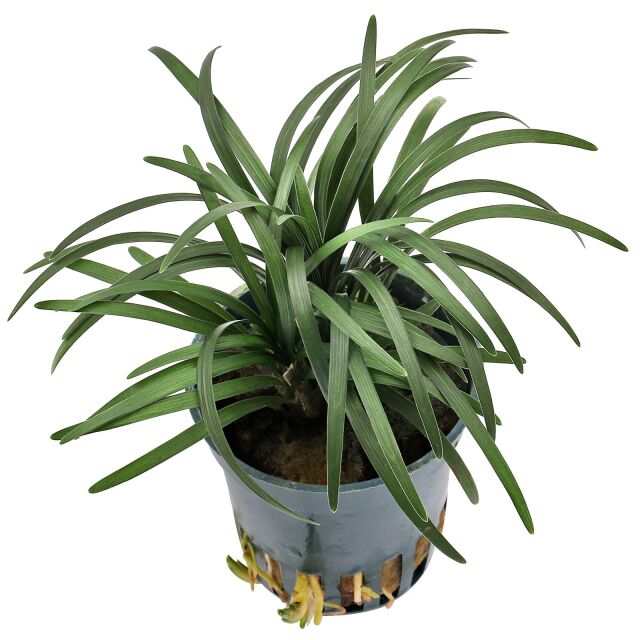
This small grass-like terrarium plant is robust, resilient and shade-tolerant, which makes it suitable for various types of terrariums. Dwarf mondo grass can be used in many ways, including as a lawn-like ground cover. Although it originally comes from subtropical to warm-temperate regions with cool winters, it also thrives in tropical rainforest terrariums. This plant reaches a height of about 10 cm. Ophiopogon japonicus forms dense clumps or carpet-like stands of narrow, overhanging leaves 2–4 mm wide. It develops underground rhizomes and runners. On short flower stalks, delicate, nodding, light purple flowers appear, which later bear black-blue, spherical fruits.
Fittonia albivenis "Pink"
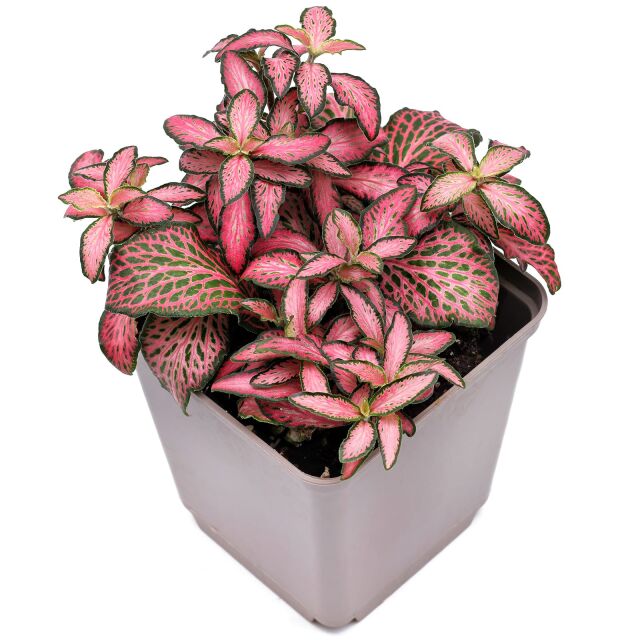
The nerve plant is a beautiful example of the exceptionally diverse acanthus family, which includes numerous decorative tropical forest plants. It is ideal as a ground cover for rainforest terrariums as well as closed containers such as bottle gardens or biOrb. With its spreading shoots, it forms a dense carpet of plants over time. Especially colorful arrangements can be created with the pink variants, together with other Fittonia albivenis varieties such as "White" and "Red". This plant grows about 6 to 10 cm tall.
Bolbitis heteroclita "difformis"
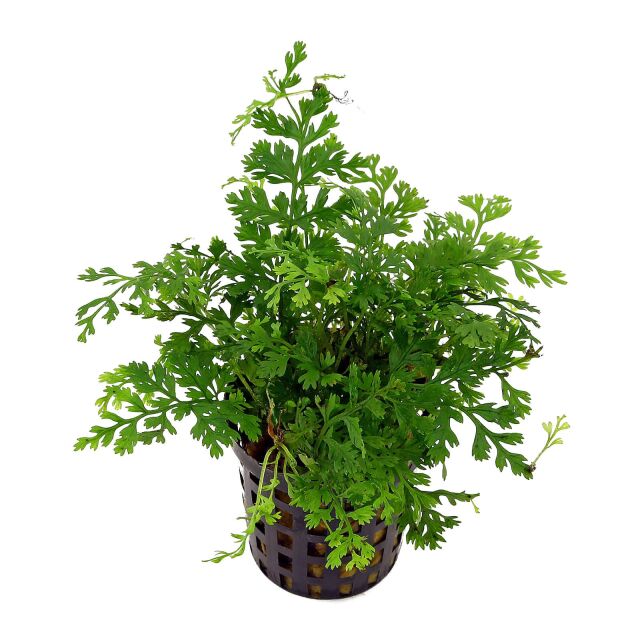
This dwarf fern is better known from the aquarium hobby and grows only slowly underwater, anchoring itself with its roots on the hardscape. The underwater leaves are clearly smaller and less finely pinnate than the emersed leaves. Several young plants often form on older emersed leaves. Bolbitis heteroclita "difformis" is especially suitable for terrariums and paludariums, where it forms a dense carpet over time. It makes no special demands on the substrate, which should always be kept moist but not too wet.
Drosera spatulata
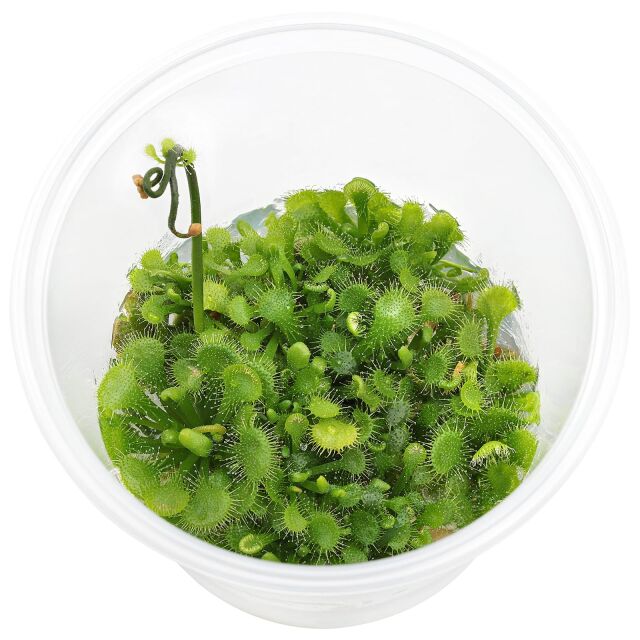
The spoon-leaved sundew comes from Asia and forms rosettes up to 5 cm wide of spatula-shaped leaves densely covered with sticky trapping tentacles. Under intense lighting, the plant takes on striking light red tones. Several pink flowers develop on a flower stalk up to 25 cm tall. Drosera spatulata is considered especially easy to care for and can even multiply strongly in carnivorous plant cultures. It thrives best in a moist, nutrient-poor and acidic substrate, such as a peat-sand mixture. A humidity of 50–75% and plenty of light are ideal. With its compact, often reddish rosettes of leaves, the spoon-leaved sundew is an attractive insect-catching plant for subtropical to tropical terrariums, paludariums or similar containers. It can even grow on vertical, moist surfaces.
Air plants
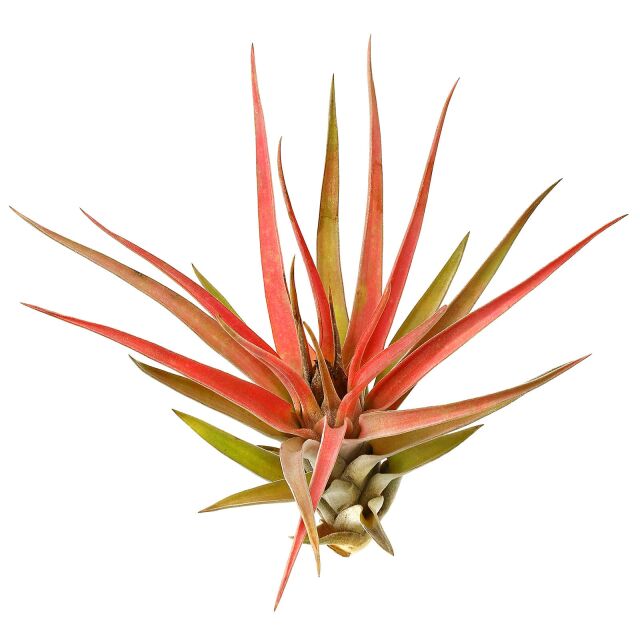
In general, Tillandsias (air plants) are also well suited to a small terrarium thanks to their simplicity and slow growth. Varieties that stay small, such as Tillandsia velutina, Tillandsia ionantha 'Fuego' or Tillandsia ionantha 'Rosea' are highly recommended here. For a terrarium with higher humidity in particular, the green rainforest Tillandsias are suitable, which prefer a more humid climate than the gray Tillandsias. They are ideally attached to a firm surface such as wood or stone. A bright location is optimal, but direct midday sun should be avoided with artificial lighting. The plants should be supplied regularly with soft water, either by dipping or misting, so they can absorb water and nutrients through their trichomes. Make sure that no permanent wetness forms between the leaf bases, as this is not tolerated. The plants should be allowed to dry off between waterings. During the growing season in spring and summer, it is advisable to add a special orchid and Tillandsia fertilizer to every second watering.