 Making your own aquarium fertilizer solution
Besides liquid fertilizers, our online shop also offers various nutrient salts for sale in the corresponding category. You can use them to put together your own fertilizer solutions for planted aquariums. In this article, you will learn what to keep in mind when making them.
Why mix your own fertilizer?
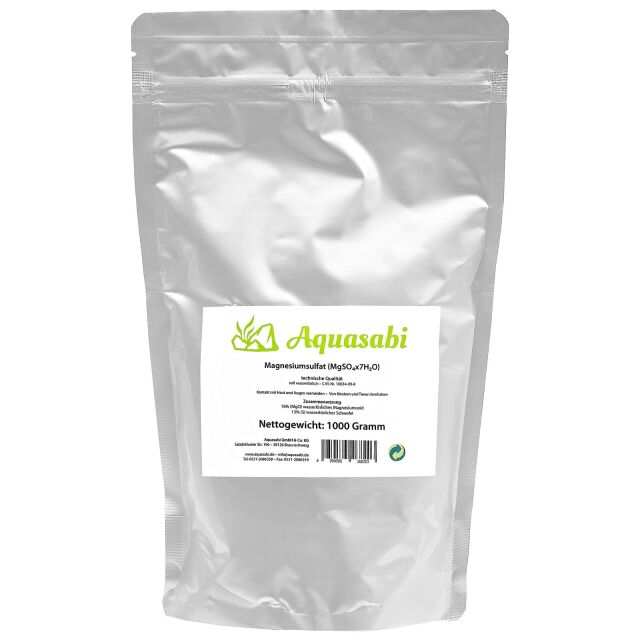
Making a DIY (do it yourself) fertilizer with nutrient salts is a good way, especially for more price-conscious planted-aquarium keepers, to supply the aquatic plants in the aquarium well at a low price. In addition, with the help of fertilizer salts, you can create a tailor-made nutrient composition from various individual components and adapt it perfectly to the needs of the plants in your own aquarium. Not all components can easily be obtained by private individuals, however: for example, nitrogen-containing nutrient salts are, for safety reasons, impossible or very hard to get. In our online shop, we offer nutrient salts in the form of Epsom salt, potassium sulfate, urea and potassium dihydrogen phosphate, among others.
Some nutrient salts such as Epsom salt for magnesium fertilization can even be added to the aquarium directly in solid form, without having to make a liquid fertilizer solution first. The reason is the excellent solubility and the special concentration of the nutrient salt.
To make your own liquid fertilizer for aquariums cleanly, some basic equipment and an understanding of chemical relationships are necessary. Below we give some tips and notes on this.
What do you need to make fertilizer?
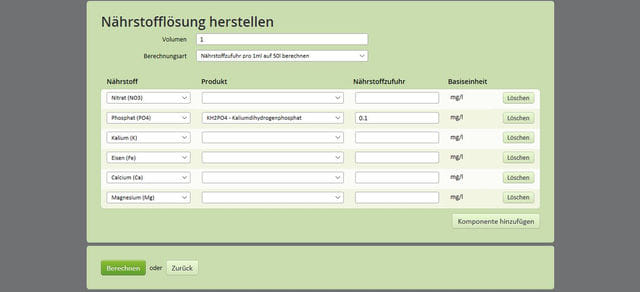
For the calculations for making the fertilizer solution, the nutrient calculator on Flowgrow helps you. With this tool, you can calculate a certain nutrient content as a target value, or a nutrient concentration depending on a certain addition of nutrient salt. Alternatively, you can also calculate the amount of nutrient salt you need to reach a certain target level of x mg/l with 1 ml of the fertilizer solution per 50 l of aquarium water.
In the following example, we want to mix a phosphate fertilizer solution with a volume of one liter. As the solid, we use potassium dihydrogen phosphate. As the desired target level, we selected a value of 0.1 mg/l PO4 here (nutrient supply with 1 ml added per 50 l of aquarium water).
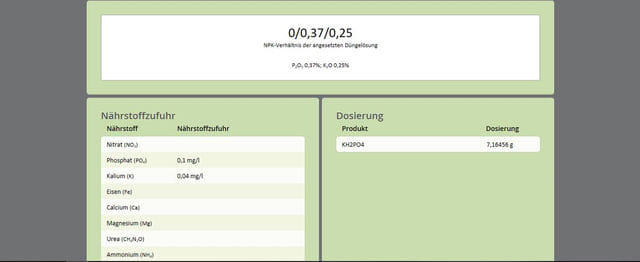
If you now click "Calculate" and then scroll further down, various nutrient values are displayed. In the right column you will also find the required nutrient salt amount of the respective product, which you need for mixing.
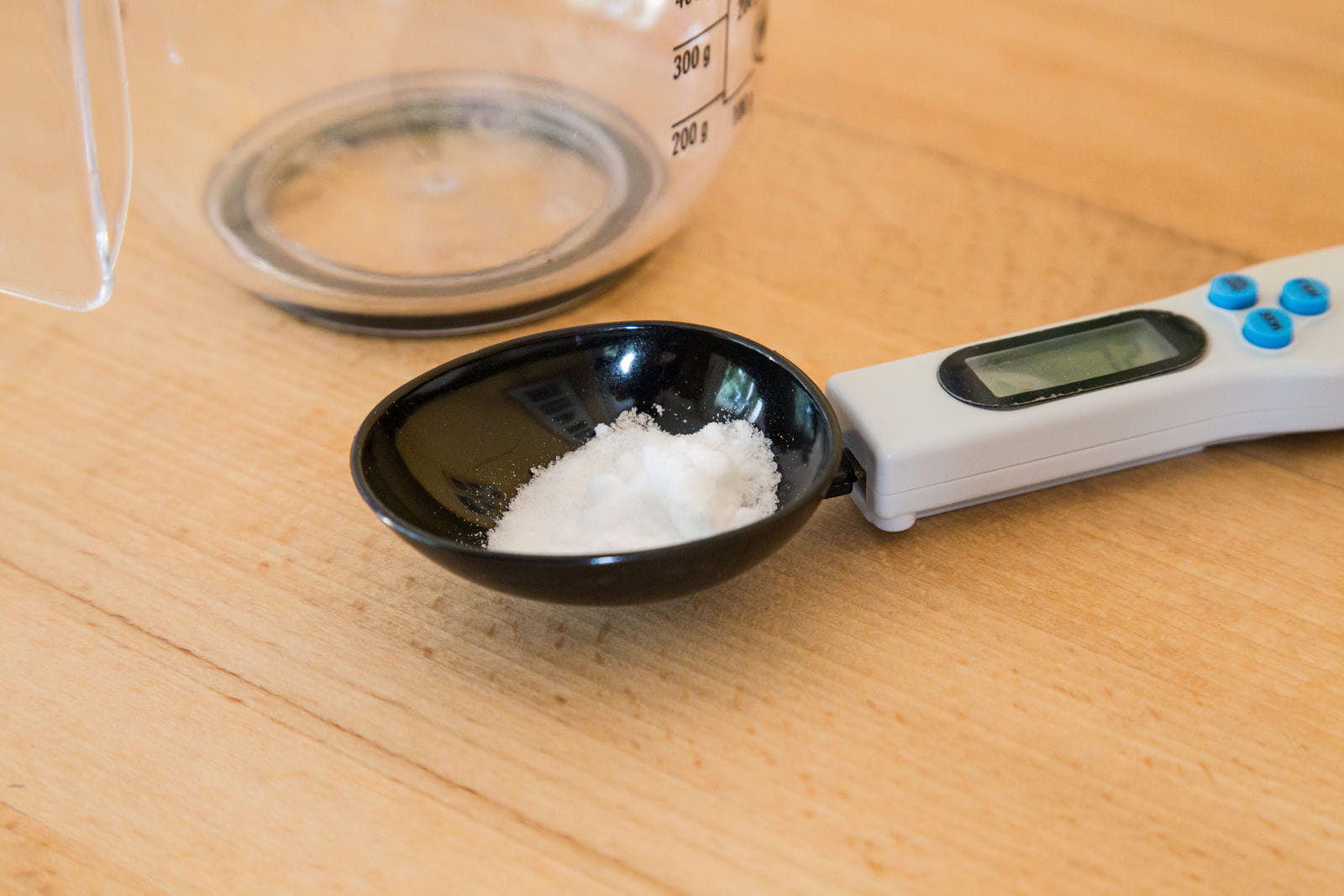
Once you have determined the required amount of nutrient salt with the help of the calculator, you have to weigh it out exactly. For small amounts, a precision scale is suitable; for larger amounts, a kitchen scale will do.
Demineralized water
The nutrient salts are dissolved in water but must not be mixed with other elements, so that no reactions occur. You therefore first need demineralized water. You can make this water with a reverse osmosis system or a cation exchanger. Many aquarists already own such systems anyway because they use them to treat their aquarium water. Alternatively, you can also buy fully deionized water ready-made.
Since the solubility of salts is better at higher water temperatures, it can't hurt to warm the water up a little before mixing. Since pure water, for example from a reverse osmosis system, often comes out of the tap very cold, it is an advantage to raise the water temperature. You can simply let the water stand for a few hours or days so that it adjusts to room temperature (20 °C) - this is a very simple but also more time-consuming method. Of course, you can also warm the water slightly on a stovetop. It should not be boiling hot, though, to avoid too much evaporation. To warm the pure water, you should if possible use containers that are used exclusively for this purpose and not for everyday kitchen use in food preparation, to rule out contamination.
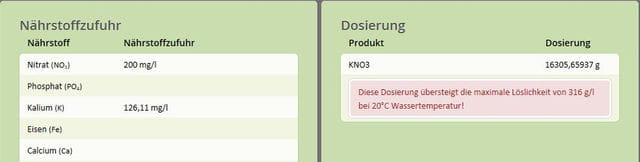
Depending on the temperature, the various salts have individual maximum solubilities. The amount of a nutrient salt that can be added to a fertilizer solution is limited by this solubility. Conveniently, the Flowgrow nutrient calculator shows you when the solubility of a certain substance (at room temperature) is exceeded.
Mixing
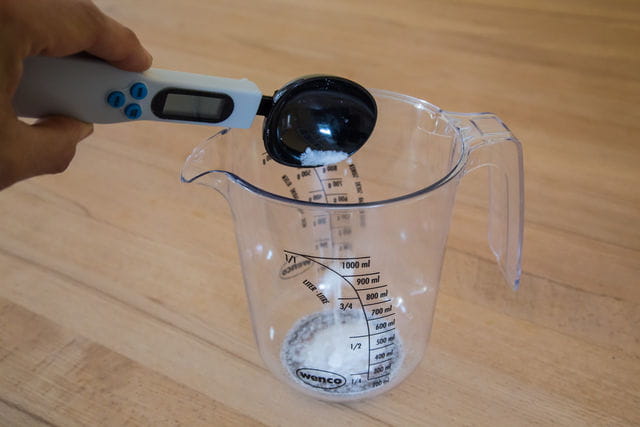
To mix the fertilizer solution, first put the weighed amount of nutrient salt into a suitable clean measuring cup that can hold the desired fill volume and has a corresponding scale (for example 1 liter).
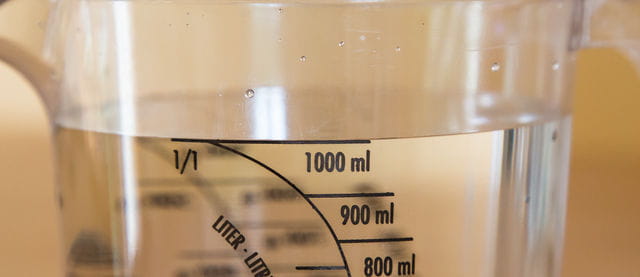
Then top it up with the demineralized water to the desired fill level mark. The order is important here: first add the salt, then top up with water.
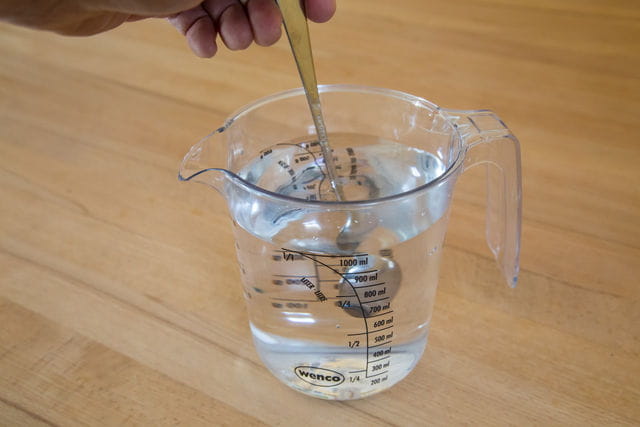
The liquid should be stirred with a suitable object (for example a long, likewise clean spoon) until no salt residue is visible anymore because all the solids have dissolved completely in the water. The liquid fertilizer is ready.
Next, the finished liquid fertilizer can be filled into the fertilizer bottle. For this, we also offer empty containers of our Aqua Rebell fertilizer bottles in various sizes. These can be fitted with the usual dosing aids such as measuring cups, dosing pumps or drip caps.
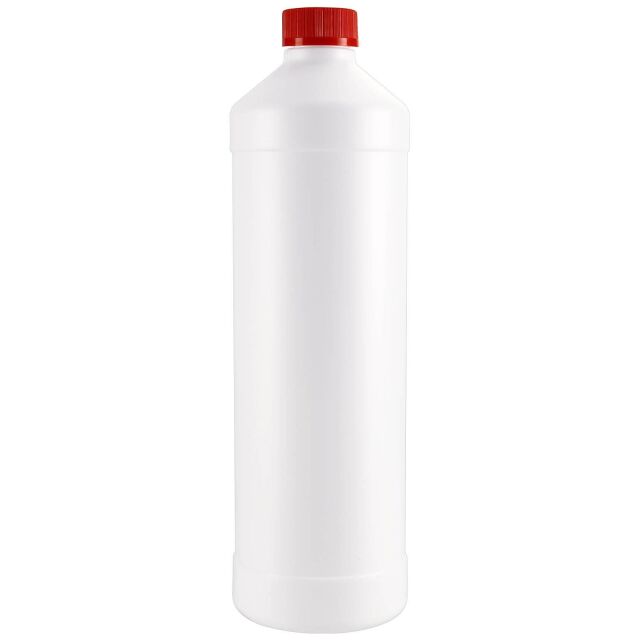
If you work with several self-mixed fertilizers, it can't hurt to label the bottles with the most important details, such as the corresponding nutrient element and the nutrient concentration when a certain amount is added. A commonly used figure is how much 1 ml of the fertilizer per 50 liters of aquarium water raises the nutrient level in mg/l.
Mixing different nutrient salts
Of course, the temptation is great to make your own NPK or all-in-one fertilizer by mixing different nutrient salts. A urea fertilizer with a magnesium component? An iron fertilizer that also adds potassium? In principle that's not a problem, but you should essentially watch out for two things. First, you have to pay attention to the maximum solubility of the nutrient salts in total. Beyond a certain concentration, no more solids can be dissolved in a liquid. This depends on the temperature, of course. Various reactions between the substances can also occur, which can lead to precipitation and are therefore undesirable. Some caution is advised especially with the nutrients iron (Fe) and phosphate (PO4), since mixing them can cause iron phosphate precipitation (see table). However, if the iron is chelated and protected well enough by a complexing agent such as EDTA, the risk is much lower or negligible. In theory, mixtures of Fetrilon (which is based on iron EDTA) and potassium dihydrogen phosphate are therefore possible for composing a shared nutrient solution.
Disclaimer: However, we give no guarantee that no reactions (especially precipitation) will occur when mixing Fetrilon with phosphate-containing nutrient salts!
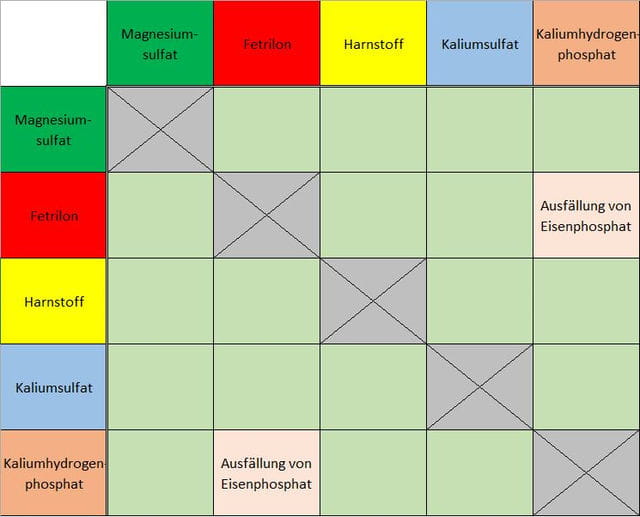
With other nutrients, too, you have to pay attention to certain combinations of ingredients so that no unwanted reactions occur. When calcium and sulfate meet, for example, precipitation in the form of gypsum can occur. Calcium and carbonate react to form the solid lime. Magnesium and carbonate precipitate as magnesium carbonate (magnesite). High pH values can have an unfavorable effect on the acids and chelators of trace elements. Here too, you should avoid these micronutrients meeting carbonates in the nutrient solution. In principle, however, the nutrient salts we offer, Epsom salt, potassium sulfate, Fetrilon, urea and potassium dihydrogen phosphate, are compatible with each other, with the restriction mentioned above regarding Fetrilon and potassium dihydrogen phosphate.
Conclusion
Mixing your own liquid fertilizers for aquarium plants can be an alternative to buying ready-made aquarium fertilizers for the price-conscious aquarist. However, this requires some equipment as well as certain basic knowledge of chemistry. As a private individual, you also don't have the option of getting hold of all the components for mixing your own fertilizers (such as nitrogen-containing components). Compromises have to be made in terms of cleanliness and shelf life, due to the non-sterile conditions during production.