 Determining Nitrate Levels Correctly
In planted aquariums, nitrogen (mostly in the form of NO3) is one of the most important nutrients for maintaining healthy plant growth. Determining it with a water test is sometimes not that easy. We offer some help.
Different water tests
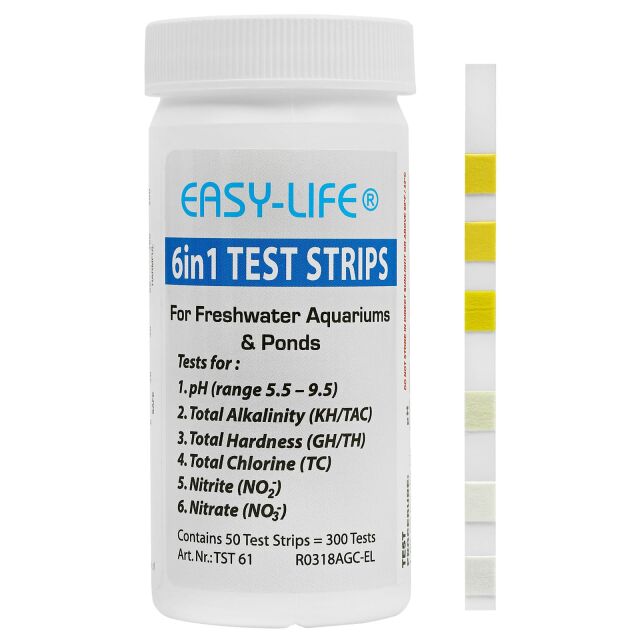
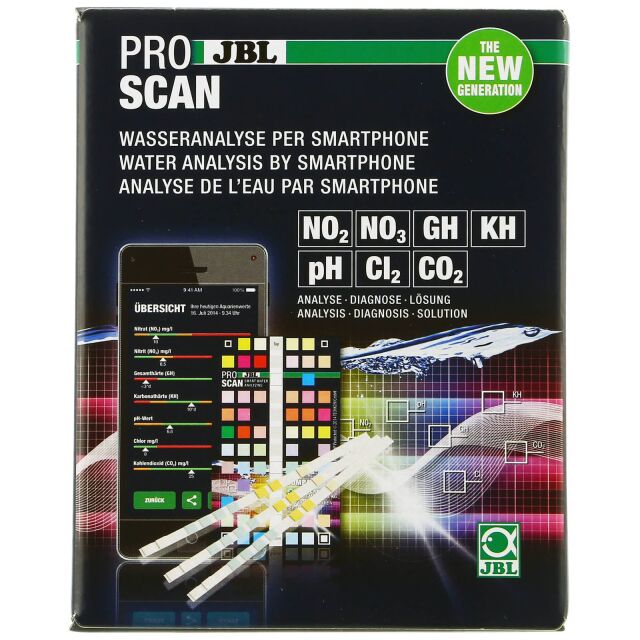
There are different types of water tests in the aquarium hobby. As with any product, there are also different qualities here. First, there are the so-called test strips. These often combine various water parameters on one test strip, including nitrate. These test strips, often also called rapid tests, can in some cases be combined with an app that reads out the values. This is possible, for example, with JBL ProScan. The advantage of these tests lies in their enormous range of parameters and their speed. You quickly get a complete overview of all relevant water parameters for an aquarium. With regard to nitrate, the division of the scale (often: 0 - 10 - 25 - 50) is sometimes somewhat coarse and therefore leaves little room for a more precise analysis in the important range of 5 to 30 mg/l NO3 of a planted aquarium.
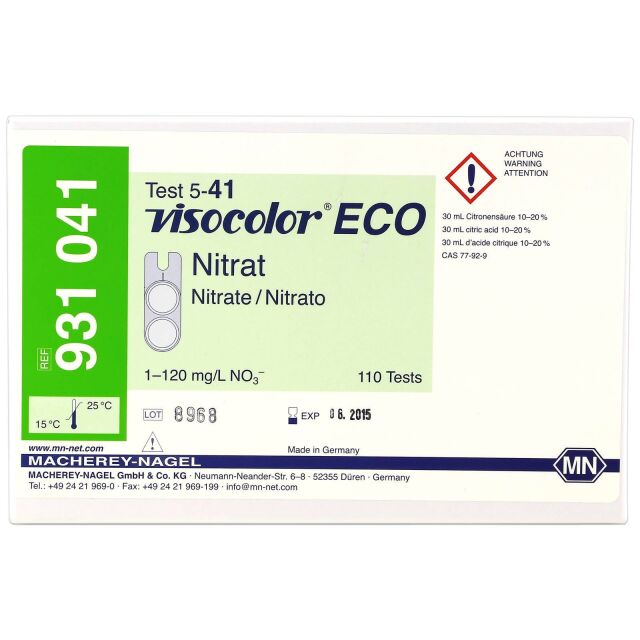
Somewhat more cumbersome to handle, but with higher accuracy, are so-called drop tests. Here, certain reagents are often dripped into a small amount of test water (hence the name). After a certain reaction time, the test can then be read by a color change. A color chart is used as an aid. A certain shade is assigned to a certain nitrate content. The scale is divided much more finely here than with a strip test. The nitrate test from Macherey & Nagel, for example, is particularly easy to read, though the product is also somewhat more expensive.
Photometer tests are often drop tests that are then read photometrically. A photometer uses light and electromagnetic radiation to determine a precise measured value in, for example, millivolts. This value is then translated into mg/l of a certain nutrient such as nitrate. Photometer tests are therefore very accurate and allow values to be determined on a small scale. In the hobby aquarium field, however, such tests are hardly used because of the high purchase costs.
Readability
An important criterion for a water test is its readability. Most common tests work colorimetrically. This means that the measurement result is first determined by a certain shade of the measuring reagent. Depending on the shade or intensity, the concentration of the substance is then more or less strongly present. What matters here is how well you can read the colors. The division of the scale also plays a role here. If only a few values are given (for example 5-25-50), a finer determination of a measured value is not really possible. A finer scale with smaller steps is more helpful here, for example to determine the nitrate value more precisely in the relevant range between 10 and 25 mg/l NO3. Photometric tests are particularly precise here, but they are also quite expensive.
Avoiding measurement errors
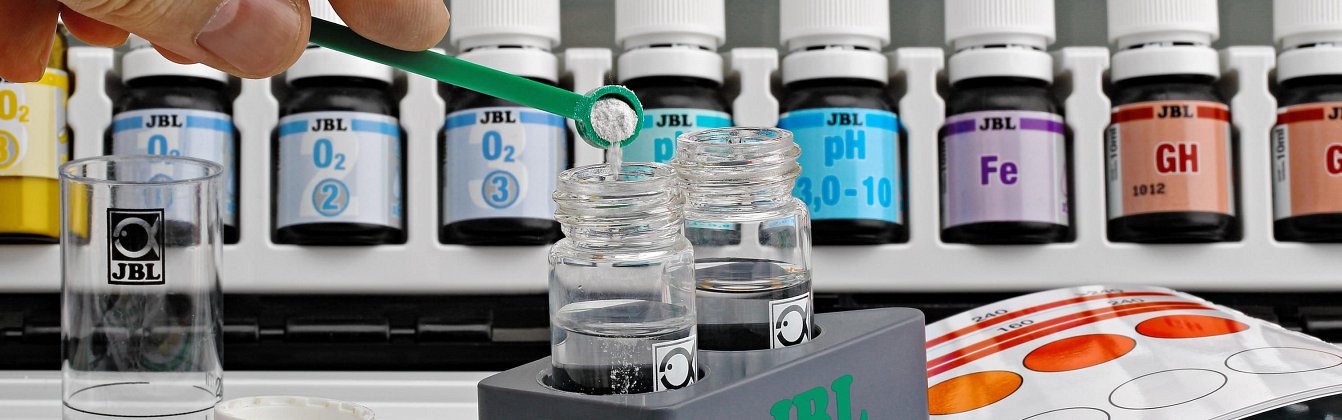
For an accurate test result, correct handling of the test procedure is very important, and it should be followed strictly according to the instructions. This applies in particular to the nitrate test with regard to specified time windows (for example: "Shake for exactly 1 minute"). The amount of test water to use (for example: 10 ml or 5 ml) must also be strictly observed, as must which end of the spoon (large or small) you should use for the reagents. All of these are often typical sources of error for a distorted measurement result.
A certain cleanliness in handling the test components should also be observed so that foreign substances cannot lead to false results. This includes above all that the utensils (spoons, syringes) are always clean and the test tubes are rinsed regularly with distilled water.
Taking the time of measurement into account
The water test must not be expired or too old. Reagents that are too old tend to cause strange colorations, for example in a drop test. Even more important, however, is correct timing and keeping to the time windows for, for example, mixing/shaking/swirling the test, as well as certain waiting times before you may read it. You should use a stopwatch to help with this. Once the waiting time is over, you should read the test promptly. A longer wait usually causes the color to get darker and darker, so you get a test result that is too high.
An important note applies to the use of the JBL ProAquaTest Nitrate. Unlike what the instructions describe, you should keep to an exact shaking time of 1 minute. This is now also described this way in the FAQ on the manufacturer's product page:
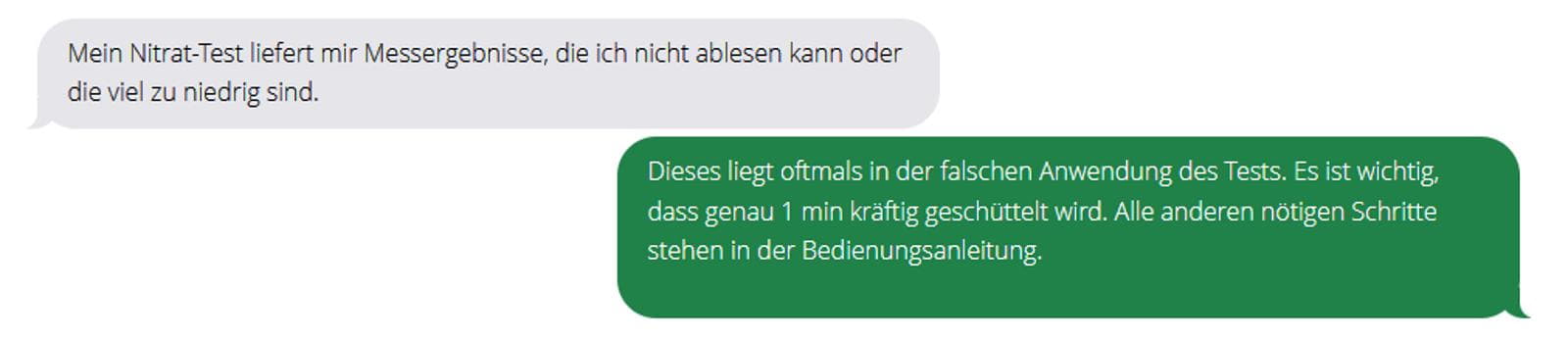
If you do not stick to the length of one minute, the drop test often shows a result that is too low.
Conclusion
To determine an important nutrient like NO3 exactly for your planted aquarium, it is worth investing in an easy-to-read drop test. If you follow the instructions and time windows exactly, you will get very accurate results. Otherwise, however, distorted measurement results due to errors in carrying out the test are possible. The aquarist should therefore read the instruction manual very carefully.