 Daily or weekly fertilization?
Aquatic plants in the aquarium appreciate a regular supply of nutrients. This can happen, for example, daily or just once a week. Each way of adding them has its own advantages and disadvantages, which we want to present to you here.
Why fertilize aquarium plants?
Aquatic plants in the aquarium should be supplied with all the important nutrient elements for healthy growth. Besides light and carbon, which in an aquascape is usually provided by a CO2 system, plants in the aquarium need so-called micronutrients. These include iron and other trace elements, which can be supplied very simply in liquid form via a complete iron fertilizer. These substances are only needed in small amounts. In addition, aquatic plants also need macronutrients: nutrient elements that are consumed in larger amounts. These include above all nitrogen, potassium and phosphorus. Macronutrient fertilizers such as our Aqua Rebell Macro Basic NPK supply these elements in combination, but there are also single-component fertilizers for each nutrient, for example Aqua Rebell Macro Special N, GH Boost N or Macro Basic Nitrate for nitrogen, Aqua Rebell Macro Basic Potassium for potassium or Basic Phosphate for a separate phosphate supply.
So that nutrients don't run short, regular addition of liquid fertilizers is the best prerequisite for avoiding deficiency symptoms in the plants. There are different concepts for the time interval of dosing, however.
Weekly fertilization
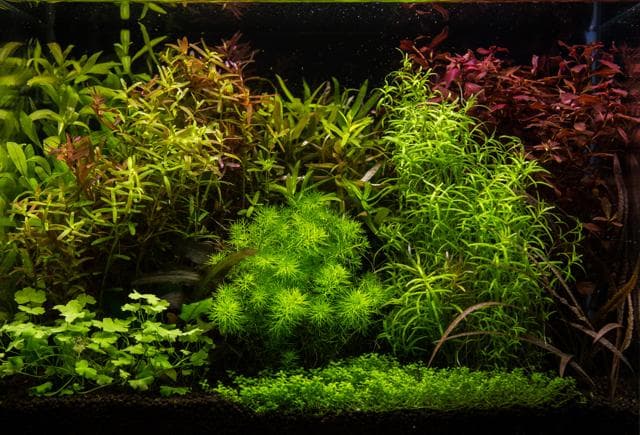
Supplying fertilizer once a week is certainly one of the most convenient ways of supplying aquarium plants. Fertilizer dosing can easily be combined here with other maintenance such as the weekly water change. It makes sense to add the fertilizers after adding the fresh water. The convenience and simplicity is also one of the big advantages of weekly fertilization. There are disadvantages, too, though: adding a weekly dose first creates a large nutrient spike. Especially with complete iron fertilizers, this can under some circumstances provoke the growth of red algae. In addition, it can happen that the plants have already used up some nutrients after just a few days, long before the next fertilization is carried out. This can sometimes lead to deficiency symptoms in the aquatic plants.
For certain nutrients, though, weekly fertilization is very well suited. Elements such as potassium or magnesium, for example, are consumed by plants to a somewhat lesser degree. A longer dosing interval is therefore a good option here. The same applies to nutrient elements that plants can store well and/or that you would rather have in a low concentration in the water column (keyword limitation). This includes above all phosphate. Weekly fertilization is therefore also recommended for it.
Daily fertilization
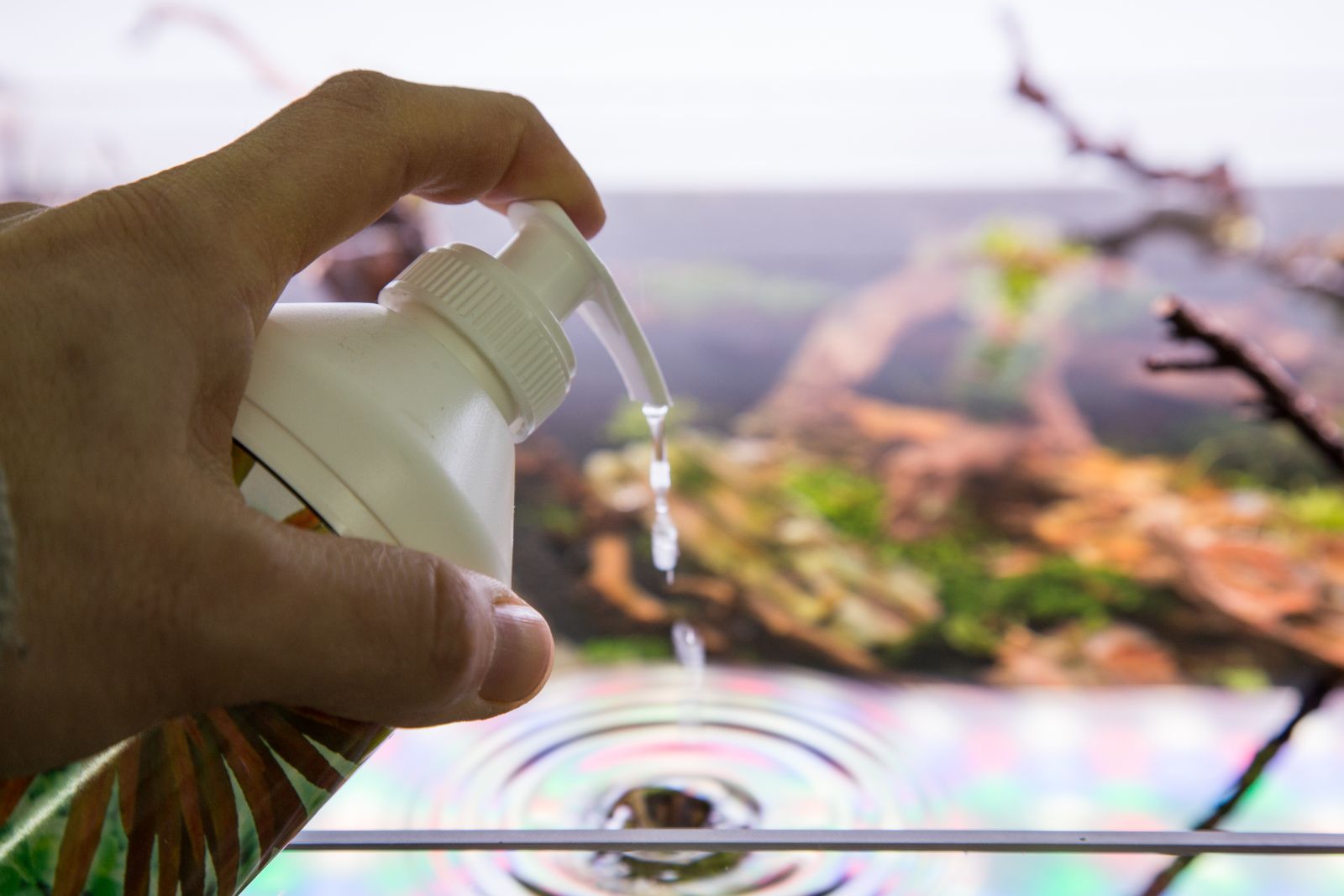
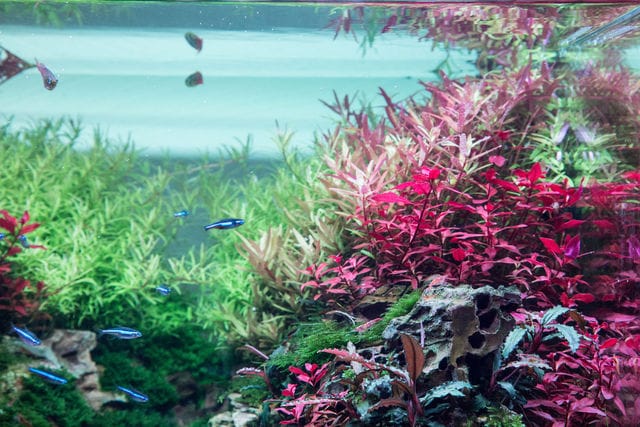
A daily supply of nutrients is the optimum for supplying aquarium plants. For this, the dose for one week is scaled down to the daily consumption (divided by 7), so that the right amount can be added proportionally for each day. This way, the plants receive a small amount of nutrients every day, so with every photosynthesis period, which is enough to cover their needs for that period. The advantages are obvious: fewer to no nutrient deficiencies arise, since new food is added every day. Longer dry spells are history.
In addition, since only small amounts are fertilized each time, no nutrient spikes arise that could possibly trigger algae problems. With an overdose of complete iron fertilizer, for instance, red algae such as black beard algae or beard algae like to appear.
A disadvantage is of course the additional effort, since as an aquarist you then also have to carry out this maintenance task every day. If that is too much work for you, you can consider automated fertilization or simply switch to fertilization with a longer interval (several days to weekly).
Combined daily and weekly fertilization
Of course, you can also combine both worlds and the advantages that come with them by combining daily fertilization with weekly fertilization. Weekly fertilization can be used, for example, to establish a certain baseline level for certain nutrients. As described above, some elements are consumed by the plants only to a lesser degree. A weekly addition suits these. For the nutrients that the aquatic plants need in larger amounts, or for which nutrient spikes should be avoided because of possible algae problems, daily fertilization is the better solution.
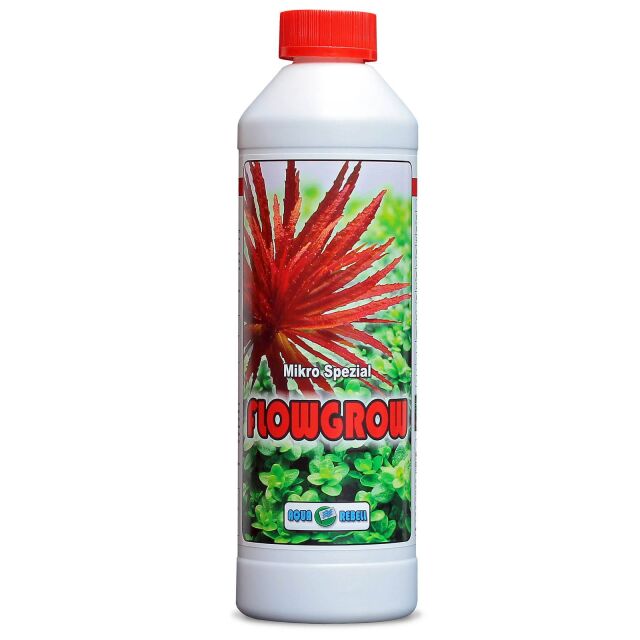
An example: for the basic supply of a planted aquarium with potassium, magnesium and phosphorus, Epsom salt and an NPK component are added after the weekly water change. For daily fertilization, GH Boost N is used to supply nitrogen, along with Aqua Rebell Micro Special Flowgrow . The latter adds quickly available iron and other trace elements.