 Soft water for shrimp
Some shrimp species need soft water to be kept successfully - just like many aquatic plants. Soft water, however, is often something that does not come straight from the tap here. Depending on the region, tap water is in some cases quite hard, too hard for species such as the bee shrimp Caridina logemanni and its relatives.
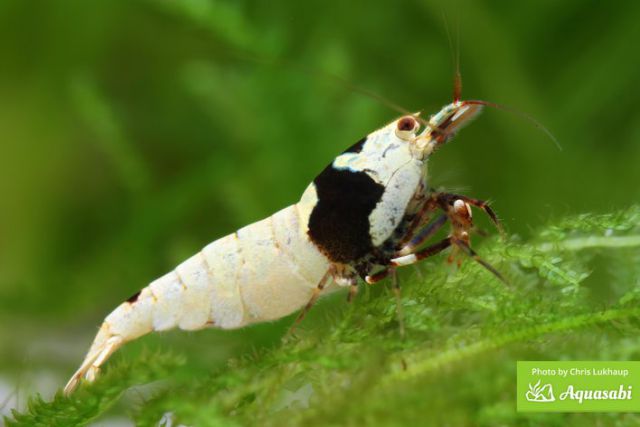
The bee shrimp Caridina logemanni is sensitive to water that is too hard.
So what to do? Basically, you could of course fall back on shrimp from the Neocaridina relatives, which tolerate hard water better, but the shrimp from soft water in some cases have significantly more beautiful colors and patterns than the Neocaridina, which are ideally quite colorful but mostly solid-colored.
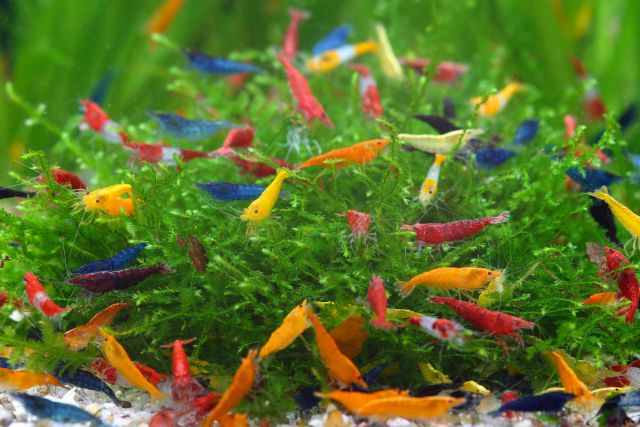
Colorful mix of Neocaridina davidi - Copyright by Chris Lukhaup
If you already have plants in the aquarium that prefer soft water, or if you explicitly want to keep bee shrimp, Taiwan bee shrimp or similar species from soft-water habitats, you should be aware of an important difference from pure planted aquariums or aquascapes with soft water.
Difference between soft water for aquascapes and shrimp aquariums
Anyone who thinks that in a shrimp aquarium you can work as easily as in an aquascape with hard tap water and an active soil substrate such as ADA Aqua Soil Amazonia will quickly run into problems with shrimp. Of course, after the water change the soil pulls the carbonate hardness and the pH value back into the soft range, but right after the water change the values first shoot up enormously - depending on the tap water. Shrimp from soft-water habitats, however, do not tolerate exactly these abrupt fluctuations at all well; they often react with molting problems and diseases. Especially the juveniles, which have to molt often and are correspondingly more susceptible as a result, very often simply die off when water parameters fluctuate and never even get going. With a bit of luck the population just barely survives, but this is of course by no means satisfying (and, from an animal welfare perspective, more than questionable).

A group of red bee shrimp (Caridina logemanni) - photo by Chris Lukhaup
In addition, the active soil saturates a bit more with every water change, and with hard tap water the point is soon reached at which the ion exchange capacity of the substrate is exhausted. If you do not regularly measure the carbonate hardness and the pH value with a suitable drop test, you do not necessarily notice it as an aquarist, because the change happens gradually. The problems with the shrimp already mentioned also return just as gradually - molting difficulties, failed molts and an increased loss rate among the offspring.
How do I prevent these problems?
In breeding soft-water shrimp such as bee shrimp or Taiwan bee shrimp, when the tap water values are not suitable, the use of a suitable hardening salt in combination with RO water or demineralized water has meanwhile become established. This sounds terribly complicated to beginners at first, but in fact the application is really very simple.
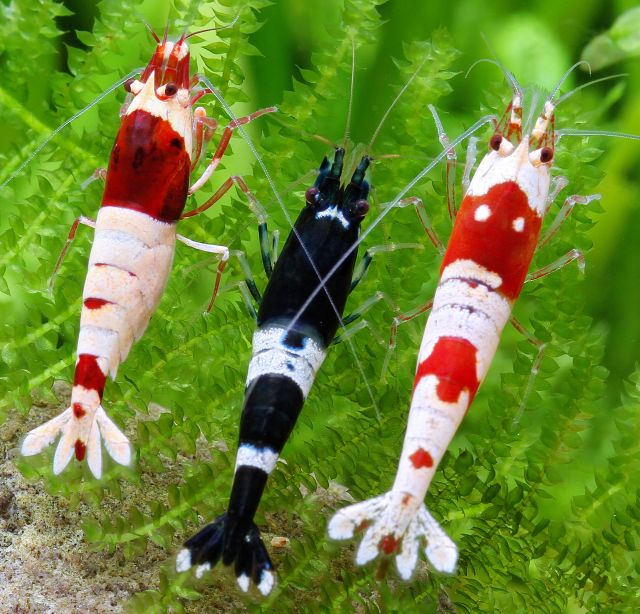
Bee shrimp and Taiwan bee shrimp - photo by Chris Lukhaup
Suitable water
If you want to work with hardening salts in order to always produce a consistent, suitable water quality with low carbonate hardness and a pH value below 7, so-called zero water lends itself as the source water. Zero water means a water very low in minerals, with a practically undetectable hardness and a very low conductivity. In shrimp breeding, water from a reverse osmosis system or a full demineralizer is often used for this. People in areas with clean air also use rainwater, although before use in an aquarium with shrimp it should definitely be filtered over activated carbon for at least 24 hours. If you keep the shrimp in a nano aquarium, buying a reverse osmosis system or a full demineralizer is hardly worthwhile. In this case, you can also fall back on demineralized water from the hardware store or the pet store. Caution - please be sure that this water is intended for use in an aquarium. Canisters with suitable water have a fish symbol printed on the label.
Producing the right values
The rest is then quite simple. The suitable hardening salt contains all the minerals in the right composition that bee shrimp, Taiwan bee shrimp and other shrimp species from soft water need. It is simply dosed according to the package instructions and stirred into the treated rainwater, RO water or demineralized (DI) water before the water change. If the salt does not dissolve completely, that is not a problem - the remainder is simply added to the aquarium during the water change and then dissolves gradually. As a rule, the undissolved remainder is so small in quantity that it causes no noteworthy fluctuations in the water parameters. The soil does the rest.
Since the replacement water mixed this way contains practically no carbonate hardness, the soil has a much longer run time, and fluctuations in the water parameters are avoided by changing with adjusted water - which the shrimp reward with increased vitality and a clearly improved willingness to breed.
Meticulous breeders measure again after mixing with a conductivity meter to make sure that the values of the replacement water do not deviate too much from the parameters in the aquarium.
If you want to do something especially good for your shrimp, add a liquid or powdered humic substance product to the replacement water, which makes the water a bit more true to the habitat. Of course, in such a soft-water aquarium in which you work with adjusted water, no rock should be used that gradually hardens the water, so that the soil is not exhausted prematurely as described above. Which types of rock can be used suitably here is described in our article "Suitable rock for aquascapes with dwarf shrimp".
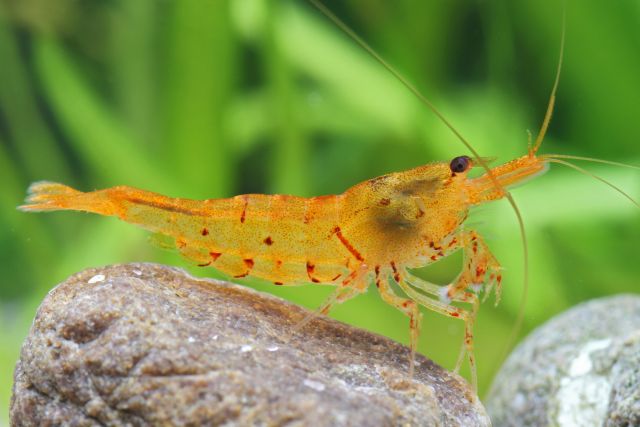
Tangerine Tigers also like soft water - photo by Chris Lukhaup.