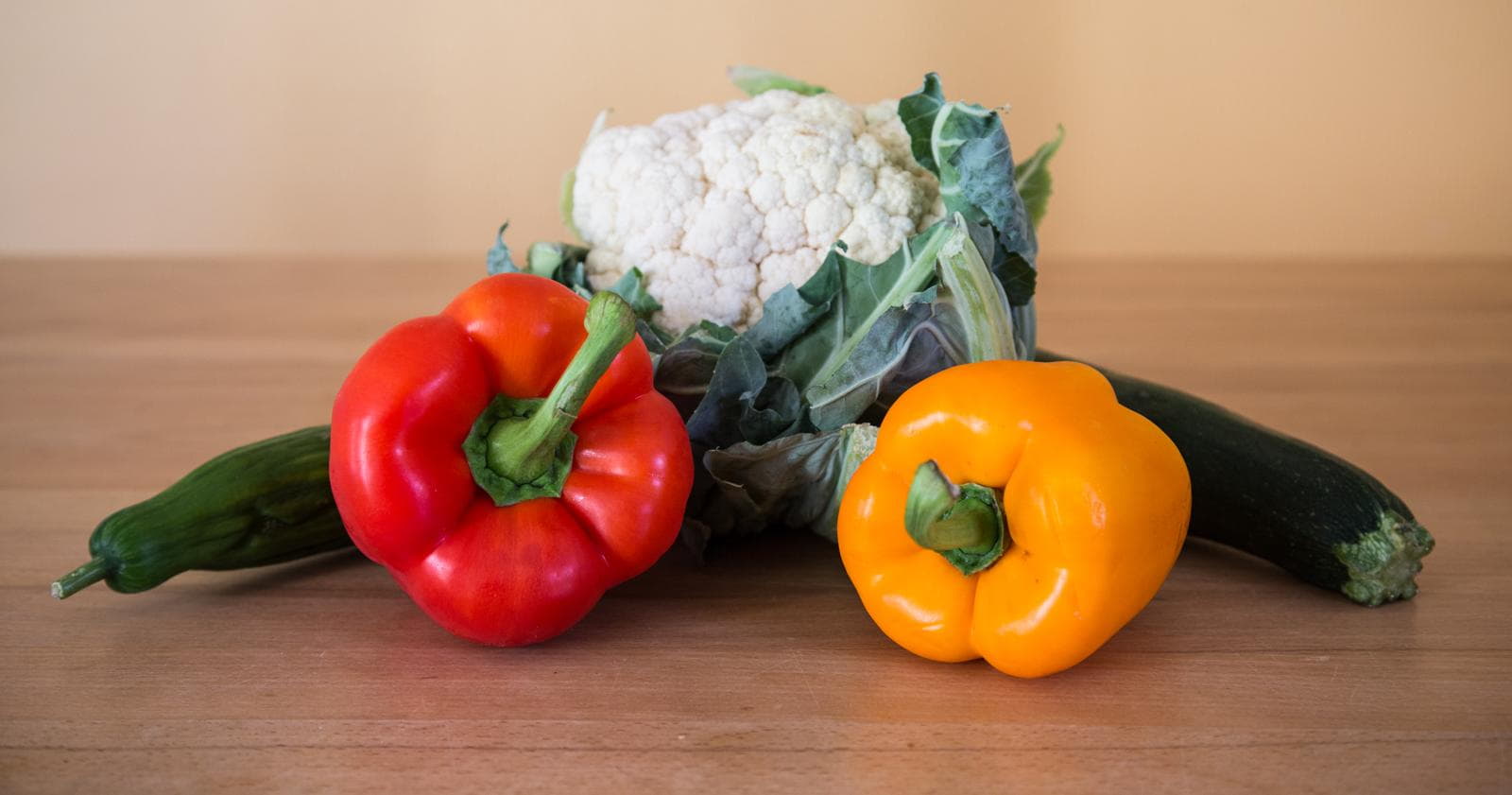
 Vegetables in the aquarium
Quite a few ornamental fish species such as catfish, but also invertebrates such as shrimp, need plant-based food for a species-appropriate diet. The aquarist can fall back on various types of dry food that have, for example, a high proportion of algae. In addition, fresh plant-based food can also be fed. We show you what to look out for.
Which plant food?
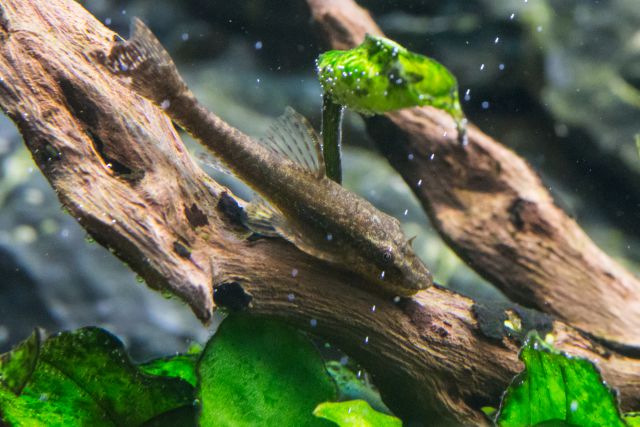
Suckermouth and armored catfish in particular, like this Otothyropsis piribebuy (sold as Otocinclus negros), love to eat fresh greens.
Various kinds of vegetables are indeed suitable for feeding fresh plant food. They should definitely be untreated and free of pesticides or the like. It is good to buy organic quality here. Popular choices include cucumber, zucchini, leaf spinach, but also cauliflower or broccoli.
Vegetables with low weight and strong buoyancy in particular (for example: leaf spinach) can be blanched before adding. This makes the food sink to the bottom faster and easier for the inhabitants of this water zone to reach. The heat also makes the food more accessible and softer, so the animals can handle it better. This is an advantage especially for vegetables with a harder texture (such as broccoli). Hard skins, such as those of cucumber and zucchini, should also better be removed so that the animals get directly to the soft inside of the food.
As with other types of food, the general rule is to keep the food portions rather small. To offer the grazing animals as much surface as possible, cutting slices (for example cucumber, zucchini) is very advantageous.
Feeding vegetables in the aquarium
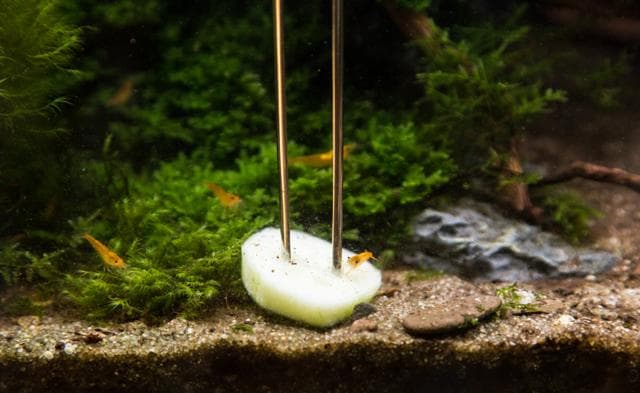
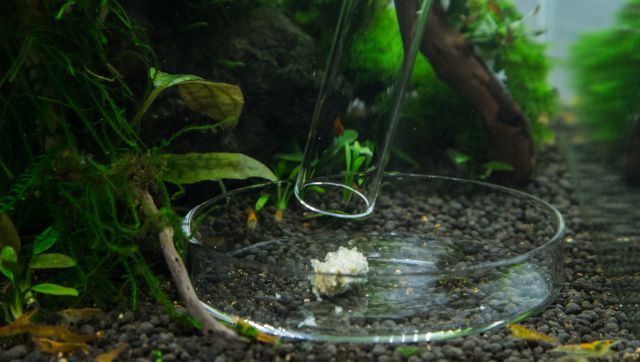
For this, it is a good idea to set a well-visible and reachable spot for feeding and to fasten the food there with a feeding clip or other aids. It is common practice, for example, to skewer cucumber slices on a wooden stick or tweezers so you can then sink them into the aquarium water. A feeding dish can additionally catch food particles that are produced, so they cannot seep into the substrate.
Disposing of food leftovers
To avoid burdening the water unnecessarily, the vegetables should stay in the aquarium for only a certain time of a few hours. After that, it is better to remove them again, or to dispose of any leftover food. Food anchored to an aid can simply be taken out of the aquarium again; loose food particles are better vacuumed up with a hose. If you have used a feeding dish, this is much easier.
In general, products containing sugar such as fruit, but also pickled peas or corn, should rather be discouraged, since they cause a stronger water load. The high proportion of sugar can also cause increased growth of bacteria that feed on the sugar.