 The Malawi aquarium
Header photo credit: Haplochromis via Wikimedia Commons (public domain), license information, source attribution.
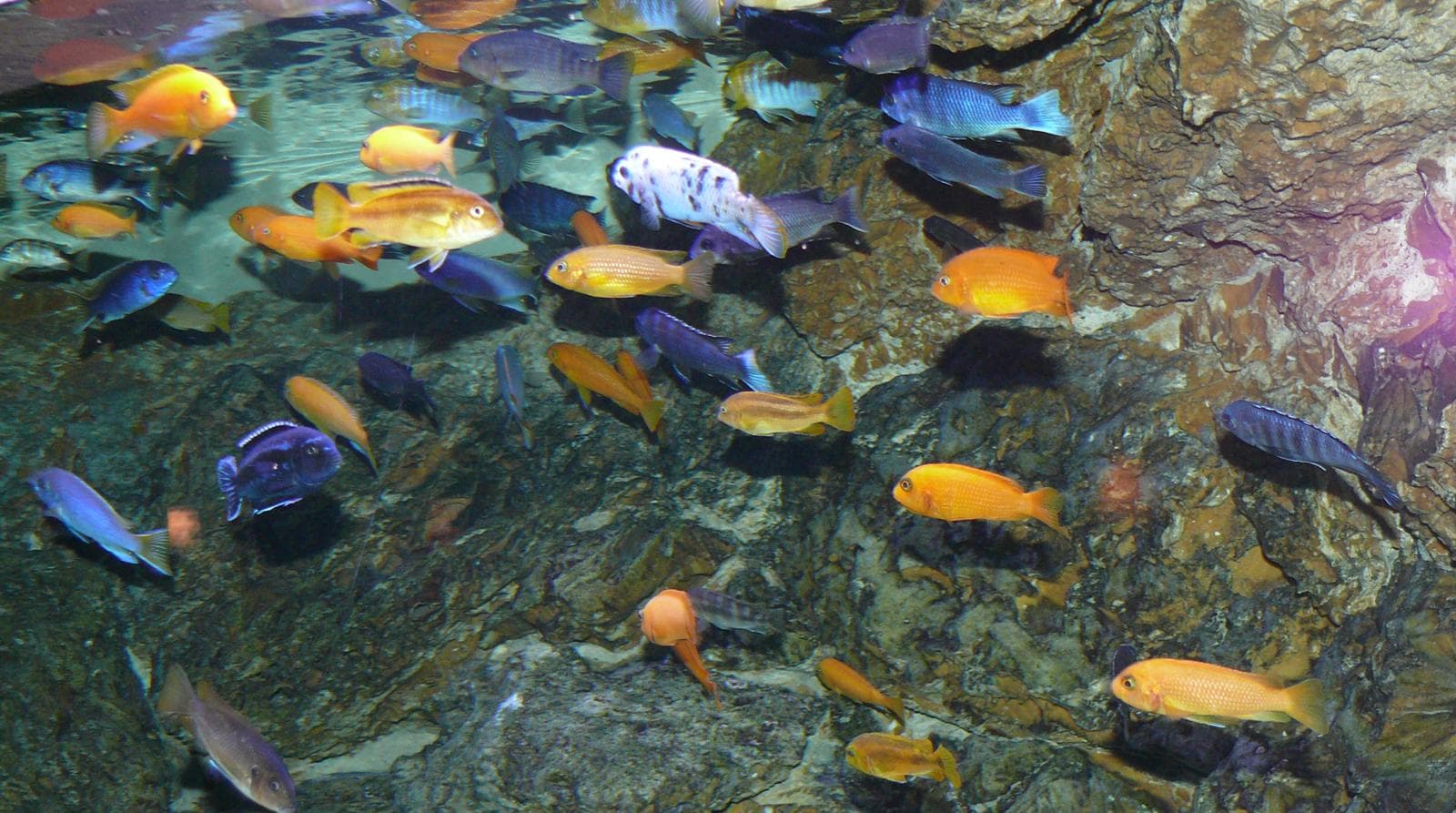
A Malawi aquarium is a suitable home for African ornamental fish that originally come from Lake Malawi. This body of water is found in East Africa and borders countries such as Malawi, Tanzania and Mozambique. Lake Malawi is incredibly clear and home to many African cichlid species, most of which occur endemically only in this lake. In total, more than 450 different fish species live in these waters. The rocky and stony shores are populated by cichlids that the locals call "Mbuna". The animals that live in the rest of the open water are labeled "Utaka". Besides cichlids, some killifish, catfish, eels, pikes and tetras can also be found in Lake Malawi. A Malawi aquarium mainly deals with the colorful cichlids that come from this lake. We show you everything you need for a species-appropriate Malawi biotope.
General information about the Malawi aquarium
A Malawi aquarium forms a biotope for commonly kept African cichlid species that occur endemically in this lake. The habitats of these colorful ornamental fish offer extremely clear water that is rich in oxygen and has a warm temperature. As a rule, rocky stone structures are used as decoration in such aquariums. Aquatic plants are normally not part of the design, nor is driftwood as decoration. Since these are fairly large ornamental fish that can also be territorial in part, large aquariums of 300 liters volume or more are recommended.
Water parameters in the Malawi aquarium
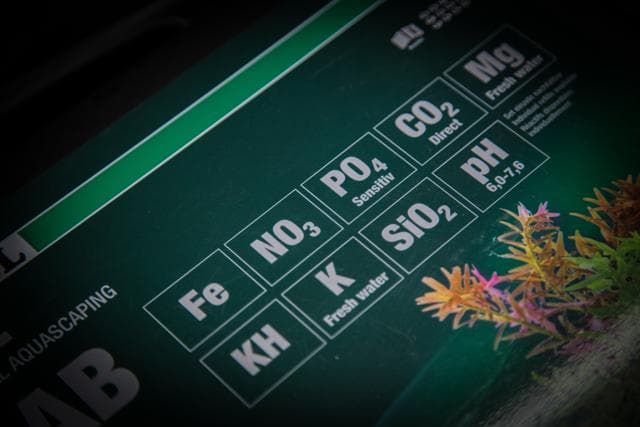
Of particular importance in African lakes is the pH in the alkaline range, which is often well above 7.5 – depending on the water, even considerably higher. Because of the soda springs in the inflows, the general and carbonate hardness are rather high. For a Malawi aquarium too, the pH should ideally be between 7.5 and 8.5. The carbonate hardness is often, to match, in a range of 5 to 9 °dKH, and the general hardness mostly in the range of 5 to 10 °dGH. The water should not be extremely hard for these animals either. Ideal water temperatures are in the range of approx. 22-26 °C. Higher temperatures should be avoided, since the oxygen content otherwise often drops, which can become dangerous for the fish. A high oxygen content is of particular importance for the animals' health, as is the quality of the water. It should be as clear and clean as possible, low in pollutants and have a low germ load. Using air stones, enough current at the water surface, diffusers or oxydators is recommended to ensure sufficient aeration.
To ensure water quality, correspondingly high-quality filtration is necessary. The animals' metabolism and the associated excretions of the fish, as well as leftover food, create a high water load. Biological filter media in particular are necessary here to maintain the nitrogen cycle at this high level. Mechanical filtration and good prefilters help keep the water clear and free of suspended particles. Regular maintenance such as a weekly water change is also important in order to keep nutrients such as phosphate and nitrate, but also the germ load, low.
Aquatic plants in the African cichlid aquarium
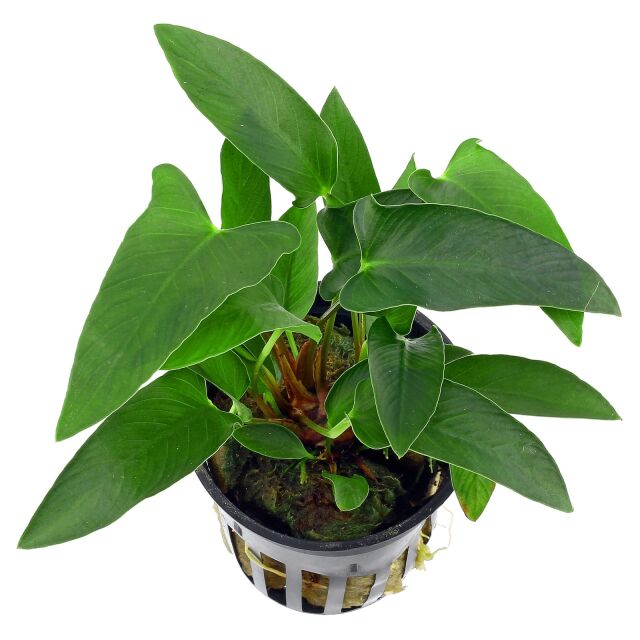
Aquatic plants are not actually present in the African habitats of the cichlids. Nevertheless, such plants can be used in the aquarium for decorative purposes and also offer biological advantages, such as breaking down nutrients in the water. However, the aquarium plants must be able to withstand the conditions in a cichlid aquarium well. Since many cichlids also nibble on the plants or dig them up, a corresponding resilience is required. Epiphytes that are rather hard-leaved are therefore particularly well suited. The genus Anubias in particular falls into this category. You can find more information on cichlid-proof aquatic plants here.
Decoration items in the African cichlid aquarium
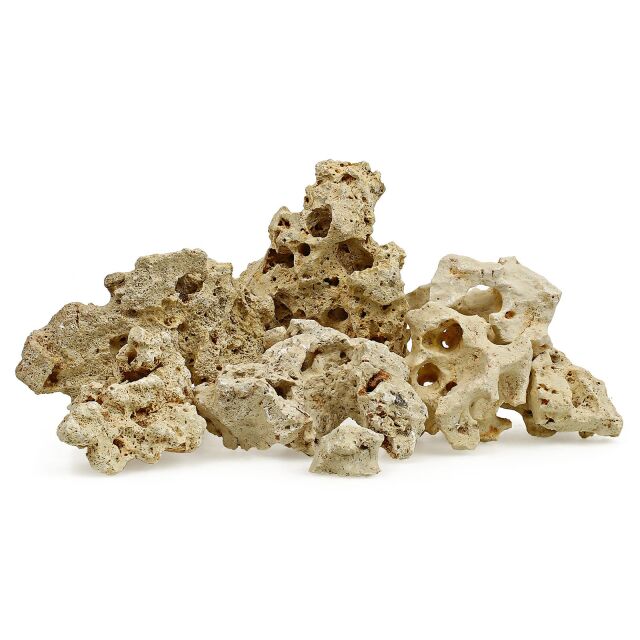
In a Malawi or Tanganyika aquarium, certain water zones of these lakes are recreated. They are often very rocky, and aquatic plants and driftwood are often looked for in vain. An African cichlid aquarium is therefore usually set up mainly with stones. Types of stone that harden the water and contain lime are gladly used for this. Holey rock is a popular choice here, but Moon Stones or Mini Landscape are also conceivable.
Because of the stocking, the aquariums for these ornamental fish are already very large. Accordingly, many kilograms or even tons of stones are built into the aquarium. It should therefore not go unmentioned that the load-bearing capacity of the aquarium's location has to be taken into account. If you want to use impressive and lavish stone structures but still save some weight, artificial rocks and back walls are recommended. Manufacturers such as Back to Nature offer a wide range of decoration options here that look attractive and natural but are much lighter than real stones.
Substrate in the Malawi aquarium

Types of sand or gravel with a grain size of 0.2 to 2 mm are suitable as substrate for almost all Malawi cichlid species of Lake Malawi that are common in aquarium keeping. The sand should not be too fine; a smaller grain size often causes cloudy water. Many Malawi species rearrange the substrate, digging in it or piling up mounds. With sand that is too fine, these movements can create a lot of turbidity that affects the water or even the function of filters and pumps.
The color of the substrate can also play a role in a Malawi aquarium. If the sand is too light in color, the animals tend to be skittish and shy and partly lose their coloration. The fish then become paler. Bright white shades are not ideal; a natural beige or gray is better. A natural patina in the form of algae coatings is also not as noticeable here as with extremely light sand.
For pure rock layouts (keyword: Mbuna), a classic substrate is sometimes not strictly necessary. Here, for example, smaller stones or flat slate can be repurposed as substrate. The aquarium's bottom pane should then only be protected against breakage by cushioning the gap between glass and rock, for example with Styrofoam.
Stocking in the Malawi aquarium
As we already learned in the introduction, the cichlids of Lake Malawi can be divided into two classes. Mbunas are the currently 12 genera that mainly inhabit the rocky zone. These animals often reach a final size of approx. 10-15 cm. They feed a lot on the periphyton and biofilms that grow on the rocks. The non-Mbunas (called Utaka) consist of around 40 genera and generally grow larger (10 to 40 cm). The aquarium for these animals should be correspondingly large, with 500 liters of volume a good guideline. These species live as predators and feed mainly carnivorously.
Some examples of Mbunas
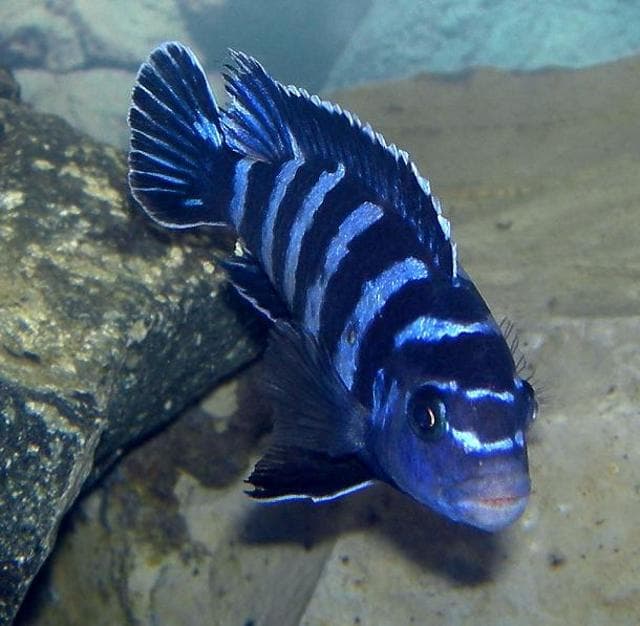
Image credit: Lee Nachtigal via Wikimedia Commons (public domain), license information, source attribution.
Demason's mouthbrooder (Pseudotropheus demasoni) is a typical Malawi cichlid and is by now also available from German captive breeding. This ornamental fish with its high-contrast coloring grows to about 8 cm and is a group animal. The aquarium should be well structured with rocks and stone structures to keep aggression within the species in check. The diet is mainly plant-based (periphyton grazer).
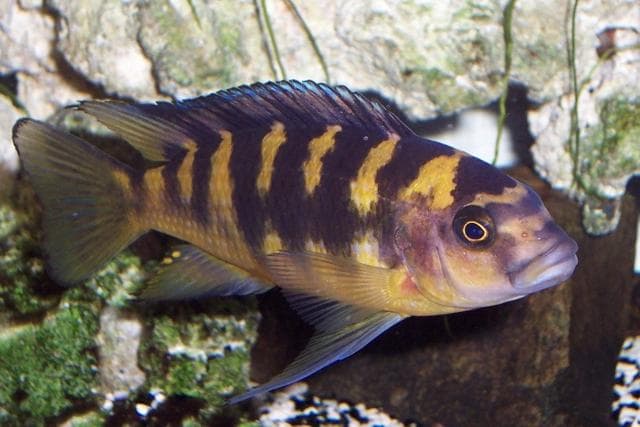
Image credit: Nicolas COUTHOUIS via Wikimedia Commons (public domain), license information, source attribution.
The chameleon mouthbrooder (Pseudotropheus crabro) offers an interesting pattern. This cichlid is one of the Mbunas and lives there in the rock structures. It grows to around 15 cm. They are quite peaceful representatives that can be kept both in pairs and in a harem. As retreats they like stone structures and caves where they can withdraw. This mouthbrooder can be fed a carnivorous diet with various types of food.
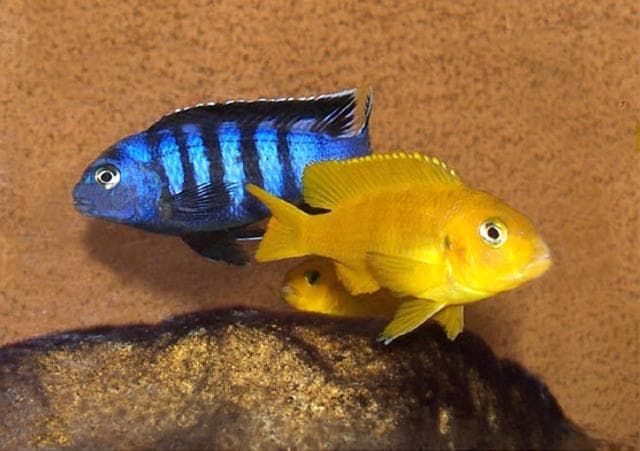
Image credit: Gerard Delany via Wikimedia Commons (public domain), license information, source attribution.
Chindongo saulosi is a typical Mbuna that inhabits the rocky structures. This fish is interesting because both male and female animals are splendidly colored. The females are bright yellow, while the males show a great striped pattern. These cichlids stay small, under 10 cm, and feed on both meat and plants. The spawning and brooding behavior on the rocks is a great spectacle but also creates potential for aggression. The aquarium should therefore be large enough and well structured.
Chindongo cyaenus is a Mbuna that can grow to around 10 cm. The males in particular show a great yellow-blue pattern and are a real eye-catcher. They can be kept in pairs or in a harem. The aquarium should be correspondingly large and have good structure so that territorial disputes can be defused somewhat. This mouthbrooder feeds on both plants and meat.
Some examples of Utakas (non-Mbunas)
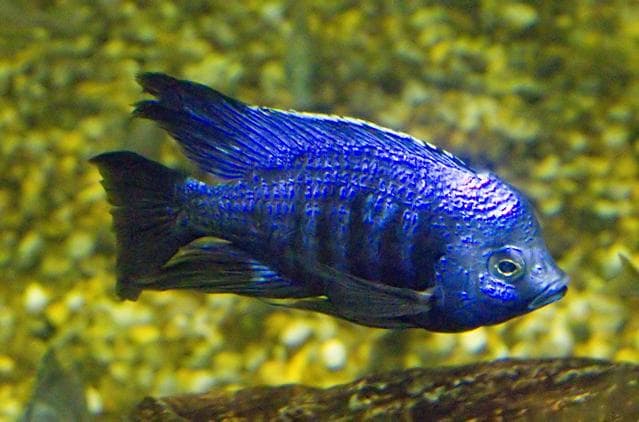
Image credit: Greg Hum via Wikimedia Commons (public domain), license information, source attribution.
The azure cichlid (Copadichromis azureus) is a bright blue ornamental fish (in males) and is one of the Utaka representatives. These peaceful ornamental fish sift through the sand for food and also dig out spawning sites there. The animals cannot assert themselves well against more aggressive ones and are therefore very well placed in a species aquarium. They grow to approx. 15 cm and are otherwise easy to keep. They need meaty food.
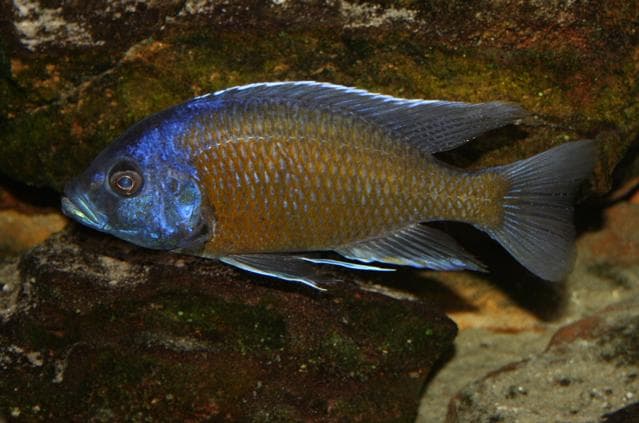
Image credit: David Midgley via Wikimedia Commons (public domain), license information, source attribution.
Copadichromis borley is a species that is at home in the open water of Lake Malawi. These cichlids even spawn in open water. It feeds mainly on plankton and is easily accustomed to flake food. The animals grow to up to 16 cm and are unfortunately somewhat sensitive to stress. For this reason, they are rarely imported. This cichlid lives in loose groups and needs peaceful aquarium inhabitants as tank mates.
Mchenga thinos was formerly known as Copadichromis thinos and is a Utaka growing to approx. 12 cm with great blue coloring. It is a group animal that is not very assertive and stays mainly in the sand zone. Keeping it in a harem is possible, but also in pairs. The animals feed carnivorously.
Cichlids for the transition zone
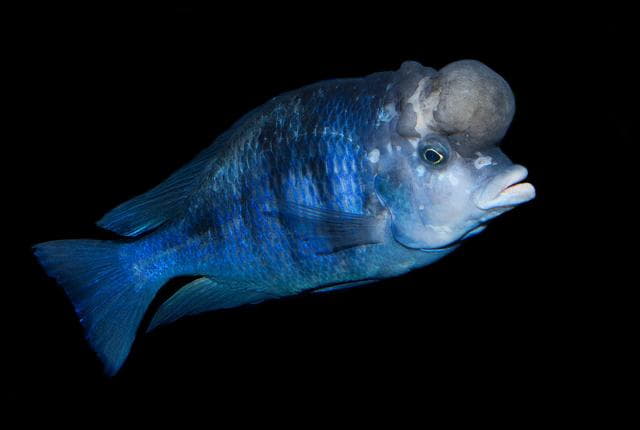
Image credit: Brian Gratwicke via Wikimedia Commons (public domain), license information, source attribution.
The Moori (Cyrtocara moorii), also called the blue dolphin, is a rather stocky Malawi cichlid about 25 cm in size. Females stay somewhat smaller. It can be kept well in the transition zone, so rocky structures are just as necessary as a sandy substrate. These ornamental fish feed on plants and can be kept in pairs or in a harem. Breeding in the aquarium is relatively easy. Since they are mouthbrooders, raising the young is a wonderful spectacle to watch.
Aulonocara baenschi "Benga", also called Baensch's peacock cichlid, is a splendidly yellow-colored peacock cichlid for the transition zone from rock to sand. They feed mainly on meat but also accept food with plant content. The animals can grow up to 12 cm and can be kept well with other fish. They are group animals that can gladly be kept in the aquarium with a surplus of females. The stone structures serve as important retreats for the females.