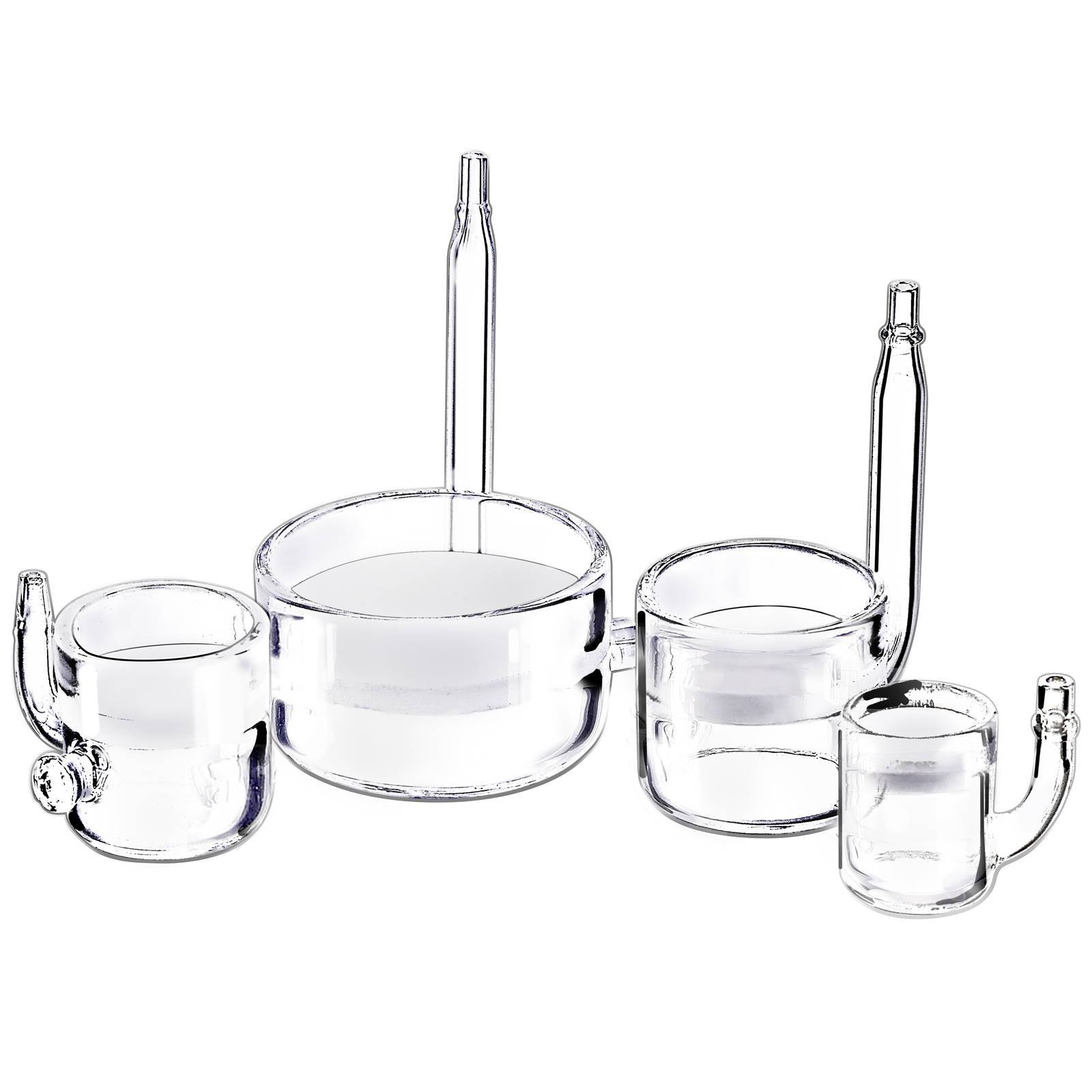
 Choosing the right CO2 diffuser for your aquarium
Carbon in the form of carbon dioxide (CO2) is one of the most important nutrients for the healthy growth of aquatic plants. Ideally, carbon dioxide is supplied to the aquarium by means of a CO2 system. The dosing device plays a major role here. So-called diffusers are particularly efficient, atomizing the CO2 into many small bubbles and thereby making it easier for the gas to dissolve in the aquarium water. For this, the CO2 is pressed through a white ceramic membrane under appropriate pressure. But even among diffusers, there are different designs and models.
We help you find a suitable CO2 diffuser for your aquarium.
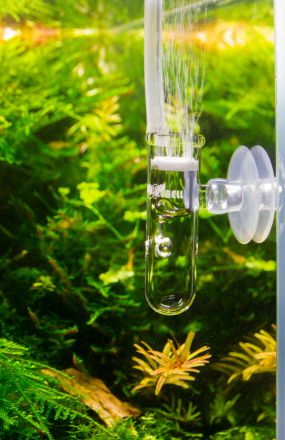
CO2 system
First of all, the type of CO2 system used on the aquarium is decisive. In principle, a distinction is made between systems with pressurized gas (with disposable or refillable cylinders) and bio CO2. Due to how they operate, the latter do not have particularly high pressure, which can also fluctuate strongly. Many diffusers, however, only work optimally at a higher, constant CO2 pressure. For this reason, for bio CO2 systems, dosing devices that also work well at low pressure are recommended. The air diffusers are recommended here. They are made of acrylic glass, are very quiet and offer good value for money.
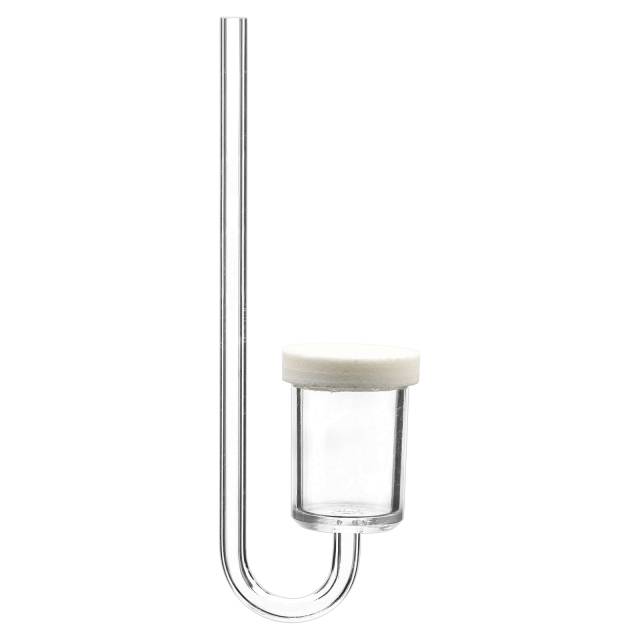
Pressurized gas systems, on the other hand, are more constant in their performance and work at a higher pressure. Here you have far more choice and can fall back on dosing devices that need a corresponding working pressure, such as larger glass and stainless steel diffusers or Inline Atomizers.
Size of the aquarium
The total water volume of the aquarium certainly has the most influence on the choice of components for a CO2 system. You orient yourself by the gross volume of the aquarium. The larger a tank is, the larger the diffuser to be used should be, or rather the diameter of the ceramic membrane it contains. The CO2 system should then work at a correspondingly higher pressure.
For nano aquariums, diffusers of smaller size are enough. Such small tanks can also be run well with a bio CO2 system. Particularly small and effective, for example, is the AQUARIO NEO Diffuser Original (see video below). This diffuser is characterized by very fine atomization.
With aquariums of a larger volume (from 500 liters up) or a corresponding edge length (from 1.50 meters), it can certainly make sense to use two diffusers. These are installed on the left and right in the aquarium, respectively. This ensures better CO2 distribution in such a large tank.
Glass, plastic or stainless steel?
If you also use filter inlets and outlets (lily pipes) made of glass or stainless steel in your aquascape or planted aquarium, you can fall back on corresponding materials for the CO2 equipment too. Both various diffusers and tubing guides (J or U pipes) are available in either glass or stainless steel. The former usually have a very fine-pored membrane installed, which, depending on the model, can also be replaced. This makes cleaning and any repairs easier.
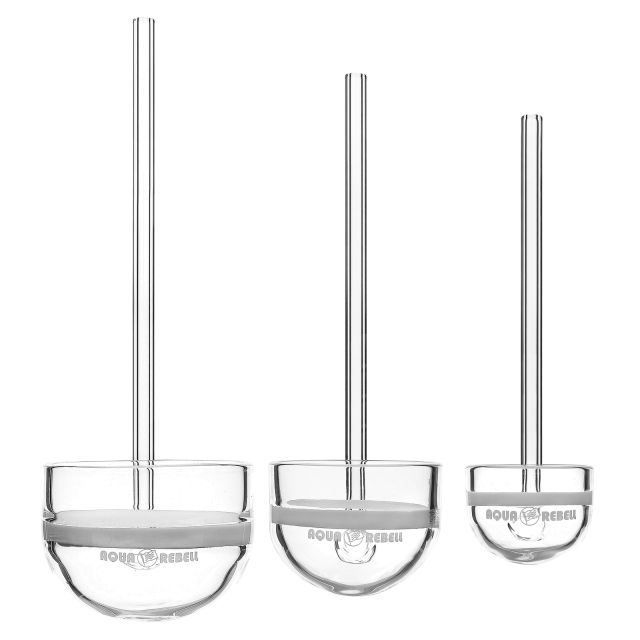
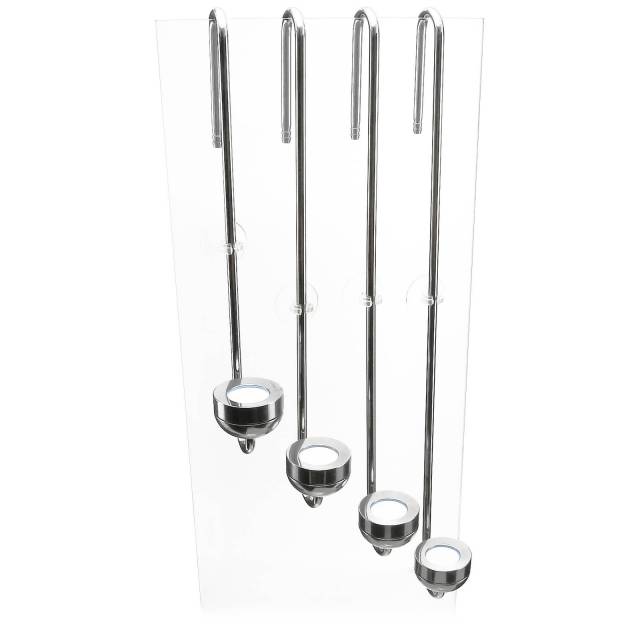
Diffusers made of acrylic glass or plastic are also available in our online shop. They offer the advantage of a low purchase price and often have excellent, very fine-pored membranes installed. At the appropriate pressure (often 2 bar or higher), these produce truly extremely small bubbles and thus very efficient solubility of the gas in the water. Models made of acrylic glass still look very attractive, while colored plastic variants can sometimes be more visually conspicuous.

The AQUARIO Neo CO2 Diffuser produces micro-sized bubbles.
Hidden CO2 equipment
Interesting for larger aquariums, but also for purist aquascaping layouts where as little equipment as possible should be visible, are the so-called inline diffusers. These are installed in the cabinet under the aquarium, in the tubing run of the external filter between the filter canister and the outlet.
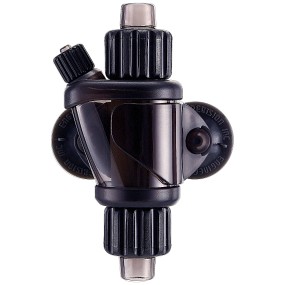
Inline diffusers are available for all common tubing diameters and hardly affect the flow performance. With this option, the atomization of the gas is once again much finer and very quiet. However, a higher working pressure is also necessary for the Inline Atomizer to work well. We recommend a value of 1.8 bar here.
All that is visible with this type of injection are micro-fine CO2 bubbles, which are pumped into the aquarium with the water from the filter outlet (see video).
The quality of the ceramic membrane
The nature of the membrane also influences CO2 solubility in the aquarium water. The finer-pored a membrane is, the more micro-fine bubbles it can produce. Smaller CO2 bubbles have a larger surface area relative to bubble volume than larger bubbles. The gas can therefore dissolve in the water faster (see also: Suikei Research). However, this also requires a higher working pressure at the CO2 system (often 2 bar). The aquarist should make sure that the system's components such as the pressure reducer, tubing and check valve are designed for such high pressure.
Many diffusers made of acrylic glass, plastic or stainless steel in particular, as well as Inline Atomizers, have very fine-pored membranes, as does higher-quality glassware from ADA or Aqua Rebell. Based on this, we have finally put together an overview of the suitable diffusers for typical aquarium sizes. The suggestions for the respective aquarium volume are summarized in a ranking by degree of recommendation:
Overview: CO2 diffusers
20 to 30 l nano aquarium, Dennerle Scaper's Tank 35 l or Nano Cube, ADA Mini M:
54 l standard aquarium (60x30x30 cm), Dennerle Scaper's Tank 50 l or ADA 60-P:
- AQUARIO Neo CO2 Diffuser Original medium
- Aqua Rebell Diffuser Small
- Stainless steel diffuser 15 mm
- Aquasabi CO2 Nano Diffuser
112 l standard aquarium (80x35x40 cm):
- AQUARIO Neo CO2 Diffuser Original large
- Stainless steel diffuser 15 mm
- Inline Atomizer
- Aquasabi CO2 Diffuser Japan Style 1000
182 l standard aquarium (90x45x45 cm), ADA 90-P:
- Aqua Rebell CO2 Diffuser Bowl 30 mm
- Inline Atomizer
- Stainless steel diffuser 25 mm
- Aquasabi CO2 Diffuser Japan Style 3000
250 l standard aquarium (100x50x50 cm) or 243 l ADA 120-P:
- Aqua Rebell CO2 Diffuser Bowl 40 mm
- Inline Atomizer
- Stainless steel diffuser 25 mm
- Aquasabi CO2 Diffuser Japan Style 3000