 Utricularia gibba
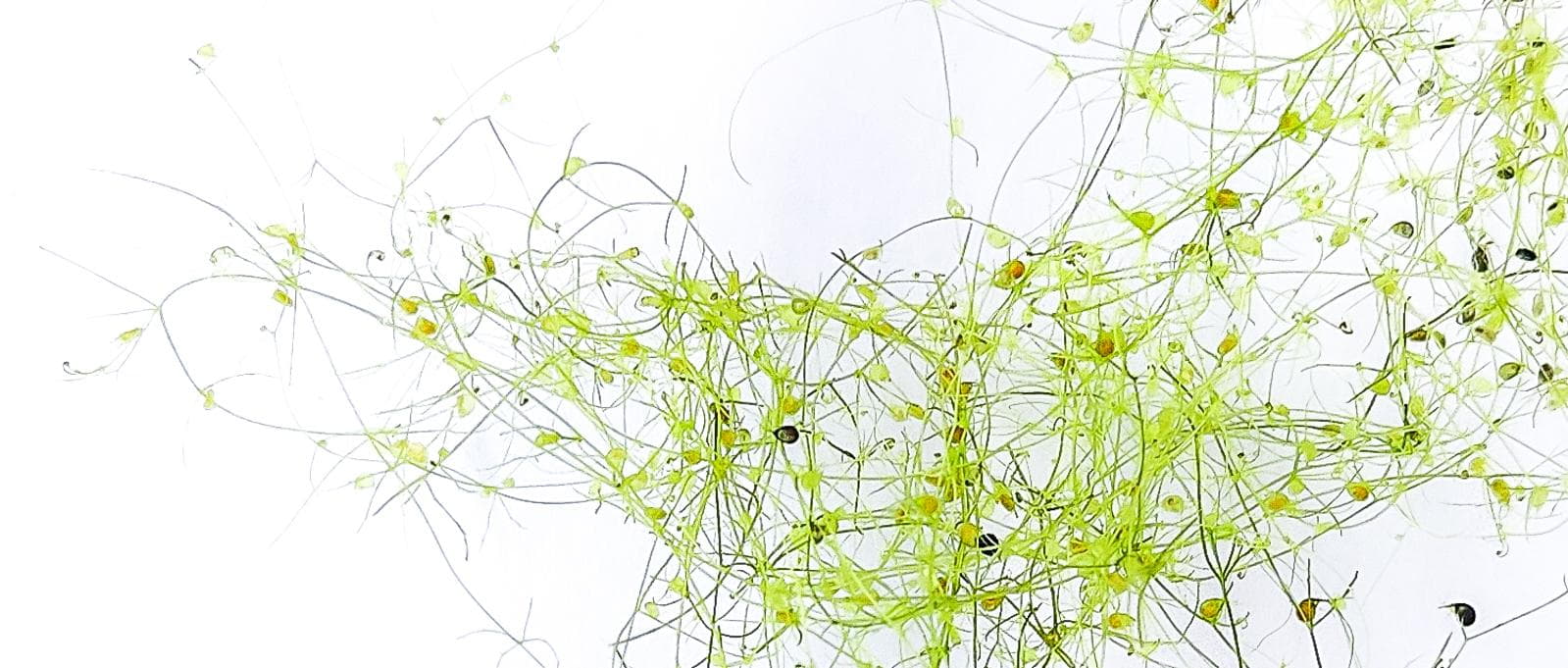
Sometimes an aquarist discovers a kind of plant or alga in their beloved aquarium that spreads quite quickly. These are light green elongated threads that are therefore often mistaken for thread algae. If, however, visible little knobs occur on the threads, it is most likely Utricularia gibba. This is not an alga, but a plant. Here we introduce it in a bit more detail.
Utricularia gibba
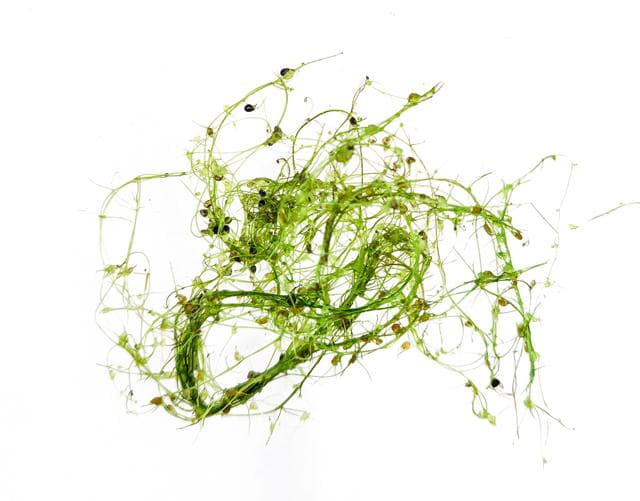
The so-called humped bladderwort (dwarf bladderwort) is indeed a plant that can easily be introduced as a "hitchhiker" with newly purchased aquatic plants. This usually only happens if you buy submersed plants; with emersed potted plants, introducing foreign plants is extremely unlikely, and with in-vitro plants it is even completely ruled out.
Because of its strange appearance, Utricularia gibba is quite often mistaken for an alga at first, since the plant grows very thread-like and has no typical leaves, stems and roots. The dwarf bladderwort can be recognized, however, by the distinctive little knobs that are spaced regularly along the threads. These are basically the very stunted leaves of this plant, on which the bladder traps are located. With them, the dwarf bladderwort is able to catch tiny aquatic animals (for example single-celled organisms). The plant can thus feed carnivorously.
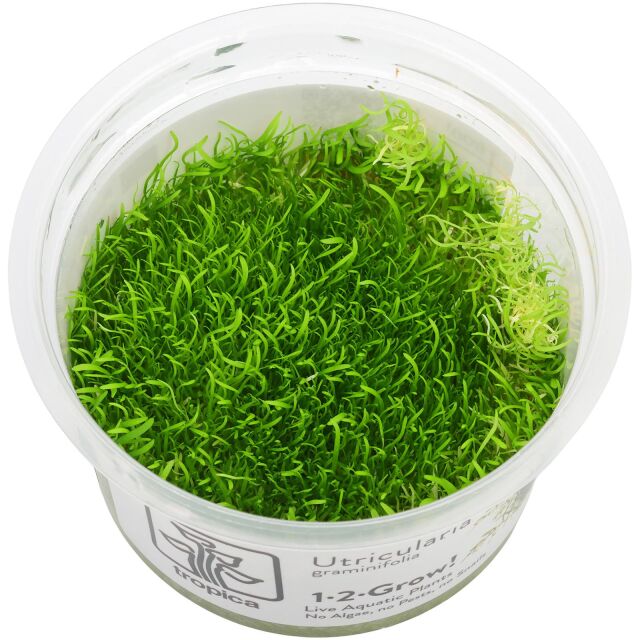
By the way, there are definitely bladderwort species that are interesting for the aquarium hobby. Utricularia graminifolia, for example, is a quite popular ground cover plant, especially in aquascaping (see photo below).
You often find Utricularia gibba between other plants, but it can also stay on hardscape or even the substrate. One more reason why the bladderwort is more likely to be mistaken for an alga.
Combating Utricularia gibba
Why should you get rid of a plant at all? This question is indeed justified. Many aquarists, however, do not really find Utricularia gibba attractive, and often it also came into the aquarium unknowingly. Unfortunately, it is very fast-growing, robust and therefore shows quite invasive behavior. Within a short time it can form quite dense stands and overgrow whole plant groups or hardscape. The plants underneath then unfortunately risk being suppressed and getting less and less light and nutrients. It is therefore recommended to keep Utricularia gibba out of an aquarium as well as possible.
Unfortunately, Utricularia gibba cannot really be pushed back well by withholding light or by worsening the nutrient situation. This is quite a common option with algae, but unfortunately does not work with this plant. This is because the bladderwort is very robust and can adapt well to different situations.
Because of its branched form and way of growing, it is sometimes quite strenuous to remove the bladderwort from other plants. You should proceed quite carefully, because even leaving behind tiny fragments can unfortunately cause new shoots to develop from them. It is therefore quite annoying and labor-intensive to keep this plant in check.
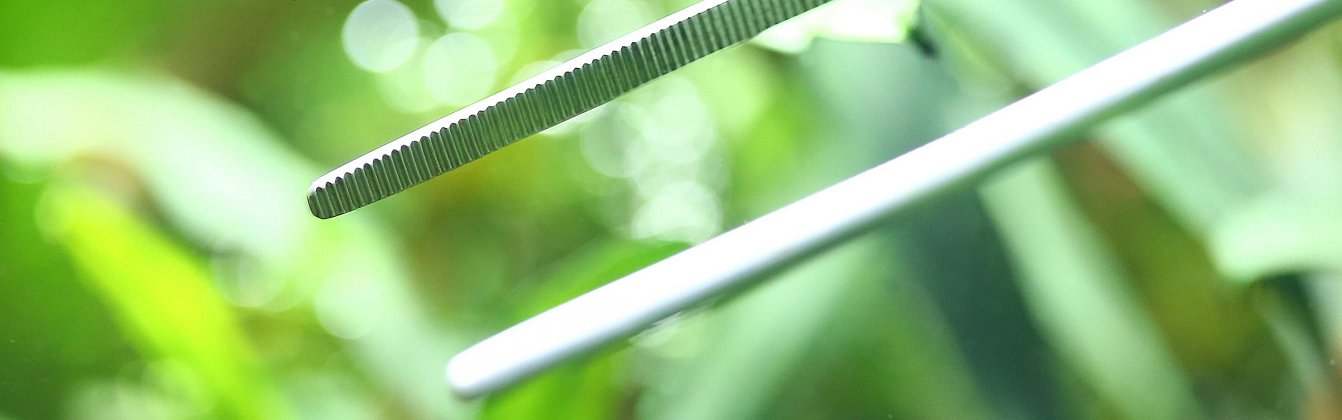
Indeed, persistent and careful picking out (best with tweezers) is the only way to control Utricularia gibba and sometimes also to get rid of it for good.
Preventing Utricularia gibba
To be on the safe side, you should already pay attention when buying aquatic plants to choose sales forms that are as free of foreign plants as possible. This most likely includes potted plants, since these are usually kept and cultivated emersed (above water). In-vitro plants offer even greater safety here and are also free of algae, snails, pesticides or other foreign plants.
Further precautions can be, for example, to inspect newly acquired aquatic plants closely before planting or even to put them in quarantine first. When buying fish or invertebrates, too, the transport water should preferably not be added to the aquarium, to prevent the introduction of tiny fragments.