 Aquarium: Mixing ground cover plants
Combining different ground cover plants can surely be traced back to Takashi Amano. It has since become a fixed part of nature aquaristics. While Dutch aquascaping strictly separates plant groups from one another, mixing foreground plants in an aquascape provides the desired, very natural look. In this article, we take a closer look at the advantages and disadvantages of this approach.
Advantages of mixing ground cover plants in the aquarium
As already mentioned, aquascapes with a so-called "mixed carpet" look much wilder and are more closely modeled on nature. Especially in Iwagumi layouts, a mixed foreground of different ground cover plants can look very lively.
Takashi Amano already knew how to put the advantages of certain aquarium plants to use. He was one of the first to use Riccia fluitans as a ground cover. Since crystalwort is actually a floating plant and does not root, this aquatic plant has to be tied onto stones. Amano also often combined Riccia with a strongly runner-forming species such as Glossostigma elatinoides. With its network of roots and lateral shoots, the runners of the Australian mud mat help the floating plant stay on the bottom. In that respect, such a combination of aquarium plants can even have technical advantages.
Leaf shapes
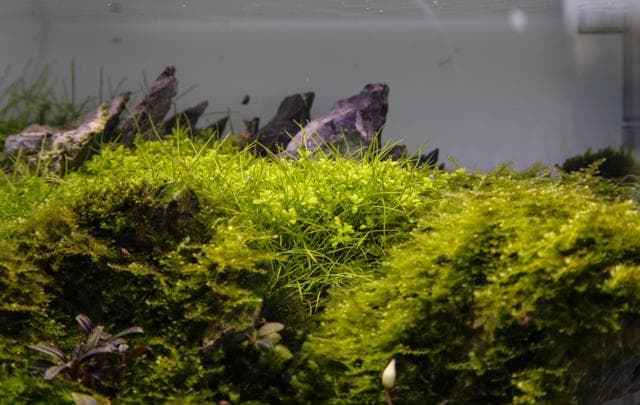
If you want to emphasize naturalness and contrast in the foreground through the planting in the aquascape, it is advisable to choose leaf shapes or growth heights that are as different as possible. Grass-like blades combined with rounded leaves make a very pretty combination to look at. A dense, flat-growing carpet from which a few taller leaves stick out also has a very nice visual effect. Further below, we present more popular examples.
Sense of depth through deliberate choice of ground cover
Especially in aquascapes in the style of an Iwagumi or diorama, often only species of aquatic plants that stay small or grow as ground cover are used. Here, a deliberate shrinking of a particular leaf shape can emphasize the sense of depth. For this, you first decide on a leaf shape (round or elongated) and place species with larger leaves toward the front and species with ever smaller leaves toward the back.
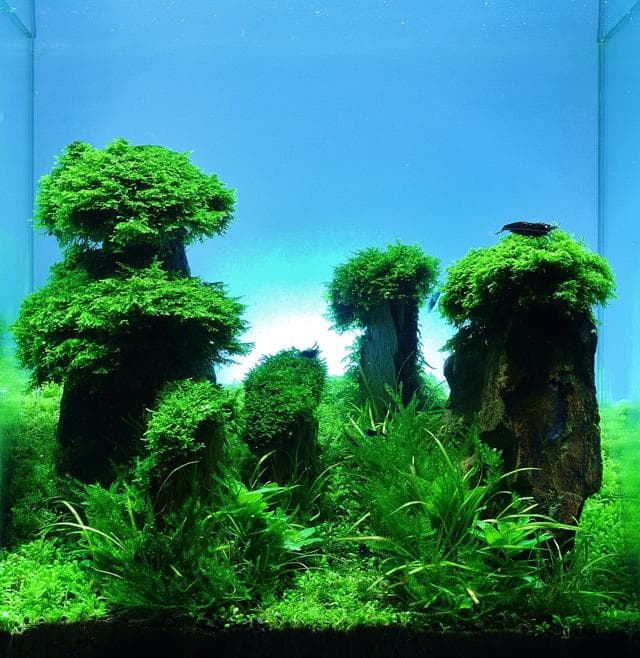
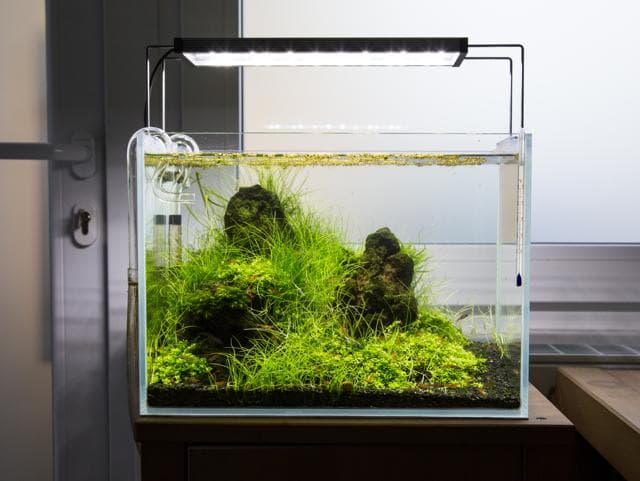
In this Iwagumi in a Nano Cube, the somewhat larger-leaved Elatine hydropiper was used in the foreground and the comparatively smaller-looking dwarf baby tears 'Cuba' in the background to bring out the sense of depth.
Of course, other plants and above all the placement of hardscape also play an important role for the sense of depth in the aquarium. We have described this in more detail in this article.
Disadvantages of mixing foreground plants
When combining different ground cover plants, however, the aquarist must also be aware that there are definitely disadvantages. For a certain time such a "mixed carpet" simply looks great, but as it matures the plants grow very densely into one another. It can certainly happen that one plant species gains the upper hand (usually the fastest-growing one) and gradually suppresses the other variety.
Separating the plants from each other or thinning out only one variety significantly is very difficult or even impossible, since the roots of both species are usually strongly intergrown. Often the only thing that helps then is redesigning the foreground.
Popular combinations
Some ways of using plants together have become established in aquaristics and are particularly popular. Here we present a few examples of mixed ground cover plants:
Solitary-growing plants for the foreground
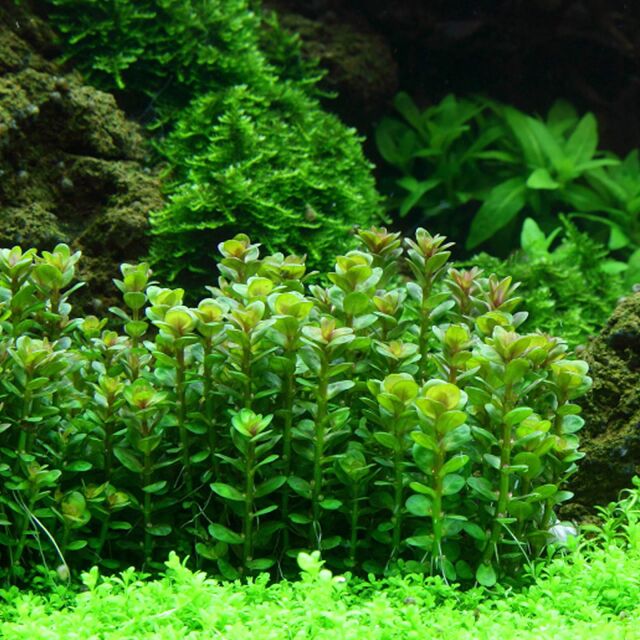
To avoid the disadvantages of a "mixed carpet" and to prevent plants from growing into one another too much, you can better choose so-called solitary plants as ground cover. These generally do not propagate, or hardly propagate, by runners and therefore stay in place and are easy to control. The following plant species are particularly well suited for this:
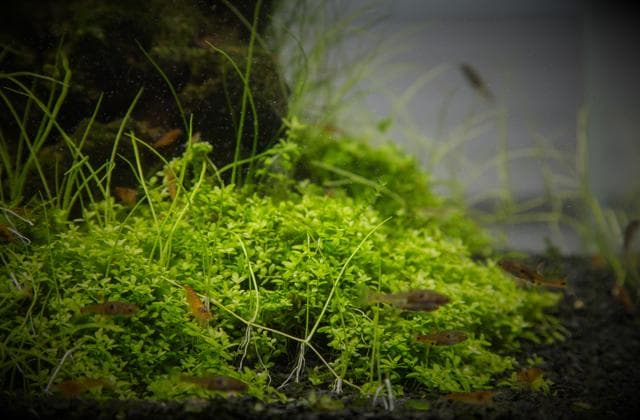
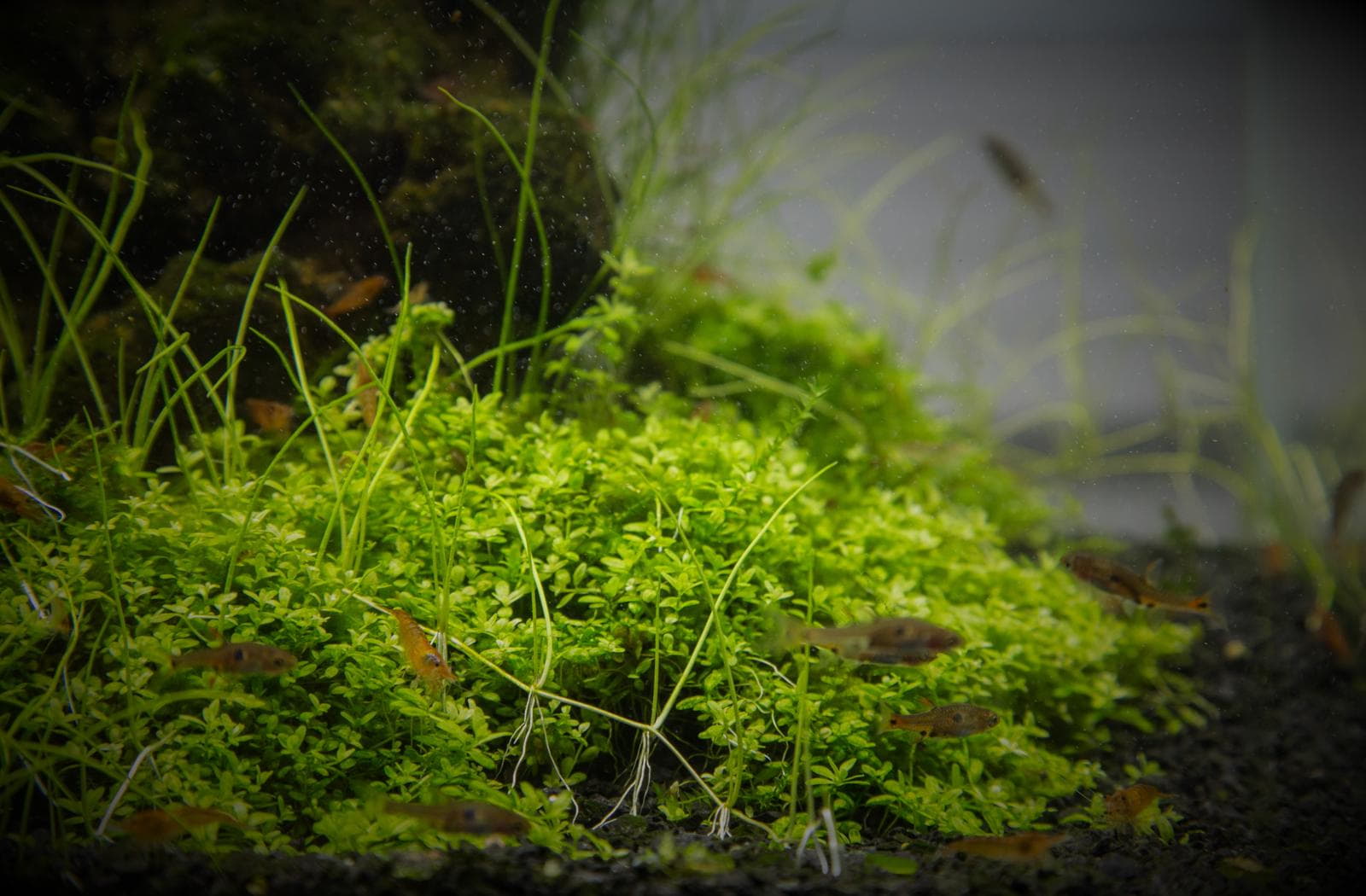
- A classic, especially for aquascapes in the nano range, is the combination of Eleocharis sp. 'Mini' and dwarf baby tears 'Cuba' (or alternatively Micranthemum tweediei). Here low-staying rounded leaves in the front area of the aquarium meet longer, thin blades that stand out higher up.
![HCC and Eleocharis]()
- The mixture of the somewhat less demanding foreground plants New Zealand grass and Marsilea hirsuta makes a pretty picture. The grass-like look is loosened up here with a few "clover leaves" and thus gives the impression of a natural meadow.
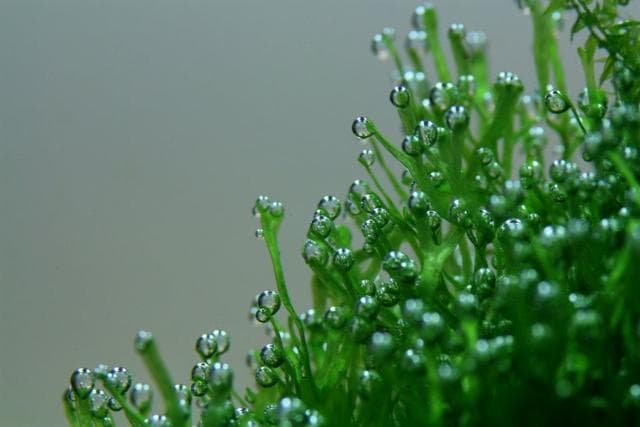
- As also described at the beginning, the combination of Riccia fluitans and Glossostigma elatinoides is very popular, especially in nature aquaristics. Here the root and runner network of the Australian mud mat helps reduce the buoyancy of the Riccia and thus keeps the plant on the bottom.
![Riccia fluitans]()
- Small-staying epiphytes
- small-staying cryptocorynes such as Cryptocoryne parva
- Staurogyne repens
- small-staying species of Echinodorus or Helanthium such as Helanthium tenellum "parvulum"
- Rotala indica
- Alternanthera reineckii 'Mini'