 Controlling growth behavior
Are your aquatic plants growing poorly and slowly? Is the Echinodorus at the back right getting far too big? There are many different reasons for deliberately controlling the growth rate of plants in the aquarium. It even goes in both directions: sometimes more growth is desired, sometimes less.
There are many factors that have a positive or negative effect on the growth rate of aquarium plants. A nutrient-rich substrate or a sufficient supply of nutrients through liquid fertilizer, for example, promotes growth. On the other hand, nutrient deficiencies can slow down the behavior and appearance of aquatic plants. In this article we show you how to use certain factors deliberately.
Control through phosphate level
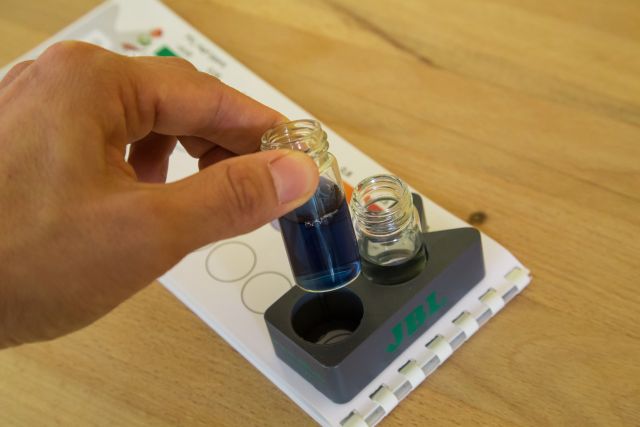
A quite popular method among planted-tank aquarists is limitation through PO4. The original idea behind it is based on the "Poor man's dosing drops" (PMDD) system, which was originally developed by Paul L. Sears and Kevin C. Conlin. The idea is to provide the plants with all important nutrients in sufficient amounts, but phosphate only to a small extent. As a result, the plants mainly grow more slowly, sometimes with somewhat smaller leaves. Because of the PO4 deficiency, reddish plants may also develop more intense coloration - the red tone is then more pronounced and in some cases goes into pink (more info on this here). Overall, though, this method is quite usable, as deficiency symptoms in the form of necroses hardly occur. The plants definitely look quite healthy but, as said, do not grow as quickly.
Limitation through CO2
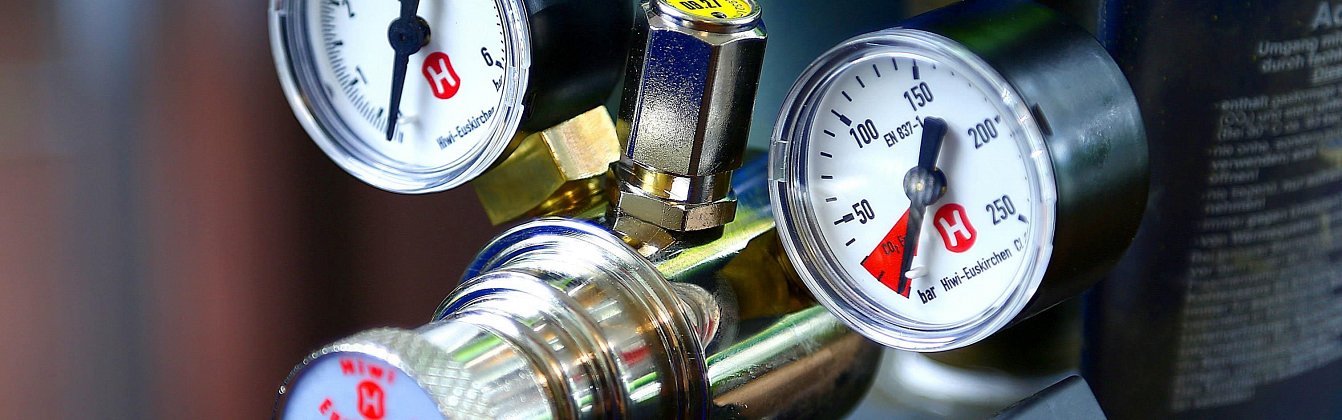
Carbon is an immensely important nutrient for healthy plant growth, even for the simplest and least demanding plants. If there was no CO2 fertilization before, adding it can accelerate the growth of aquarium plants enormously. Vitality also increases noticeably then. The plants then show healthier colors and look stronger. By limiting CO2, you can also slow the growth rate down somewhat, if that is desired. Here you should not stop carbon fertilization completely but only reduce it, so that a turquoise drop checker (corresponding to roughly 10-15 mg/l CO2) is present. This method is not necessarily ideal for controlling the growth rate, because it can also cause nutrient deficiencies (for example yellow leaves). Unfortunately, plant health also decreases somewhat as a result. Although some plant species can fall back on biogenic decalcification, this is not particularly good for the vitality and appearance of the plants.
Limitation through light

By changing the brightness, the growth of aquarium plants can be controlled quite well. Especially when increasing the lighting, however, it is important that the nutrient balance as well as the species and sheer mass of the aquatic plants match each other well. As a negative example: strongly lighting a few shade plants without good liquid fertilization and CO2 addition is not likely to lead to better growth, but very probably to increased algae growth.
Reducing the light intensity also reduces the metabolism of the plants. Following Liebig's law of the minimum, light then becomes the limiting factor. This offers a good way to slow down processes in the aquarium, which is useful for times of absence such as a vacation. Nutrient consumption is then reduced and, to a certain extent, the maintenance effort as well, so that you do not have to trim the plants as often during that time.
Over a longer period, however, when reducing the light you should make sure that no light deficiency symptoms develop. These show up especially in stem plants through long internode distances. The plants then grow upward faster to get more light. The growth is then less bushy and compact, also with rosette plants, for example.
Control through the substrate
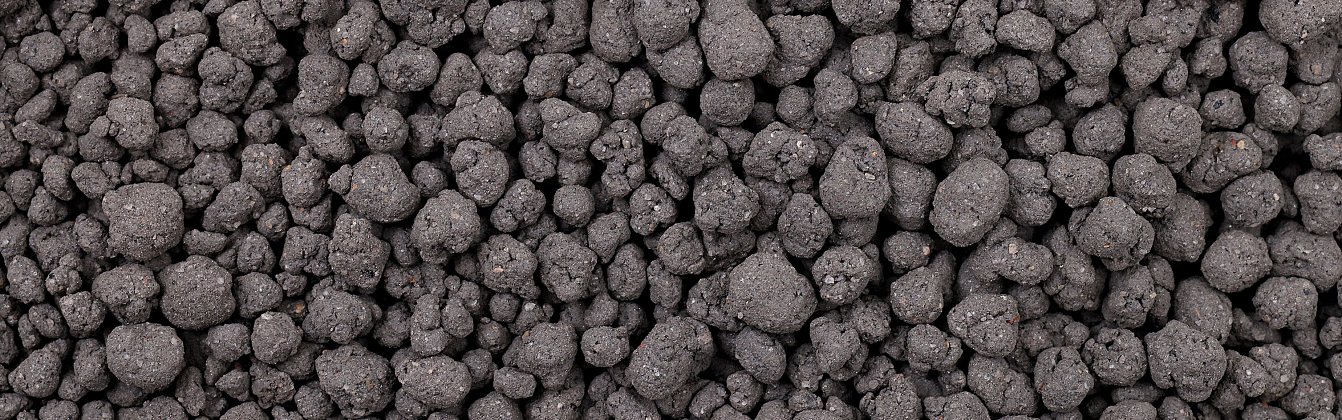
How well aquarium plants can feed through their roots is the be-all and end-all in aquatic plant keeping, especially for heavy root-feeding species. Soil substrates play out their strengths here. In some cases soils are so heavily pre-fertilized that liquid fertilization is not needed at all, or only very little, for a certain time. Heavy root feeders in particular, but also stem plants, benefit greatly from this and grow extremely well, especially in the first weeks. Especially in comparison with nutrient-free sand or gravel, clear differences can be seen here. But even over a longer time, soil offers many advantages for the growth of aquarium plants thanks to its cation exchange capacity. This can in some cases also be undesirable, because especially heavily root-feeding rosette plants such as Cryptocorynes and Echinodorus can then reach gigantic proportions. Sometimes such strong and lush plant growth is not desired at all, since it makes the plants larger and also increases the maintenance effort.
In this case, the aquarist is better advised to use a substrate that is not as strong or is even nutrient-free, such as sand or gravel. A good but more controlled growth is then ensured by combining it with appropriate liquid fertilization and the use of substrate fertilizers. The latter, by the way, can also be used well when the effect of soil is wearing off and you want to offer individual plants nutrients through the roots again in a targeted way. Here, nutrient tablets or fertilizer balls can be placed very precisely near the roots to promote the growth of certain aquarium plants.
In principle, however, controlling growth through the substrate is not as easily possible and traceable as, for example, with liquid fertilization. Once placed in the substrate, the nutrients are available and their concentration can be changed only with difficulty or not at all. You also have rather little influence on the speed of nutrient release. A combination of substrate and liquid fertilization is therefore advisable for controlled and traceable growth of the aquarium plants.