 The Indonesian Style in Aquascaping
In this article, we want to take a closer look at the special style of aquascapers from Indonesia. The aquarium designers from this country are distinguished above all by their special approach to hardscape (driftwood and stones in the aquarium). We will now present this feature in a bit more detail.
Glued hardscape
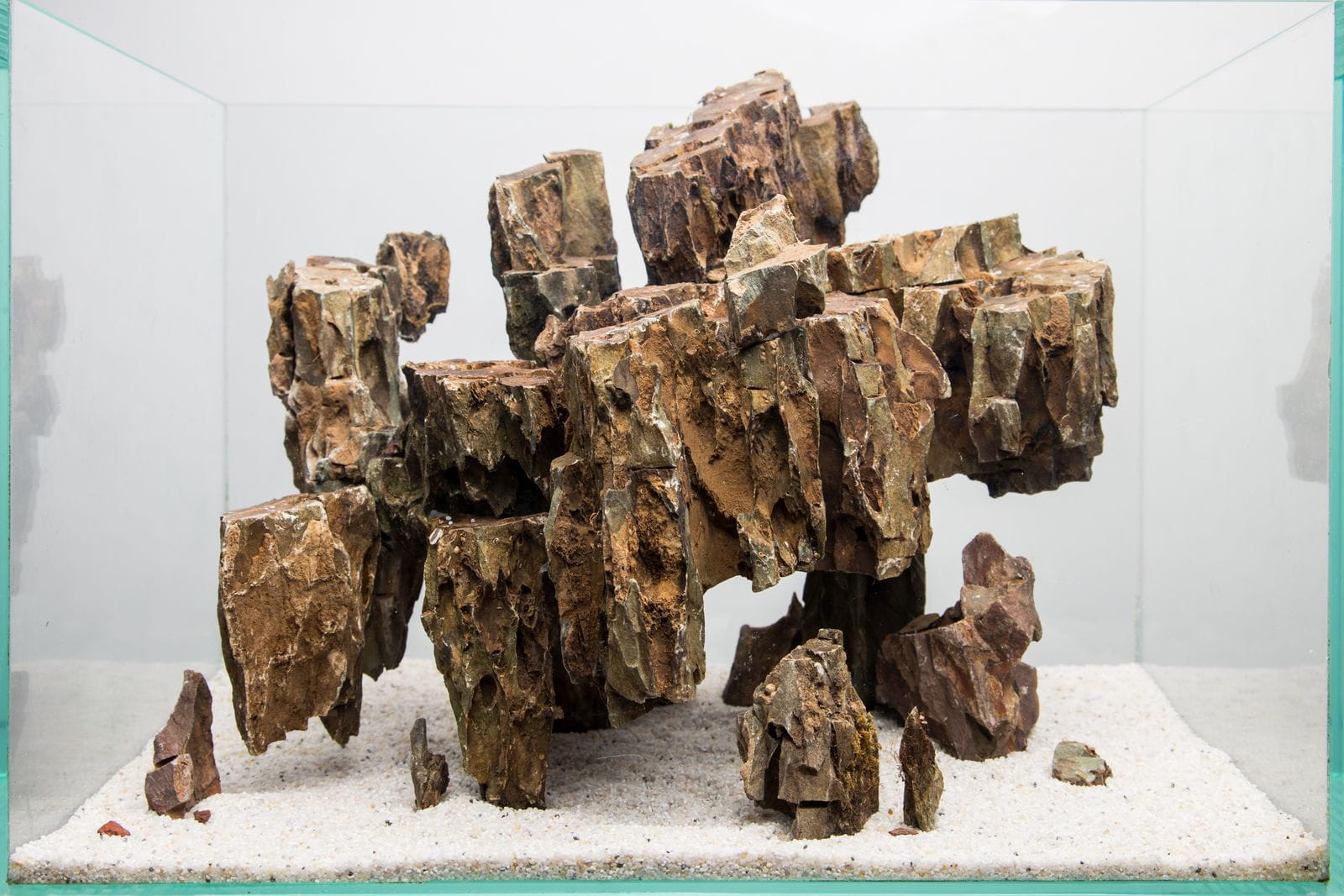
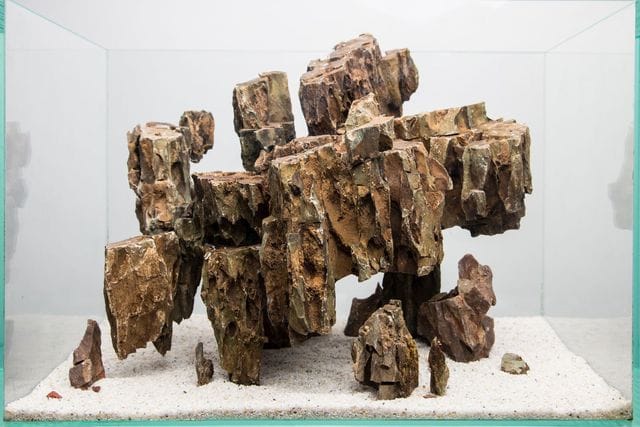
Very distinctive for the Indonesian aquarium setup style is the creation of hardscape compositions that are frequently glued together. Fixing stones and driftwood to each other, together with the properties of the glue, creates a great many new and above all time-saving possibilities. By working with super glue using the cigarette filter method, individual components can be joined together very quickly. It is also no problem to realize rather adventurous combinations such as stone overhangs or creating an entire root out of several pieces.
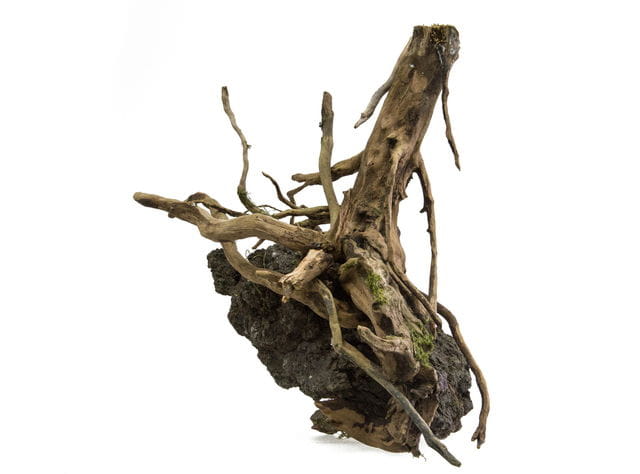
This hardscape arrangement combines a stone overhang with a root made of many individual parts.
Complete hardscape compositions are also gladly glued together so that they form one large, connected piece, or are joined together by a common base plate. This way the entire arrangement can be moved in and out of the aquarium very easily.
Bonsai trees
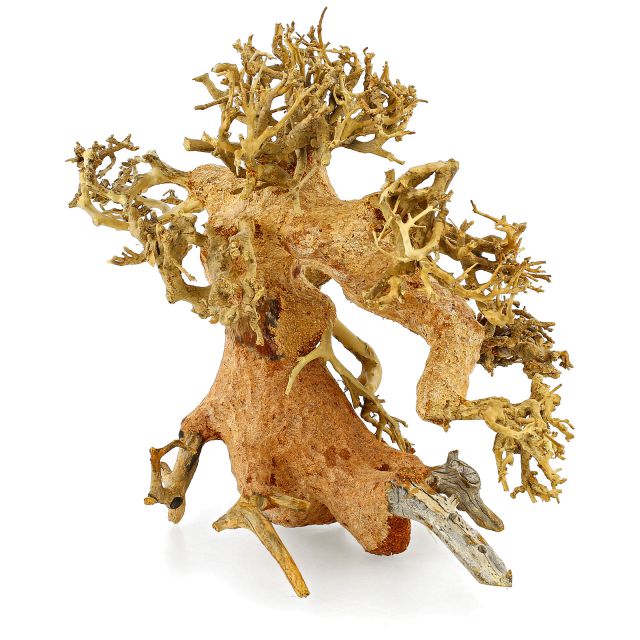
By the way: the bonsai trees that have become popular in the aquarium hobby in recent years are also made according to the Indonesian principle. These are handmade products in which pieces of wood are joined together to obtain a whole piece of wood (here in the form of a bonsai tree). A great piece of craftsmanship for your use in the aquarium.
Indonesian aquascapers
Of course, you should not reduce the expertise of Indonesian aquascapers to their hardscape skills alone. These extraordinary aquarium decorations are planted primarily with fine mosses such as Riccardia chamedryfolia and Fissidens fontanus, or delicate ground cover plants are used. By using such small-leaved aquatic plants, the scale of an underwater landscape is set in an optimal proportion, so that the impression of a successful diorama is well preserved.
The quality of aquascapers from Indonesia is of course also reflected in correspondingly good placements in renowned aquascaping contests such as the AGA Contest or the IAPLC. Many of these aquascapers are also strongly represented on social networks. Renowned aquarium designers from Indonesia include Herry Rasio, Wendy Kurniawan, Yoyo Prayogi or Arif Hamsa, to name just a few. It is definitely worth engaging with the work of these layout designers and letting yourself be inspired.