 Fixing a sand path with glue
A sand path in an aquascape is a unique detail that looks breathtaking. Paths wind through gorges or little streams meander through the landscape - at least that is the visual impression. In fact, such sand paths are not easy to maintain, especially when a very steep slope is added. We have tried out a new method here to keep such a sand zone in place.
Super glue in the aquarium
Cyanoacrylate-based glues have in fact been used successfully in the aquarium hobby for quite some time. In the form of gel-like plant glues, they can be used to attach aquatic plants to decorative materials. Thin, liquid super glue is used with the so-called cigarette filter method, above all by Indonesian aquascapers, to bond entire hardscape structures together. So why not use it to hold decorative substrate zones in place as well? We will now show you how it works using an example.
Gluing a sand path step by step
In this typical diorama-style aquarium layout, a mountain landscape is created. The type of stone we use here is Minilandschaft, and the substrate is a nutrient-rich soil. It is important to use a not-too-coarse base material in the areas where the sand will be sprinkled later. Soil is well suited for this. If the gaps between the particles are too large, the glue can otherwise seep downward faster, which reduces its bonding strength and may even reach the bottom glass. This should be avoided.
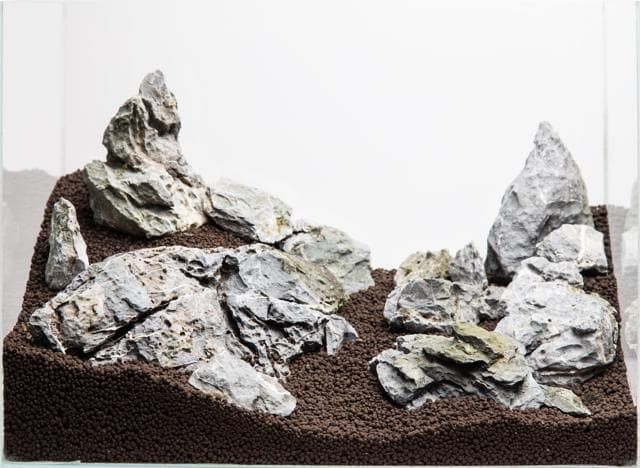
To make the impression even more realistic and varied, a sand path is laid out that narrows as it winds toward the back. To create the necessary sense of depth, this sand path has to be laid out with a considerable slope.
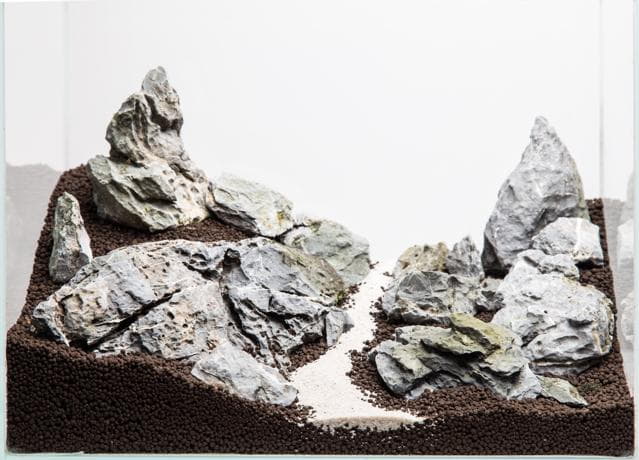
Since natural erosion and above all animals that dig through the substrate, such as shrimp, level out this slope over time, regular maintenance is necessary to preserve the sand path. For example, the path has to be piled up again in the rear area from time to time to keep the slope. Too much accumulated sand in the front zone will also have to be removed so that it does not pile up too much in the foreground. To reduce this maintenance somewhat, gluing the sand surface can be a good option. First, a few safety notes.
Disclaimer & safety notes
Please observe the safety instructions of the respective product before use. The glue used bonds skin and eyelids together within seconds. Keep out of the reach of children. Avoid direct contact with skin, eyes and clothing. Wearing suitable protective clothing (gloves) is recommended.
Since quite a lot of glue is used this way, we recommend working with the material only in well-ventilated rooms. You should also take regular breaks. If you notice signs of headache or nausea, stop working.
Although experience shows that using super glue in an aquarium, which is not its intended purpose, is harmless, it cannot be ruled out that the ingredients may cause damage to glass, equipment, substrate, plants and animals. Use at your own risk! We accept no liability for any damage that may occur.
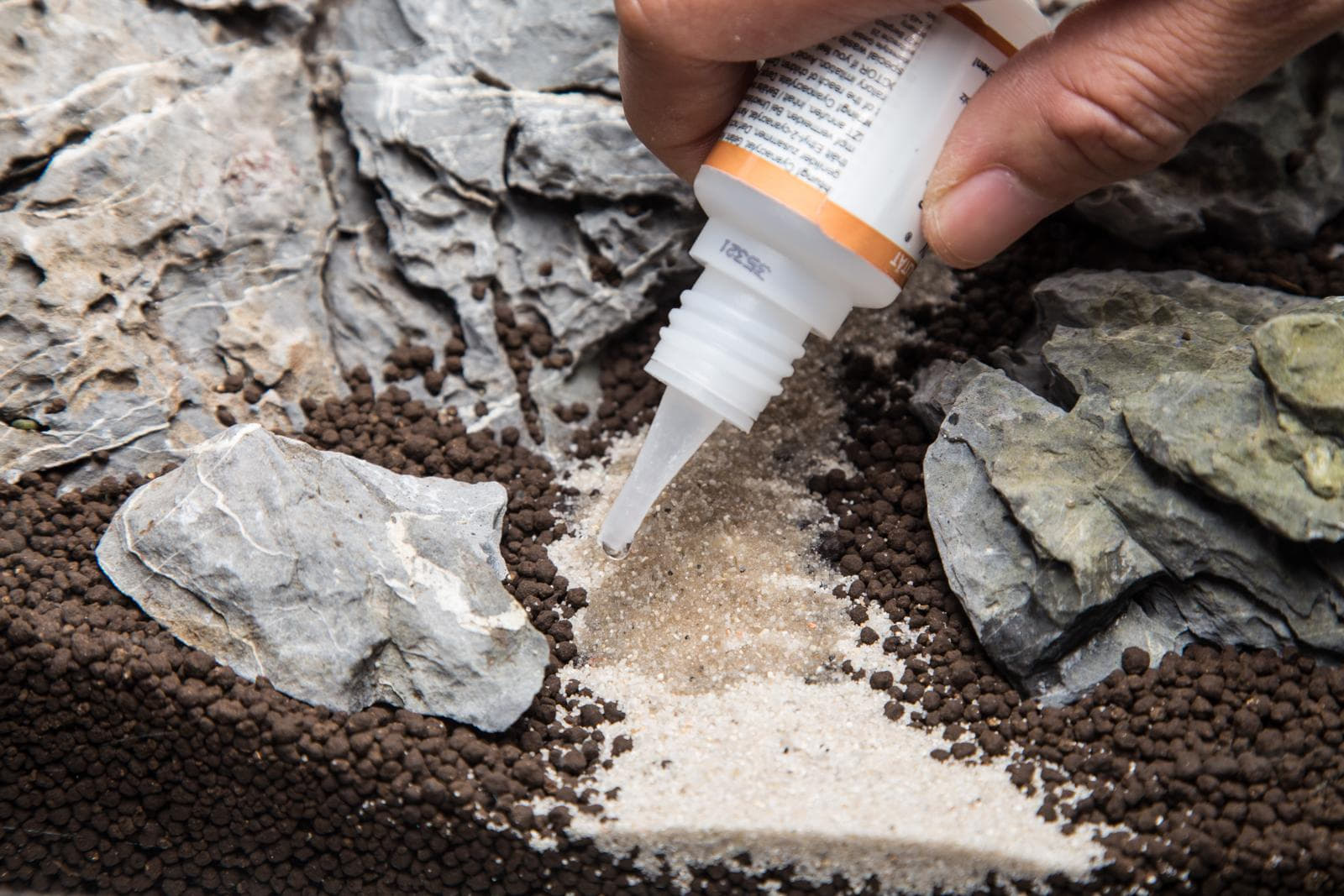
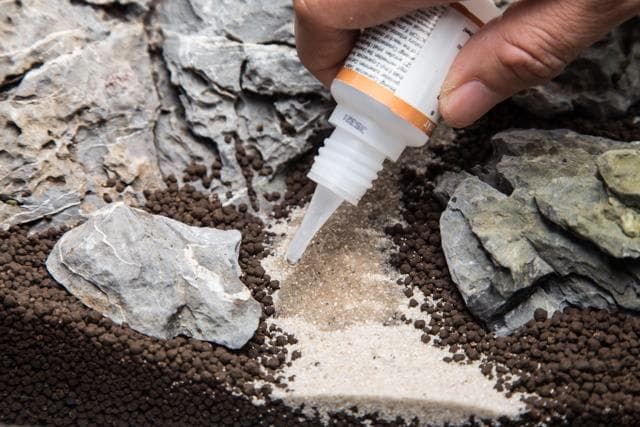
To do this, you can drip a thin, liquid (NOT gel-like) cyanoacrylate-based super glue onto the sand path drop by drop. Use the glue very sparingly and very precisely. In any case, only the top layer of the substrate should be glued (to a depth of just a few millimeters). You can easily see where the glue has already been applied, because the sand clearly darkens in these spots. Take particular care that no liquid gets onto the glass panes of the aquarium. It is better to clearly leave out certain areas in the background and foreground near the panes. You should also allow for the glue spreading a little from the spot where it was applied. By the way, this also happens in the downward direction, so that some materials used under the sand are glued along with it, such as soil granules.
After applying the glue over the desired area, you can sprinkle a little sand over it by hand with your fingertips. Since the sand soaked in glue turns dark, lightly sprinkling sand over it restores the original look and color tone.
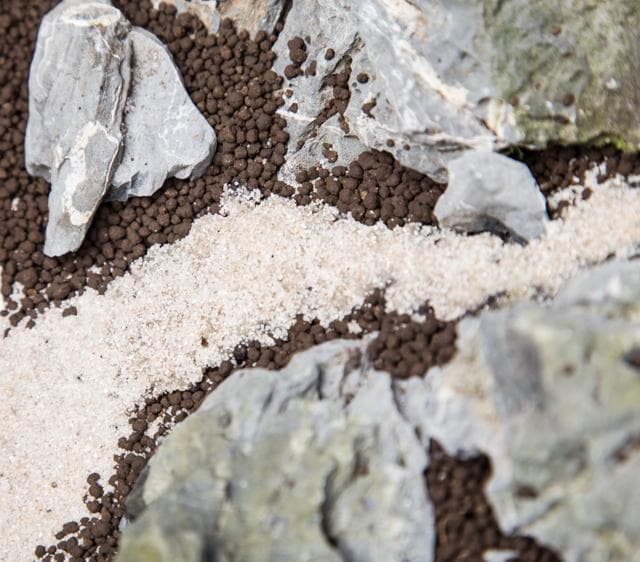
In this way, the sand can of course also be fixed to hardscape such as stones. With a sand path, that may not be a bad thing, because you can also fix it to nearby rock at the sides. This gives the path even more stability. Keep in mind, however, that the super glue also turns stones dark. Gluing right next to the substrate is less noticeable, or the glued spot can be concealed again with substrate sprinkled on afterward.
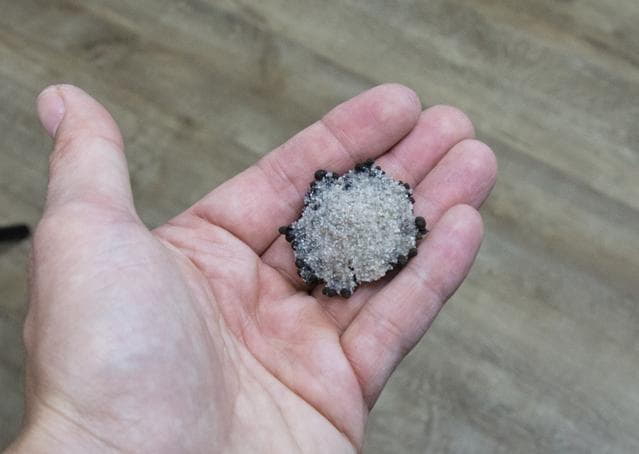
Since the glue cures quite quickly, it usually does not reach deeper layers. If you applied the glue very sparingly and precisely, ideally only the sand path itself is glued. After drying, such zones can even be lifted out and, in some cases, reused in other layouts.
Details
In aquascaping, such a sand path is often refined with additional small stones, pebbles or even other types of substrate. This creates an incredible variety of detail and makes an aquarium design look much more natural and impressive. The disadvantage is that these fine touches can only be preserved over a longer period with a corresponding amount of maintenance. Particles heavier than the sand often sink down and then disappear into the lower layers.
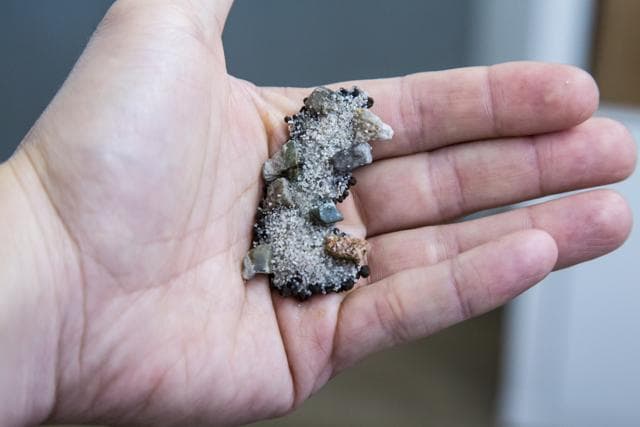
These details can also be fixed in place with the glue, as in this photo. This sand zone was enriched with a few smaller stones.
If you want to make these details more flexible, it can still be worth fixing only the sand path underneath with glue. The substrate then forms a rigid mass in which the small stones can no longer sink in.