 Oxygen in the aquarium
Oxygen gas (O2) is a component of air and can dissolve in water. In principle, it is of enormous importance for all living things in the aquarium. This applies not only to animals such as ornamental fish, shrimp, snails and crayfish, but also to many microorganisms such as bacteria, which need the gas for chemical processes. Aquatic plants also need oxygen, although they naturally produce it themselves through photosynthesis as well. In this article we show how important oxygen is for an aquarium and give tips for a better oxygen supply.
Oxygen and animal inhabitants
For most living things in the aquarium, especially ornamental fish, shrimp, crayfish and snails, oxygen is vital for respiration. This gas is taken up through respiratory organs such as lungs or gills, often also through the entire body surface, and is then distributed throughout the body via the bloodstream. In this way all organs are supplied with O2. In the cells, energy for all life processes is then obtained by oxidizing organic substances with the oxygen. Carbon dioxide (CO2) is produced as a waste product. Because of this so-called aerobic respiration, oxygen is of immense importance for all animal inhabitants of the aquarium.
The element oxygen (O) is also one of the basic building blocks of most organic compounds and thus of living things themselves. The animals, however, do not take up this oxygen as O2 from the air or the water, but with the organic nutrients in which it is chemically bound.
Oxygen and microorganisms
O2 is also important for many microorganisms in the aquarium − apart from those that do not need oxygen because they are capable of so-called anaerobic cellular respiration. But, for example, bacterial genera such as Nitrosomonas and Nitrosospira, which are so important for the nitrogen cycle, need oxygen. They oxidize ammonium (NH4) to nitrite (NO2); the next step from nitrite to nitrate (NO3) is carried out by genera such as Nitrobacter and Nitrospira, which also need oxygen for it. Hence, oxygen is of great importance for the biological balance and the breakdown of pollutants.
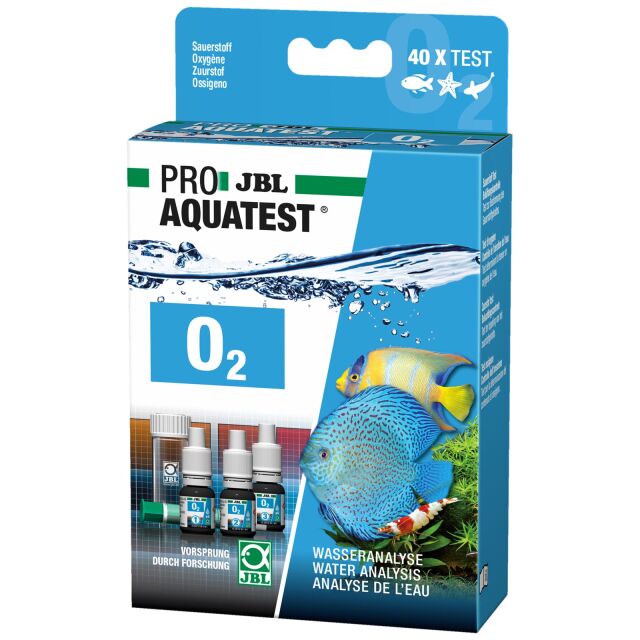
The concentration of oxygen in aquarium water should if possible not drop into the range of only 4 to 5 mg/l O2. If you measure such low values, you can speak of an oxygen deficiency. For the aquarium hobby there are suitable oxygen tests with which the O2 content in the water can be checked.
Aquatic plants and oxygen
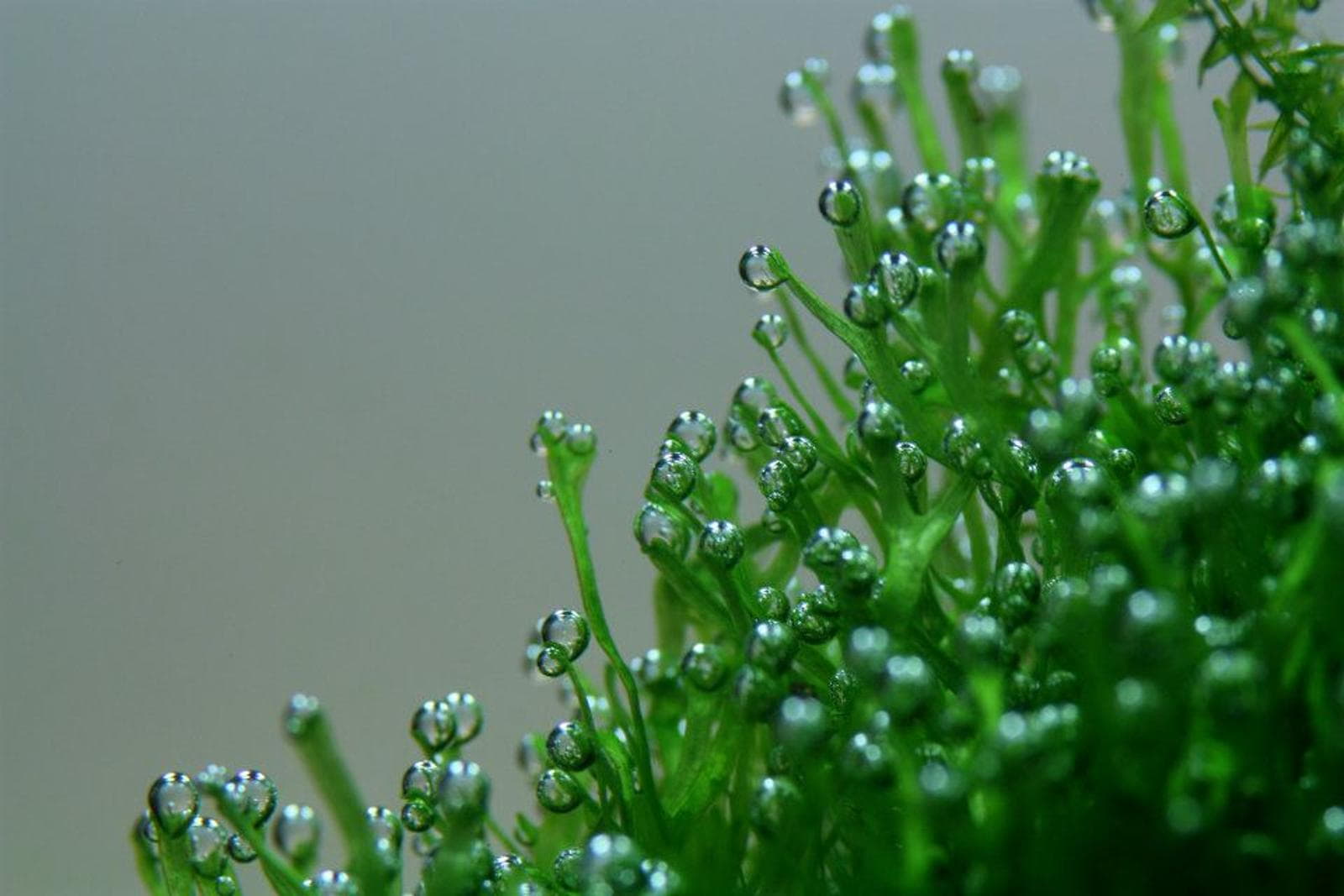
Plants need oxygen too. Just like animals, they need it to obtain energy from organic substances through aerobic cellular respiration. However, they also produce oxygen themselves during photosynthesis. Here, light energy is used to make glucose and oxygen gas from water and carbon dioxide. Plants can take up oxygen from the air or the water for their respiration and additionally use the oxygen from their own photosynthesis. Conversely, they use the CO2 from respiration for photosynthesis. For plants, the O2 supply to the roots is especially important, because these must breathe in order to live. As a rule, however, roots cannot produce their own oxygen through photosynthesis. In their natural habitats, aquatic and marsh plants also mostly grow in low-oxygen soils. Here a system of air channels helps them transport oxygen. This system, called aerenchyma, runs through the entire plant. In this way, roots and other underground organs can be reliably supplied with oxygen. Some aquatic plants are even able to release oxygen through the roots and thereby enrich the soil with O2.

Most aquarium plants have such a well-developed aerenchyma, but epiphytes such as Anubias, Java fern and Bucephalandra do not. In nature, they mostly sit on rocks in and next to fast-flowing waters. Their roots and rhizomes are not adapted to low-oxygen conditions and therefore also depend in the aquarium on the oxygen in the open water or in a coarse, well-flushed substrate.
In the aquarium, the aquatic plants produce oxygen during the lighting period, that is, usually during the day. The plants do respire then as well, but they normally release more oxygen through photosynthesis than they consume through respiration. At night, however, when it is dark, no photosynthesis takes place, only respiration, the reverse process, so to speak. During this time the plants need O2 and release CO2. In very densely planted aquariums with a lot of fast-growing plant mass, an oxygen shortage can therefore sometimes occur at night, which can then have a negative effect on the inhabitants. Shrimp in particular can suffer from this. The aquarist then regularly discovers a few dead animals in the morning, again and again. Here, aerating the aquarium at night can help. We have presented exactly how to proceed in this separate article.
Relationship between temperature and oxygen
Water can only absorb oxygen to a certain extent. This ability also depends strongly on the water temperature. As the temperature rises, the water's capacity to absorb oxygen drops; conversely, cooler water can absorb more oxygen.
Especially in aquariums that need rather higher temperatures because of their stocking, the aquarist should therefore make sure there is a good oxygen supply. These include, for example, South American aquariums, especially those with discus, aquariums with African cichlids, but also themed aquariums with a focus on Sulawesi.

Recognizing oxygen deficiency in the aquarium
A lack of oxygen in the water can often be recognized in the animals by the fact that they stay near the water surface and have an increased breathing rate. Typical is fish "hanging" under the water surface, combined with gasping. But it is not only fish; invertebrates, too, can indicate oxygen deficiency through their behavior. Snails then crawl up the aquarium glass in large numbers, and shrimp try to reach the surface using aids such as aquatic plants and decorative objects such as driftwood. This behavior can be caused not only by oxygen deficiency but also by an elevated nitrite content or too strong a CO2 concentration. You should determine this more precisely with targeted testing. For this, the aquarist can find suitable tests in specialist stores for determining the oxygen, carbon dioxide and nitrite concentration in the aquarium water.
Increasing the oxygen content in the aquarium
If there is a lack of oxygen in the aquarium, there are several approaches to solving the problem.
Aerating the aquarium
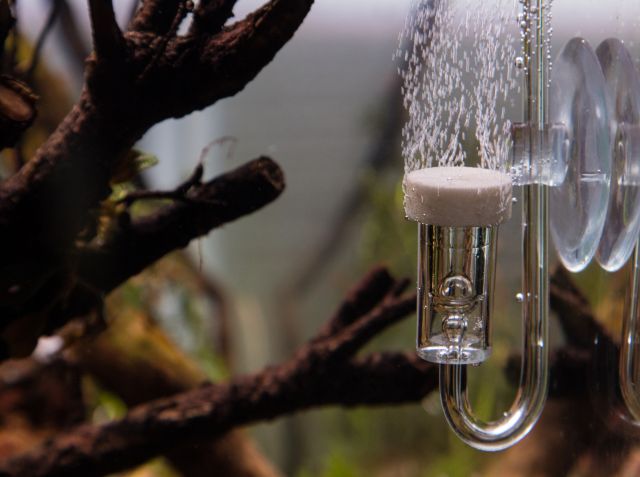
The simplest and most obvious solution is additional aeration of the aquarium. As a rule, this is done with an air stone in the aquarium, which is connected to a diaphragm pump via an air hose and carries ambient air into the water. The air stone, or diffuser, breaks the air up into smaller bubbles, which then rise in the aquarium. Depending on the size of the bubbles and the corresponding surface agitation, CO2 is also driven out. Sometimes the breathing of the ornamental fish and other aquarium inhabitants can be impaired by too high a carbon dioxide concentration. Driving out CO2 with an air stone then makes breathing easier for them. In a planted aquarium, however, the aquatic plants may grow worse if a lot of CO2 is driven out, since it is the source of the essential plant nutrient carbon. You get a similar effect on the oxygen and carbon dioxide concentration if you adjust the filtration of the aquarium a little, for example by positioning the filter outflow higher so that the water surface is agitated more. Or you use a skimmer, or surface skimmer, as the filter inflow.
Lowering the water temperature
If an oxygen deficiency is due to the temperature in the aquarium having risen sharply (for example on very hot summer days), the O2 content can be increased by cooling the aquarium. Of course, you should proceed gently here so as not to shock the stock. We have presented measures for cooling an aquarium in more detail here.
Oxydators
There are certainly other technical aids in the aquarium hobby for adding oxygen. In the shrimp scene in particular, the use of an oxydator is very popular. Installing a Twinstar sterilizer also increases the oxygen concentration in the aquarium. Both products also have other positive effects (for example reducing germ pressure), which we have described in more detail in the case of Twinstar in this article.
More aquatic plants
A fairly popular argument for the importance of aquatic plants is that they are natural oxygen producers, and accordingly adding more plants to the aquarium is recommended to increase the O2 content. For a noticeable effect to occur, however, it is also important to supply the aquatic plants optimally with enough light and all essential nutrients. In addition to carbon from CO2, this includes micronutrients (iron and other trace elements) as well as macronutrients, above all potassium, nitrogen and phosphorus. You can read how to feed aquarium plants properly in this article.
And as already mentioned above, aquarium plants are oxygen donors only during the lighting period, not in the dark when no photosynthesis takes place.