 Breeding grindal worms made easy
Source and copyright of the header photo: Cherus - Own work via Wiki Commons, license: CC BY-SA 3.0, source credit.
Grindal worms actually belong to the enchytraeids, but they show a few different behaviors and also stay considerably smaller. The pale grindal worms are quite rich in fat and should therefore not be fed to the fish in the aquarium every day. Grindal worms are very easy to breed, and the cultures - done right - are not particularly smelly.
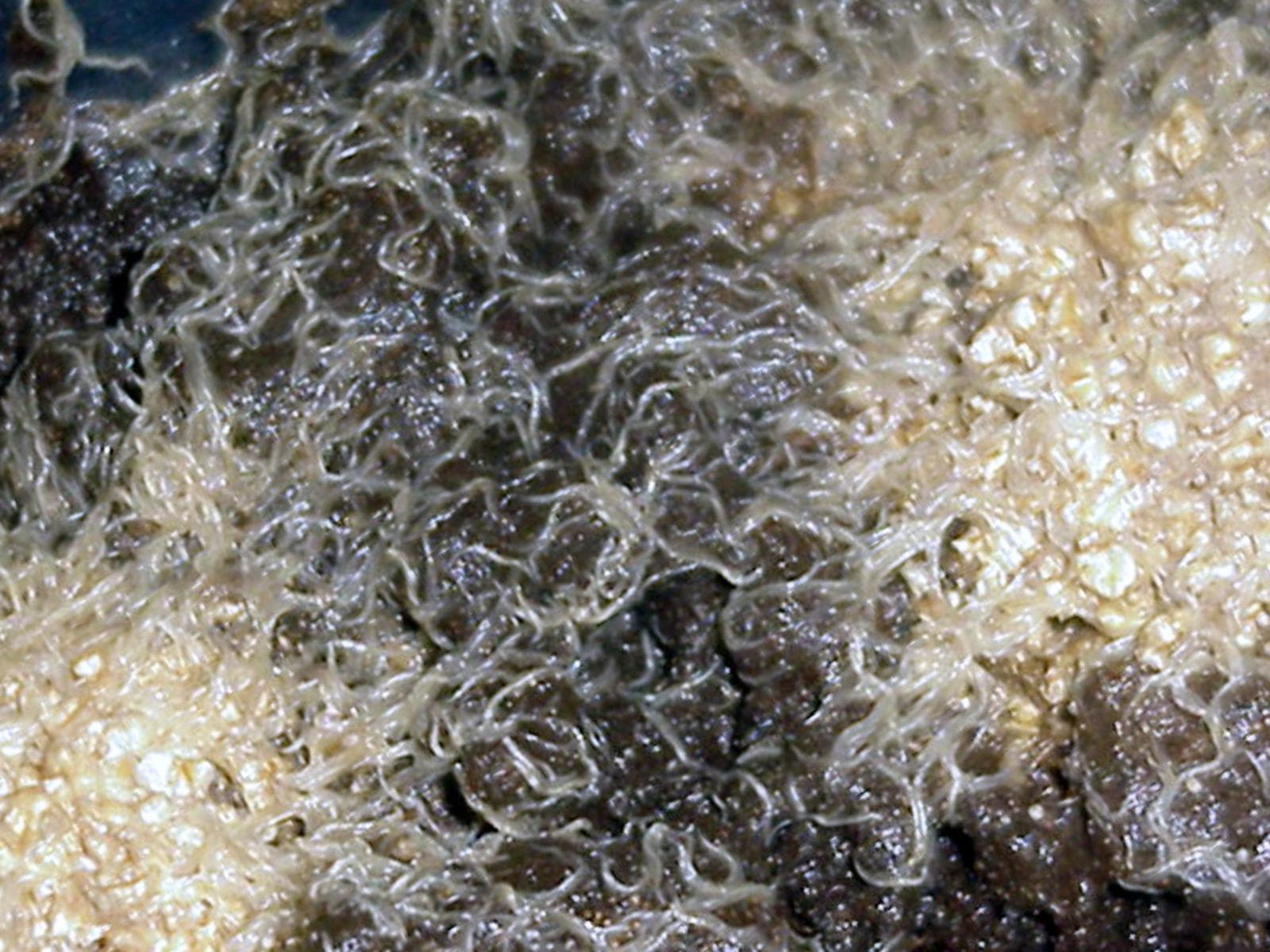
The white, thin grindal worms, which only grow up to about 1 cm long, are named after their discoverer, Morton M. Grindal, who noticed the first two specimens and went on to breed them. Later the grindal worm was identified as Enchytraeus buchholzi, but the common name was kept, also in honor of its discoverer. As a species of the genus Enchytraeus, these segmented worms belong to the oligochaetes. Unlike the other enchytraeids common in the aquarium hobby, they do not clump together in water but spread apart.
The hermaphroditic grindal worms lay egg cocoons after mating, from which the young worms hatch. Under good conditions they reproduce very quickly and are therefore a very productive source of live food for your aquarium fish or invertebrates.
Grindal worms as live food for fish and invertebrates
Grindal worms cannot swim; they crawl along the substrate. The worms can survive underwater for a few more days and are therefore very well suited as a live food that does not directly pollute the water if not everything is eaten right away.
The worms sink immediately and then stay lying on the bottom. Caution: in coarse substrate they can "disappear" downward. Here, substrate-dwelling cleanup crew such as Malaysian trumpet snails should definitely be present in the aquarium, which can take care of dead worms in the substrate.
The soft grindal worms are a good live food for juvenile fish and adult small to medium-sized aquarium fish. They are also perfectly suited for shrimp, snails and crayfish and are readily accepted. Especially protein-hungry shrimp such as Amano shrimp, or juvenile crayfish or dwarf crayfish, like these fatty, protein-rich worms very much. Aquarium snails also like to grab grindal worms, because they need protein to build their shells.
Grindal worms should by no means be fed daily, however, because they are very high in fat. One to three times a week is sufficient, ideally alternating with other live food such as water fleas, which are less rich.
Where do you find grindal worms?
Grindal worms, which are very easy to breed, can be found as starter cultures at hobby fairs, trade fairs and in various online shops, and you can get them from fellow aquarists ... Grindal worms are not hard to get because they are quite easy to breed and keep.
Breeding grindal worms made easy
Like the other enchytraeids common in the aquarium hobby, grindal worms are not aquatic animals and are therefore bred on a moist substrate. Seramis, for example, is suitable for this and is very easy to keep clean. Moist potting soil (unfertilized) or peat is also suitable as a substrate for grindal worms. Many things work as a breeding container: a food storage box or another container with a lid that is placed on loosely and/or provided with small air holes. The ventilation prevents mold and rotten spots, and the lid protects the culture from drying out.
Grindal worms like it moist and warm; their comfort temperature ranges from 22 °C to 28 °C. They do not need any light, so the culture can also be kept in the dark without any problem.
From time to time the culture is split. If you choose Seramis as the substrate, it can be rinsed through from time to time. The washed-out worms are caught in a sieve and can then be fed. It is advisable to keep a second culture in reserve in case the population in the first box collapses, which can happen from time to time.
Feeding grindal worms
Grindal worms are easy to feed. They like to eat fine rolled oats, dry yeast, baby cereal, some moistened toast, fish flake food and much more.
To prevent mites from spreading in the grindal culture, only feed as much as the worms can handle until the next feeding. This also prevents the culture from starting to mold.
"Harvesting" and feeding grindal worms
If you place a small pane of glass or plastic on the culture, the grindal worms collect on its underside. They can then be removed very easily and cleanly and fed to the fish, crayfish or shrimp in the aquarium.