 Breeding blackworms made easy
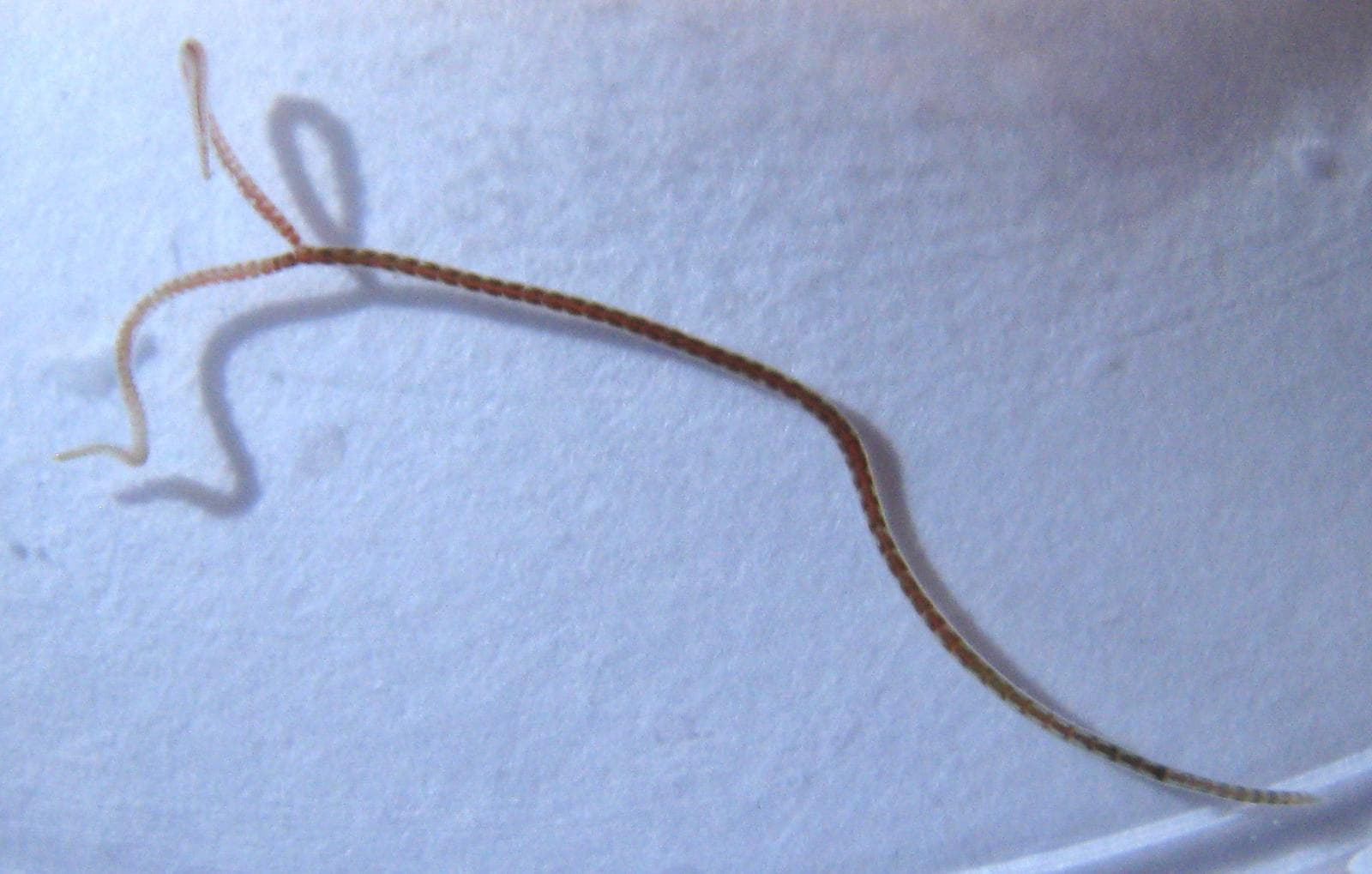
Image rights for the header photo: Dvortygirl - Own work, license: CC BY SA 3.0. The worm has a double tail due to an injury.
Blackworms (German: "Glanzwürmer", literally "glossy worms") are closely related to earthworms - the segmented, pink-gray to dark red annelids of the species Lumbriculus variegatus, however, live entirely underwater. Their red blood pigment, hemoglobin, gives them their color. As oligochaetes ("few-bristled" worms), they have the short, sparse bristles that give the group its name, one set on each segment, which they use to push themselves forward. A blackworm grows between 4 and over 10 cm long. They are a little hard to measure because they can stretch and contract a great deal. For their length they are relatively thin, so even smaller aquarium fish such as guppies can still eat them. Because they are often found in the roots of aquatic plants, blackworms are also known as Dennerle worms.
Blackworms as live food for fish and invertebrates
Blackworms are a perfect live food not only for fish but also - and especially - for crayfish. Unlike terrestrial earthworms, they do not have the drawback of escaping into the substrate, dying there and possibly fouling the water. Armored catfish, for example, throw a real party when they can dig the worms out of the substrate. Since they contain quite a lot of fat and protein, blackworms should not be fed to fish or crayfish every day.
In shrimp tanks, the blackworms that live in the substrate are often used as a cleanup crew. They dig, eat leftovers and keep the substrate loose. This brings more oxygen to the plant roots, which benefits the growth of the aquatic plants in the aquarium. Shrimp do not eat blackworms in excess, even if one or two get eaten now and then.
How do you get blackworms?
You can get blackworms either as a starter culture from fellow aquarists who have a well-running colony, as live food at the pet store or in an online shop, or you can catch them yourself. Blackworms are, after all, a classic pond food.
That is why you can wonderfully "harvest" them outdoors with a lettuce trap. To do this, you sink a few lettuce leaves in a net in a pond, ideally one without fish so that you do not accidentally bring parasites into your aquarium. A weight on the net is useful, as is a long string with which you can later pull the net out of the pond.
After a few days, you take the net with the by now slightly rotten, decomposing lettuce out of the pond and carry it home in a bucket. There you rinse the lettuce leaves thoroughly and catch the water. Surprisingly many blackworms collect here! You can feed them directly - or start a culture.
Breeding blackworms made easy
A worm culture works even in a small aquarium of 12 liters or more at room temperature, and without a filter, heater or light. The bottom should be covered with brown autumn leaves, in which the worms can hide and which they also use as food.
Feeding blackworms
The blackworms are fed every two days with plant-based food: spirulina tablets, rolled oats, chlorella powder, some scalded, soft-boiled lettuce, nettle or dandelion, dry yeast, ...
If the aquarium is not filtered, generously change the water two to three times a week. Alternatively, you can also add water fleas to the blackworm breeding tank. They keep the water clean through their filtering activity and can also be used as a valuable live food. You can read more about water fleas in our blog "Breeding water fleas as live food".
Reproduction of blackworms
Blackworms reproduce readily when fed well and are very productive, even in a worm breeding tank. They can reproduce sexually through egg cocoons, but also asexually by pinching off the last piece of their rear end. These pieces grow into new worms. Asexual reproduction by pinching off is preferred; the worms only produce egg cocoons, also called resting eggs, when living conditions in their habitat deteriorate. These egg cocoons are very well protected against cold, heat and drought.
"Harvesting" blackworms
It is not easy to sort the wriggling little worms out of the leaves on the bottom of the worm breeding tank. The "harvest" is easier if you cut coarse filter sponges into pieces and place them on the bottom of the worm tank. The blackworms find the porous sponges irresistible and crawl into them. Now you simply take one or more pieces of the sponge and conveniently transfer the worms to the aquarium with the fish or crayfish you want to feed. Alternatively, with larger quantities you can also build a lettuce trap as described above - adjusted to the tank size, it must of course be correspondingly smaller.