 Aquarium: sand or gravel?
Besides sand, gravel is certainly one of the most popular and time-tested substrates in aquarium keeping. What are the advantages and disadvantages of each substrate? We compare them here.
Sand or gravel?
By definition, there is in fact a gradual transition between sand and gravel. Sometimes these substrates even consist of the same material and differ only in particle size. There is actually a DIN standard that defines and regulates this. Gravel is declared as having a grain size of 2 mm to 63 mm, and there are even finer subdivisions into coarse gravel, medium gravel and fine gravel. A grain size below 2 mm, on the other hand, is defined as sand. Both substrates have been proven in aquarium keeping for decades and differ slightly in their properties. In general, sands and gravels are water-neutral and do not release any substances into the aquarium water or affect the water parameters. They are also free of nutrients (with a few exceptions) and are therefore a passive substrate, unlike soil. Only some natural gravels or sands can harden the water at times, especially in combination with a CO2 system. KH, GH and pH then rise accordingly. The products should be labeled accordingly, though.
Some sand and gravel substrates are dyed. Besides natural colors, this gives the aquarist very artificial shades such as blue, pink or green. The dyed particles are usually plastic-coated, so the treatment generally has no influence on the water parameters. As a precaution, you should not expose plastic-coated substrates to high temperatures, in order to preserve the protective coating.
There is an enormous variety of colors, especially for types of sand and gravel, so besides the aquarist's personal taste you can also cater well to the needs of the livestock. With the right substrates and decoration, you can create wonderful biotopes for various ornamental fish species. While some African cichlids, for example, are used to a light substrate, shy animals in particular prefer a rather dark substrate that does not reflect the light as strongly. A suitable environment takes away the animals' fear, and the colors of the fish or shrimp stand out with more contrast.
Sand
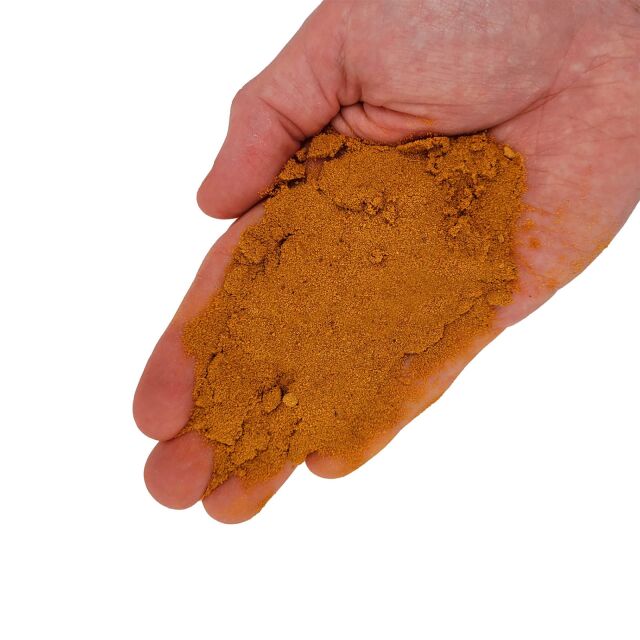
Because of its small grain size, sand is a very dense material that leaves few gaps in the substrate. As a result, especially with very fine sands, the substrate becomes quite compacted, so dirt and detritus tend to stay on the surface instead of seeping into deeper layers. This has certain advantages, because the detritus can be vacuumed off conveniently and the substrate stays quite clean and free of waste. However, if organic material does end up in deeper layers, this can sometimes cause problems. This can happen, for example, through digging, whether by the aquarist or by ornamental fish. Decaying organic material can produce putrefaction gases in low-oxygen zones, caused by further breakdown processes by microorganisms. For these and similar reasons, it is not recommended to put substrate fertilizer layers under a layer of sand in the aquarium, especially if the fertilizer contains organic components. However, sand can be enriched with nutrients using substrate tablets, fertilizer balls or capsules. To do this, the fertilizer products are placed near the roots of the aquatic plants.
Thanks to its fine structure, sand is very popular in aquascaping as a decorative layer (as opposed to the coarser soil substrates for the planting zones), for example to create winding paths or high-contrast areas in the foreground. In biotope aquariums, too, sand is the material of choice for creating a natural environment. Especially for sifting species such as eartheaters or other cichlids, sand is the ideal substrate for rearranging, building spawning pits and searching for food. Because of the fine particles, there is generally no risk of injuring the barbels, which matters a lot for various catfish species such as Corydoras.
Would you like to learn more about sand? Then take a look here.
Gravel
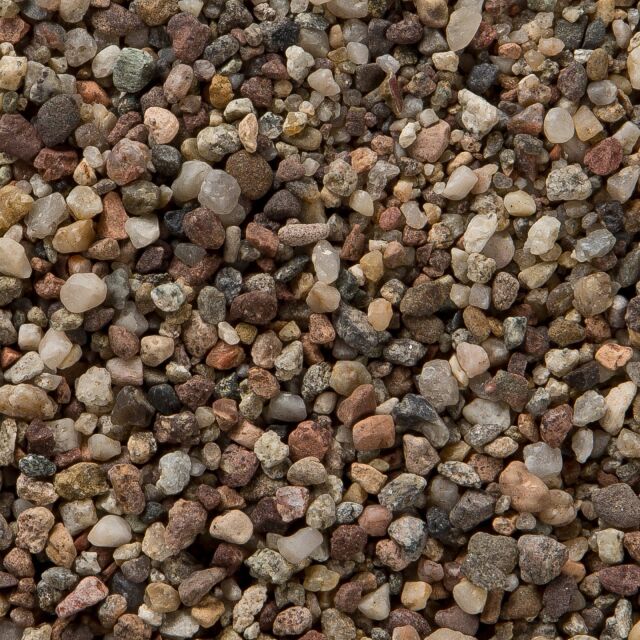
Gravel usually has a coarser grain than sand, which creates more gaps between the particles. As a result, water flows through the substrate in the aquarium more easily. Overall, the substrate is looser, which promotes the transport of oxygen and nutrients within it. The aerobic conditions allow sessile beneficial bacteria to settle well, supporting the breakdown of pollutants in the aquarium as part of the nitrogen cycle.
To maintain the gravel and remove the detritus that has sunk into it, you should clean it regularly with a gravel vacuum, especially in fish aquariums.
Gravel can also very well form a substrate (with a suitable substrate fertilizer underneath) from which the aquatic plants can be supplied with nutrients through their roots. Of course, fertilizer balls, tabs or capsules can be used here as well. With gravel and substrate fertilizer, you can therefore build a sensible layered substrate.
Gravel comes in different colors, grain sizes and also shapes. Basalt gravel, for example, is quite sharp-edged. Substrate with rounded edges is better suited, for example, to protect bottom-dwelling fish such as armored catfish and their sensitive barbels. In general, the aquarist should also take the needs of the aquarium's inhabitants into account when choosing the color of the substrate. Shy fish, for instance, prefer a rather dark gravel, which also offers a nice contrast.
In aquascaping, coarser gravel in particular can be used very nicely to create detailed contrasts in sandy foreground zones. This enhances the fine details of an aquascape and creates a very natural impression.
You can find more information on gravel here.