 Ammonium in the aquarium
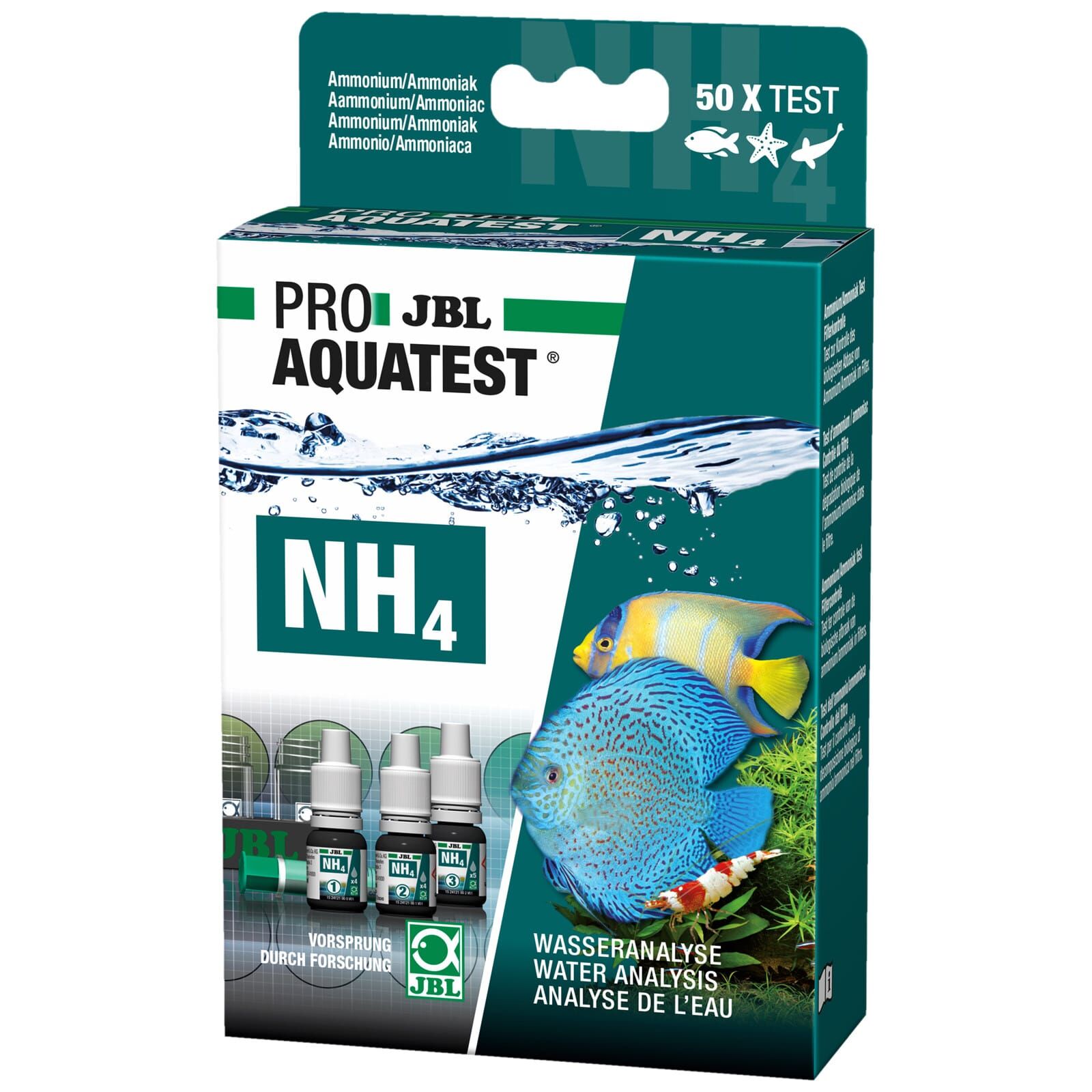
Ammonium and ammonia are known in the aquarium hobby primarily as substances that are toxic to fish, and in terms of content they belong to the nitrogen cycle. The so-called ammonium peak is often a noticeable part of the cycling phase in a newly set up aquarium. In planted aquariums, however, this compound is also gladly used as a nitrogen fertilizer. What is actually the difference between ammonia and ammonium? And what does it mean for fish and plants in the aquarium? In this article we explain the exact relationships.
Ammonium and ammonia
Ammonium and ammonia are, first of all, to be understood as nitrogen compounds. Ammonia (NH3) takes on the role of a base, while ammonium (NH4) is the matching acid as its reaction partner. Depending on the pH value, the two are directly linked in a dissociation equilibrium. This means that with a rising pH value (and, by the way, with rising temperature as well) the share in the form of ammonia predominates, while at a pH value of 7 and below it is hardly present anymore.
The most important difference for the aquarist is that ammonium is relatively non-toxic to fish, while ammonia is toxic because it raises the pH value of the blood in living organisms. From a content of 0.02 mg/l, ammonia can become dangerous for fish in the aquarium, and there is acute danger at concentrations around 0.2 mg/l.
The role of ammonium in the nitrogen cycle
Source: Public Domain via Wikimedia Commons
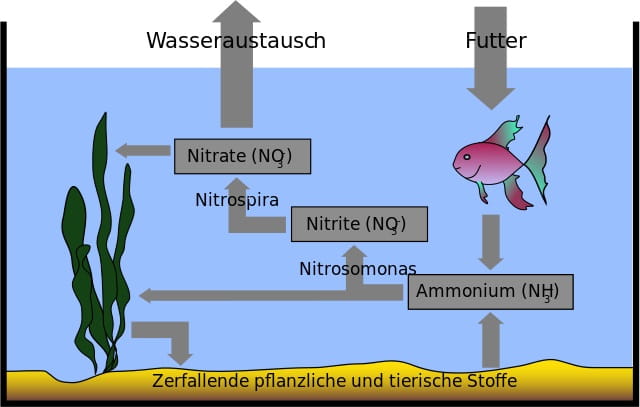
The so-called nitrogen cycle is an important ecological process in the aquarium for breaking down pollutants. Bacteria that live on all surfaces in the aquarium (especially in the substrate and in the filter media) decompose the organic waste that accumulates (animal excretions, leftover food, dead plant material), producing ammonium among other things. Fish also breathe out this substance through their gills. Whether, and to what extent, ammonium (NH4) or ammonia (NH3) is present depends, as described above, mainly on the pH value of the water. Ammonium can be used as a nutrient by aquatic plants in the aquarium, but owing to further bacterial activity, in the sense of the nitrogen cycle, it is also processed first into nitrite and then into nitrate. While nitrite can also be toxic to fish, the nitrogen form nitrate is largely harmless to aquarium inhabitants.
Because of the relationship between ammonium and the pH value of the water, particular caution is therefore required in fish aquariums at pH values above 7.5 (especially if they are permanent). Classic examples would be biotopes with African cichlids (Malawi and Tanganyika). In these cases the aquarist should create a suitable system through appropriate feeding habits, filter technology and maintenance measures that meets these requirements.
Ammonium in the cycling phase
When you set up a new aquarium, the ecosystem and the bacterial cultures are not yet in balance or have developed insufficiently, especially with regard to the nitrogen cycle. If entirely new components are used during setup, there are no bacterial strains present at all. With the arrival of the first organic waste, food in the form of ammonium/ammonia now also appears. A corresponding bacterial population first has to develop on it, which then processes this substance further into nitrite. As a rule, bacteria such as Nitrosomonas are responsible for this process, which, by the way, consumes oxygen. Since the organic waste keeps accumulating and the growth of the microorganisms cannot yet keep up, a so-called ammonium peak often occurs here during the cycling phase, in which the measurable concentrations of ammonium or ammonia rise significantly. Once the bacterial density is sufficient after a certain time, the level of ammonium/ammonia decreases again. Instead, a nitrite peak now follows, for similar structural reasons. Bacteria such as Nitrosomonas now oxidize ammonium to nitrite in large quantities. To metabolize this compound further into nitrate, a sufficiently large population of the corresponding bacteria (usually Nitrobacter) first has to form. This development takes time, and until then so much excess nitrite is produced that a peak occurs here as well.
What matters for the aquarist is that during this period of the cycling phase, because of the peaks and elevated concentrations of ammonium/ammonia and nitrite, he or she should avoid adding any animals if possible, and only do so once the water parameters allow it.
Recognizing ammonia poisoning
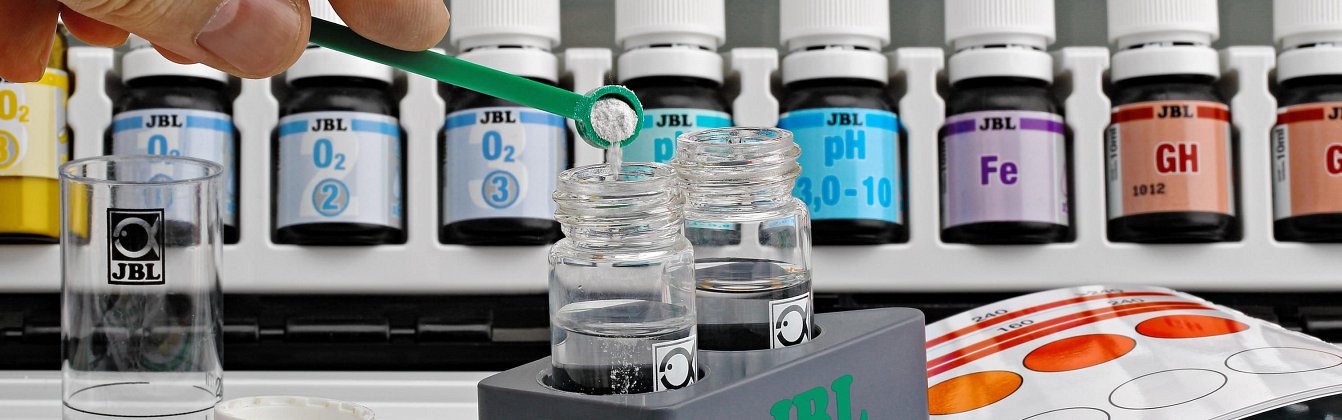
In general, substances that are toxic to fish, such as nitrite and ammonia, should be monitored using appropriate liquid drop tests. Such water tests are particularly important for the cycling phase, so that you can determine when to add the stock.
In the case of ammonia poisoning, fish often show the following symptoms:
- Apathetic behavior (lying on the bottom, swimming on the side)
- Gasping for air near the surface
- No interest in food
- Sudden deaths
- Strange, strained-looking or very frantic swimming movements
- Reddening of the gills or reddish streaking on the fins
If such symptoms are observed, a suspicion of ammonia poisoning should in any case be confirmed with a water test. This rules out that it may be nitrite, CO2 or another kind of poisoning.
Countermeasures for ammonia poisoning
As an immediate measure in case of poisoning, a sudden, larger water change is recommended first. However, the aquarium owner should proceed calmly and with care and not fall into panic. The fresh water should definitely be matched to the aquarium water so that the fish do not suffer an additional shock. In other words: temperature and other water parameters such as hardness and pH value should be matched as closely as possible.
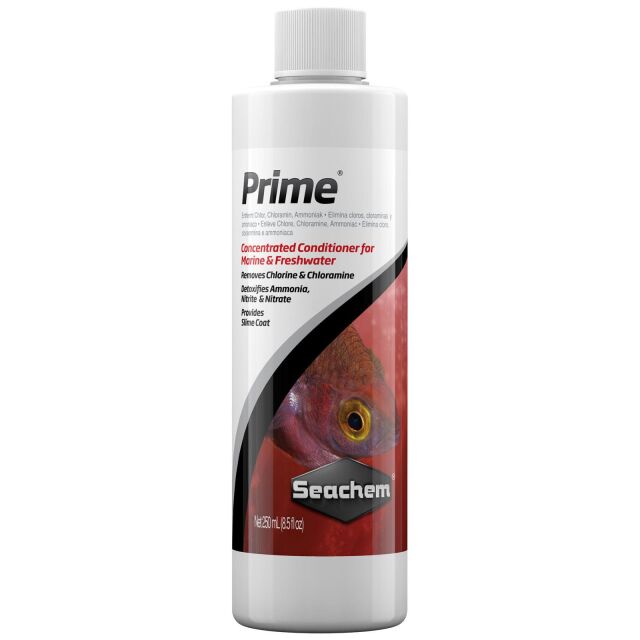
There are also certain care products such as Seachem Prime or other water conditioners that can bind toxins immediately. However, medium- to long-term solutions are also required, since the ammonia level can rise again after the immediate measure.
For the period in which higher ammonia concentrations persist for a longer time, the aquarium owner can keep the water change rate elevated. It is also advisable during this time to temporarily use zeolite as a filter material, which is able to absorb ammonium thanks to its ion exchange capacity. Bacteria products such as Microbe-Lift Nite-Out II can help to increase the population of microorganisms that are involved in the nitrogen cycle and can therefore break down ammonium/ammonia. Since these processes consume oxygen, it cannot hurt to provide a more oxygen-rich environment in the aquarium by aerating it. This can also be achieved by using a Twinstar sterilizer, an oxydator or a more strongly agitated water surface.
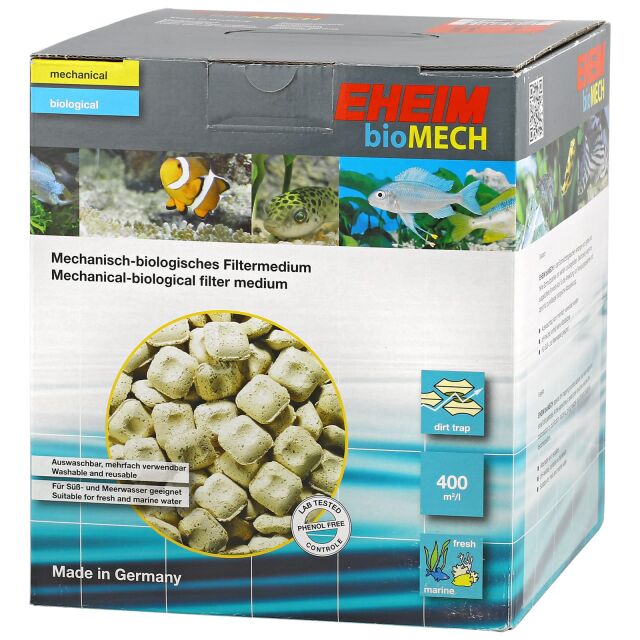
To offer the nitrifying bacteria enough surface area to colonize, the aquarium owner can retrofit the filter with various filter media. Thanks to their porosity, high-performance biological filter media such as Eheim bioMECH have a particularly large surface area on which the microorganisms can settle. However, the establishment of further bacterial populations sometimes takes a little time and is to be understood as a long-term measure.
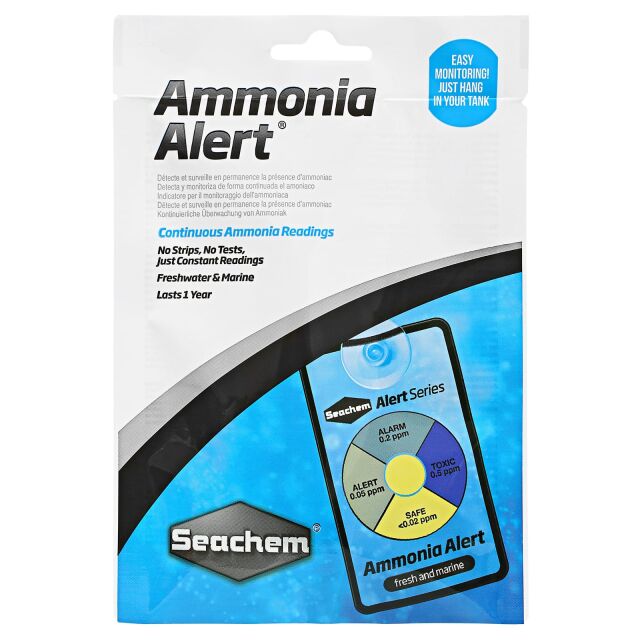
By the way: a rather clever product is Ammonia Alert from Seachem, which is a kind of continuous test for ammonium. This allows the level to be monitored permanently and kept well in view.