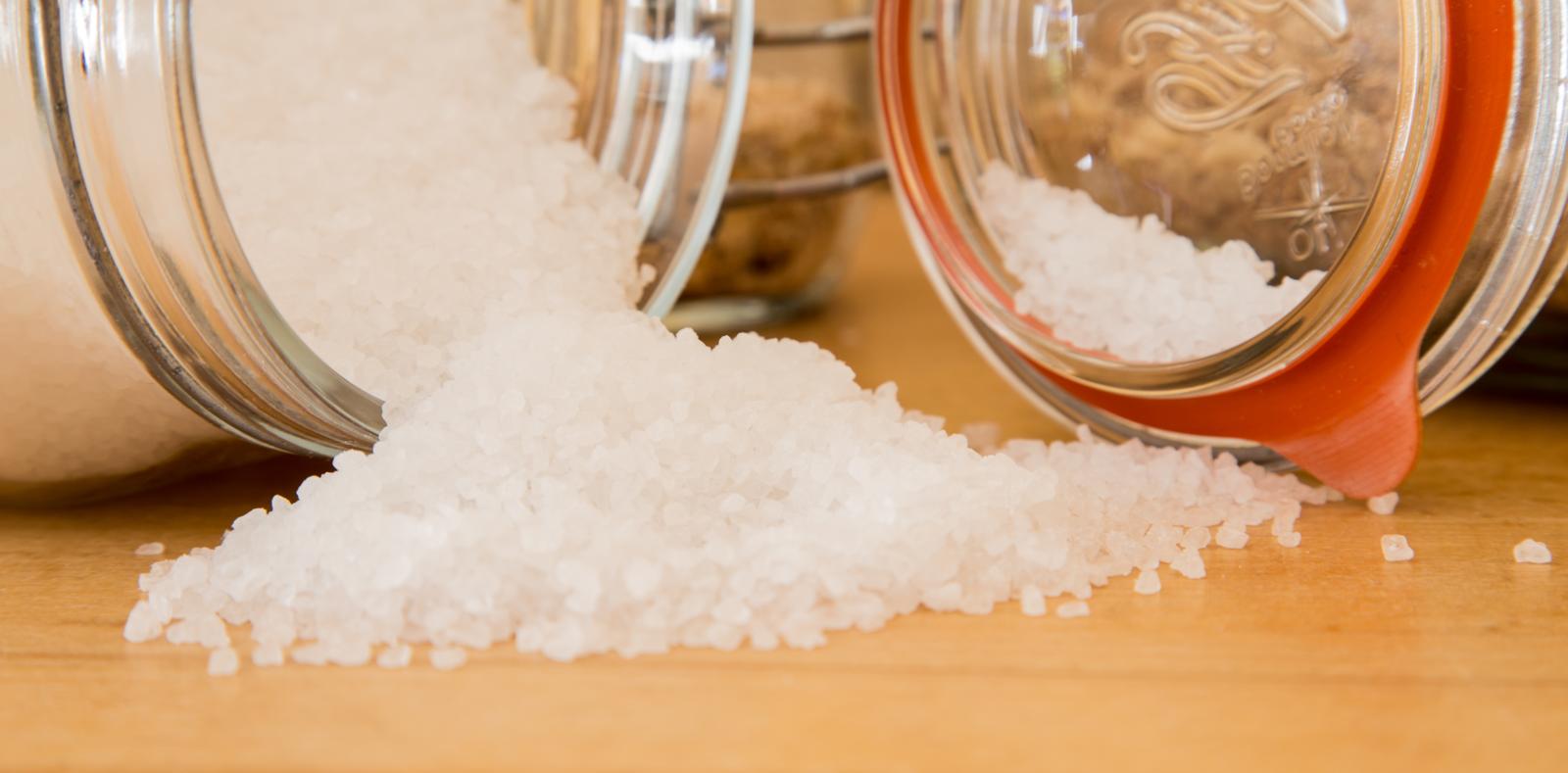
 Adding table salt to the aquarium
Using table salt (sodium chloride) is a time-tested approach in aquarium keeping. Salt baths, to which ornamental fish are exposed only for a certain period, are very effective against ectoparasites such as Trichodina, Costia and Chilodonella, and are also helpful for fungal infections. Even against stubborn parasites such as leeches or carp lice, a salt bath can be a helpful treatment.
But adding a small amount of salt to the aquarium can also be a sensible measure. It not only slows down the development of single-celled parasites; reducing the toxicity of nitrite, the antibacterial effect and support during a pH crash are further important benefits.
It is important to use iodine-free salt. You should also avoid other additives such as anti-caking agents, as they can otherwise affect sensitive ornamental fish.
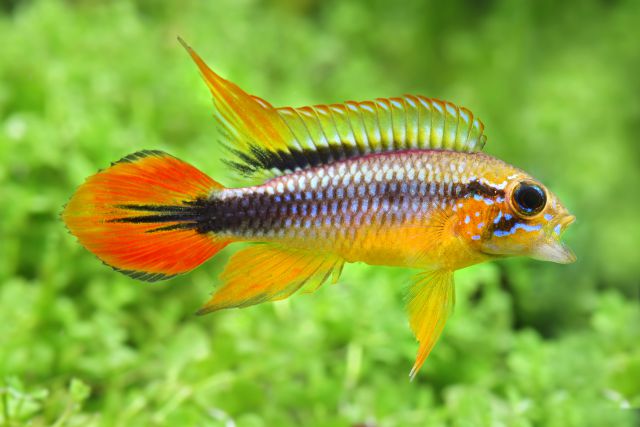
Copyright by Chris Lukhaup.
It is just as important to use only a low salt concentration, matched to the treatment goals. In general, no negative effects on ornamental fish are to be expected. Soft-water-loving aquarium fish such as Apistogramma (see photo) and many tetra species, however, tolerate only a small amount of salt, and only temporarily. Sensitive aquatic plants can also react to added salt with growth problems at times.
In general, the water should be salted with sodium chloride only slowly, to make the procedure as stress-free as possible for the animals. The same applies to reducing the salt content after a treatment.
Osmoregulation in ornamental fish

Most ornamental fish species are used to a certain salt content of the water, known as salinity. This salt content has a strong influence on the animals' osmoregulation. This is a mechanism that allows fish to live in bodies of water while keeping their water balance at a constant level. It works through an efficient release and uptake of sodium and chloride ions via the gills, and through the regulation of water. The osmoregulation of fish creates a kind of balance, so that as little water as possible enters the fish and any excess water that has entered is quickly excreted again. This is achieved by constantly producing urine, which is heavily diluted. Under saltwater conditions, fish therefore suffer an osmotic loss of water, whereas in freshwater, water is taken up due to osmotic pressure. Most fish species are adapted to a specific salinity range. If the salt content deviates strongly, this can result in a disruption of the osmotic balance. The animals are exposed to increased stress and become more susceptible to disease.
Livebearers such as black mollies are particularly affected. These animals are often kept at a high salt content in breeding facilities and in sales tanks. If you buy these ornamental fish and put them into an aquarium with a different salinity, the sudden change can cause an osmotic shock. Within a few days, this can lead to fish illness and even the death of the animals. It is therefore advisable to find out about the salt content of the water in the dealer's tank before buying livebearers. If the salt content of the new aquarium differs too much, you can accustom the fish very slowly to the new salinity in a quarantine tank over a period of about two weeks through frequent water changes.
Application & dosage recommendations:
Short bath (approx. 10-15 minutes): 15-20 g/l table salt. For very sensitive ornamental fish, only 5-10 g/l.
Long-term bath (for approx. 3-5 days): 1-3 g/l for soft-water fish, 3-5 g/l for fish from harder water.
During the baths, the animals should be observed constantly in case an osmotic shock occurs.
A general concentration of 0.1% (equivalent to 1 g/l) is suitable as an additive for livebearers or for treating injured fish. A dose of about one teaspoon (approx. 5 g) per 25 liters of water has proven tolerable for most ornamental fish.
Overview of different salt treatments, their purposes and salt concentrations:
0.1% = 1 g/l: General use as a care product in aquariums for livebearers or as support for injuries.
0.1 - 0.3% = 1 - 3 g/l: As a long-term bath for 3 to 5 days for soft-water fish.
0.3% = 3 g/l: As a long-term bath for injuries or to reduce the toxicity of nitrite.
0.3 - 0.5% = 3 - 5 g/l: As a long-term bath over a longer period of 5 to 7 days for hard-water fish. Also suitable as a countermeasure against an infestation of freshwater polyps (Hydra).
0.5 - 1% = 5 - 10 g/l: As a short bath for 10-25 minutes for sensitive fish.
2% = 20 g/l: As a short bath for 10 - 25 minutes for robust fish.
Disclaimer
Please observe the safety instructions of the respective product before use. Treatment with table salt does not replace medication. Use at your own risk! We accept no liability for any damage that may arise!