Dwarf Four Leaf Clover


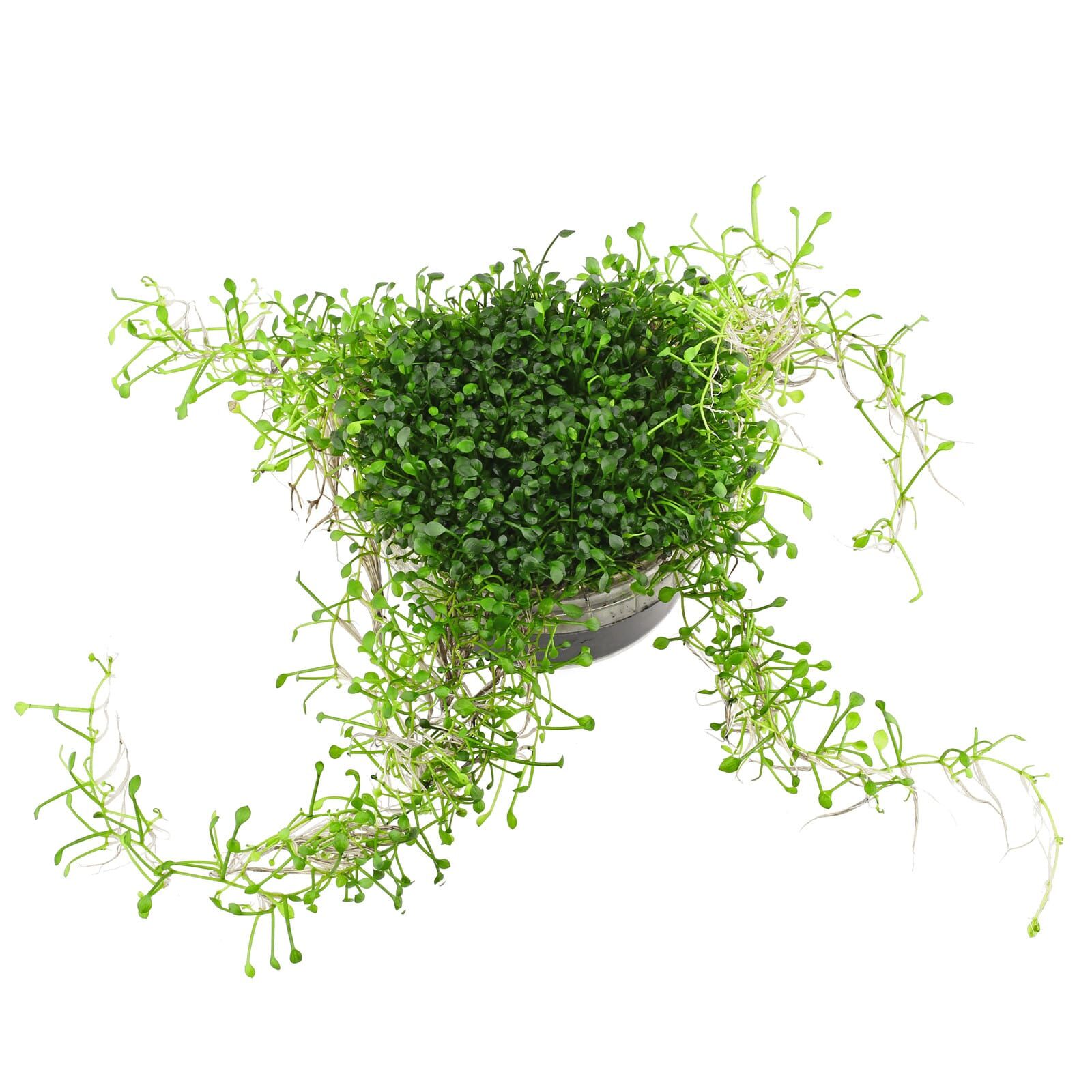
Marsilea crenata
Dwarf Four Leaf Clover
- Forms very small leaves
- Also available as Marsilea minuta
- Forms a 1-3 cm high and close carpet
- New leafes with brown color
Curbside delivery: This item ships by freight carrier and is delivered to the curb only, not to your door or into your home. The carrier will call you in advance to schedule a delivery date. Learn more about freight delivery
Customers also bought


Item question
We’re here for you!
Please enter your question and e-mail and we’ll contact you as soon as possible. It usually takes us up to 24 hours during business days to respond.
Thank you for your question!
Thank you, we’ll get in touch!
Close window
You already sent us a question.
Please wait a few minutes
Description
The Dwarf waterclover, Marsilea crenata, is a pretty aquatic fern from tropical Asia and Australia that forms a small-leaved carpet in the aquarium. M. crenata is also sometimes regarded as a synonym of Marsilea minuta and is labelled as such by the company Tropica, for example. Like other Marsilea species, this fern grows in nature in various wetlands such as swamps, rice fields and floodplains. In the terrestrial form, long-stalked leaves with four leaflets grow on the creeping rhizomes, looking like "lucky clover". Marsilea crenata is usually sold in this emersed form.
After some acclimatisation time, new shoots with much shorter submerged leaves grow in the aquarium, while the old emersed leaves slowly die off and can be cut off. The submerged leaves are usually undivided with small, rounded to spatulate leaf blades and are rarely more than 5 mm wide. They are significantly smaller than the submersed leaves of Marsilea hirsuta. Sometimes two-, three- or four-part leaves of different heights develop. Marsilea crenata spreads moderately quickly in the aquarium with its runners. The carpet grows to a height of about 1 - 3 cm.
Marsilea crenata is a robust aquarium plant and can cope with relatively little light; the CO2 requirement is also low. However, the Dwarf waterclover develops best with at least moderate light and a complete supply of nutrients, including via the substrate, and the addition of CO2.
After removing the rockwool, it is best to divide emersed potted plants into several pieces and place them in the substrate at some distance from each other. When rhizome shoots with submerged leaves develop, the old emersed leaves gradually die off and can be cut off. Tissue-cultured plants are also divided into several pieces and planted after washing off the culture medium.
Over time, the rhizomes creeping in the soil or above ground grow together to form a carpet. Occasional cutting prevents the carpet from becoming too thick and eventually detaching from the ground. Propagation is easy by cutting off pieces of rhizome and sticking them in the ground.
Particularly in Marsilea from in vitro (tissue culture) cups, new leaves have a brownish colour. They are by no means rotten.
The Dwarf waterclover is a relatively undemanding, versatile ground cover that requires little light. With its moderate growth rate, it is easier to manage than Glossostigma elatinoides, for example. Marsilea crenata, with its leaves that are significantly smaller than those of the Rough waterclover (Marsilea hirsuta), is well suited to small or nano aquariums. In its emersed form, this fern, which looks like "lucky clover", makes a pretty accent in paludariums and wabi-kusa.
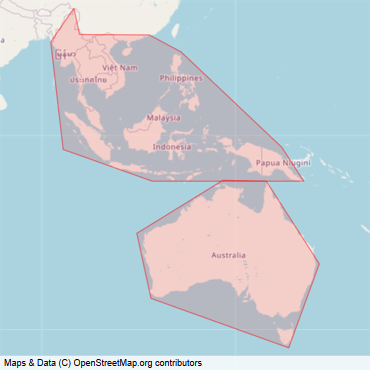
Marsilea crenata is a widely-spread water clover distributed in South-East Asia and Australia (Northern Territory, northern and central-eastern Queensland). It is found in shallow water and on drying-out mud, amongst others in rice paddies.
M. crenata cannot be clearly discerned from Marsilea minuta, and might even belong to that species (Nagalingum & al. 2007).
In trade, you often see the names M. crenata, M. hirsuta, M. exarata, M. drummondii and M. quadrifolia, however, it is not sure whether the respective plant was identified correctly. Most species of the genus Marsilea can only safely be identified in their emersed form by means of their sporocarps (spore-containing fruit).
Please see Marsilea spp.
| Common names | Dwarf water clover |
| Complete botanical name | Marsílea crenáta C. Presl |
| Family | Marsileaceae |
| Genus | Marsilea |
| Usage | Foreground, ground cover |
| Aquascaping | forms a small-leaved carpet |
| General hardness | 0 - 30°dGH |
| Propagation | Runners, Splitting, cutting off daughter plants |
| Can grow emersed? | yes |
| Source | Flowgrow |
| Common names |
| Dwarf water clover |
| Complete botanical name |
| Marsílea crenáta C. Presl |
| Family |
| Marsileaceae |
| Genus |
| Marsilea |
| Usage |
| Foreground, ground cover |
| Aquascaping |
| forms a small-leaved carpet |
| General hardness |
| 0 - 30°dGH |
| Propagation |
| Runners, Splitting, cutting off daughter plants |
| Can grow emersed? |
| yes |
| Source |
| Flowgrow |
How many plants do I need?
General information
Please choose a variant to see more information.
| Item no. |
|
| EAN | |
| Weight | |
| Shipping weight |
Questions and answers about Marsilea crenata
You have questions about this product? Ask other customer or our support team about this product!
Customer reviews
30 Reviews
| 5 Stars(26) |
|
| 4 Stars(3) |
|
| 3 Stars(1) |
|
| 2 Stars(0) |
|
| 1 Star(0) |
|
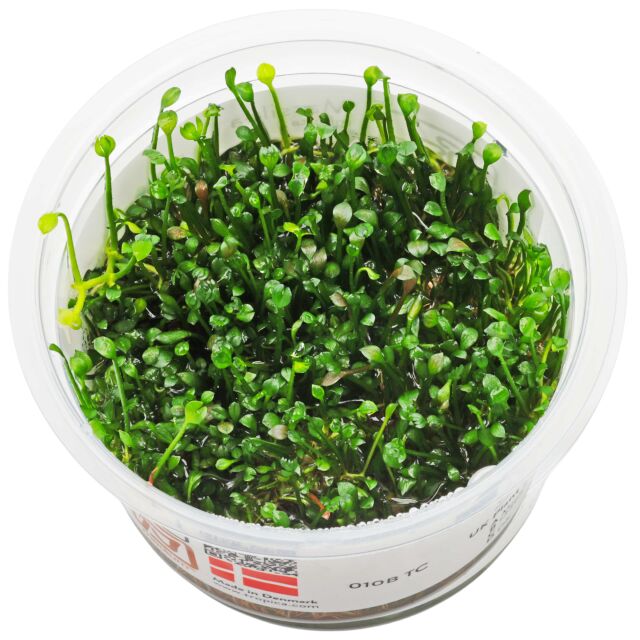
Very beautiful ground cover. Grows very well for me.
Show original
Sehr schöner Bodendecker
Sehr schöner Bodendecker. Wächst bei mir sehr gut.
The plant grows great, there was a lot in the cup, top 🔝 I'm very satisfied with my order. Thank you very much
Show original
Sehr viel im Becher
Die Pflanze Wächst super , war sehr viel im Becher , top 🔝 ich bin sehr zufrieden mit meiner Bestellung.vielen Dank
I bought the plant as ground cover for my nano aquarium. As expected from Tropica, the cups were packed full of beautiful, healthy plants. (read more)
Show original
Tolle, einfache Pflanze.
Ich habe die Pflanze als Bodendecker für mein Nano Aquarium gekauft. Wie von Tropica zu erwarten, waren die Becher prall gefüllt mit schönen, gesunden Pflanzen.
Bereits eine Woche nach dem Einsetzen bildeten sich bereits die ersten Ausläufer. Das hätte ich nicht erwartet!
Im Becher könnten noch relativ grosse Blätter (5mm) zu sehen sein. Die im Aquarium nachwachsenden Blätter sind jedoch wesentlich kleiner.
Ich glaube das ist mein neuer Lieblingsbodendecker!
Similar products


