

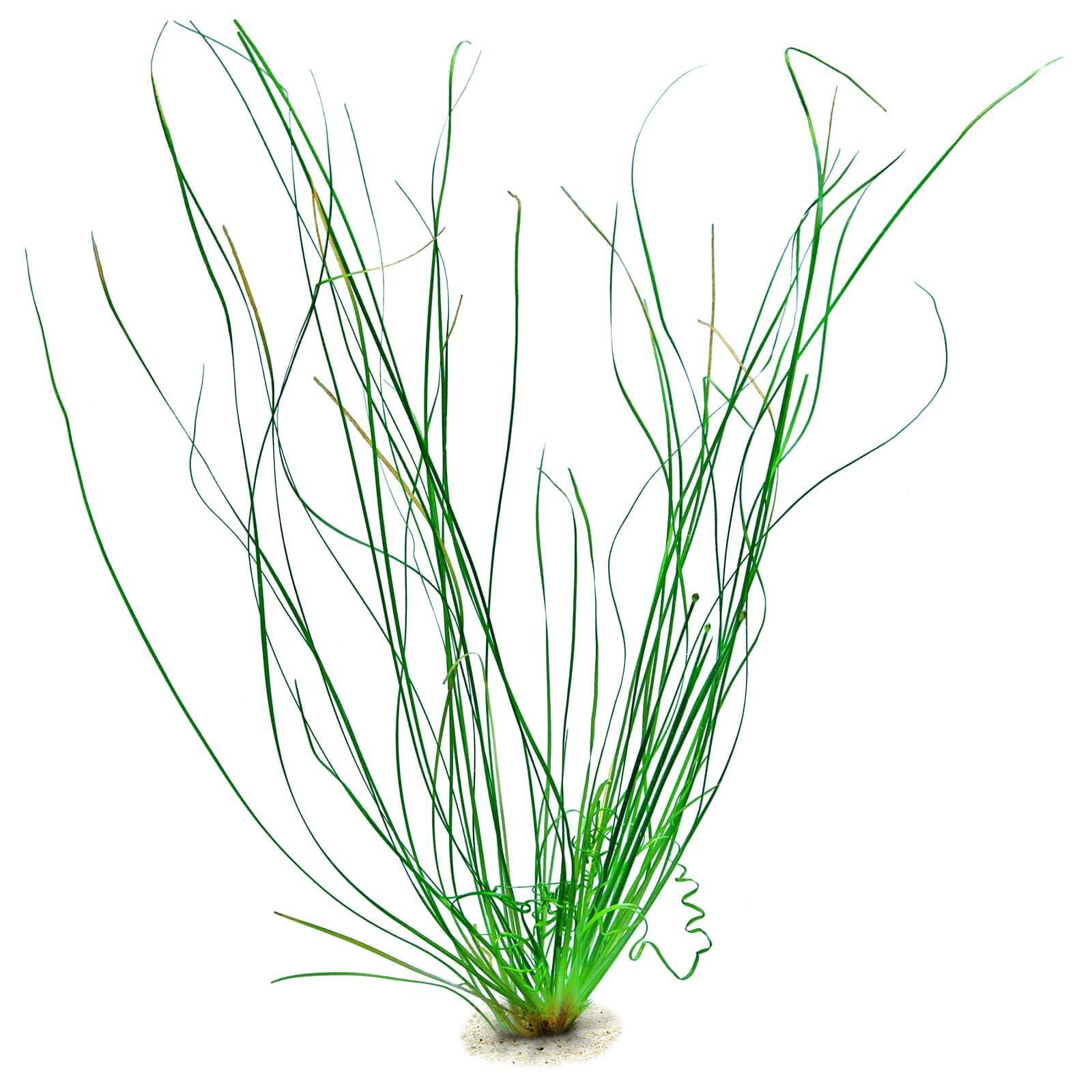
Eriocaulon sp. "Japan Needle Leaf"
- Grasslike, comparable to Vallisneria gracilis
- Very narrow, flexible leaves
- Dark green coloration
- Also grows as epiphyte
- Undemanding
Curbside delivery: This item ships by freight carrier and is delivered to the curb only, not to your door or into your home. The carrier will call you in advance to schedule a delivery date. Learn more about freight delivery
Customers also bought


Item question
We’re here for you!
Please enter your question and e-mail and we’ll contact you as soon as possible. It usually takes us up to 24 hours during business days to respond.
Thank you for your question!
Thank you, we’ll get in touch!
Close window
You already sent us a question.
Please wait a few minutes
Description
This remarkable grass-like plant was brought onto the market in Asia under the name Eriocaulon sp. "Japan", however, in the hobby, several different Eriocaulon variants are known under that name. Its species identity is still unclear. It is certainly not native to Japan and resembles certain Eriocaulon species that occur in rocky beds of fast-flowing rivers in India. Its submerged leaves are flexible, dark green and smooth. They grow to a length of approx. 30-40 cm with a width of only 1.5 mm. The leaves are distichous, which means that they grow in two rows on the rhizome - quite uncommon for an Eriocaulon. The creeping, short, hard rhizome branches readily, forming a large, dense grass-like tuft with time. Sometimes, young leaves get stuck when sprouting and become wrinkled. They can be removed and are normally followed by straight leaves.
Interestingly, this Eriocaulon attaches itself to solid material such as rock or wood. Therefore it seems likely that it occurs naturally on rock or in gravel in flowing waters.
Occasionally inflorescences appear that remain shorter than the leaves. When they are able to grow out of shallow water, its flowerheads open, exposing many tiny greyish white flowers. When the heads remain submerged, they develop adventitious plantlets.
Quite contrary to other Eriocaulons, "Japan Needle Leaf" grows in very well in our tanks, not only with soft water rich in CO2 and acidic substrate (Aquasoil), but also in medium hard water, at a temperature of approx. 21-26 °C. This Eriocaulon is apparently also quite frugal when it comes to fertilisation. Macro- and micronutrient supply via the water column is sufficient, a nutrient-rich substrate is not necessary. The plant can be propagated by dividing the branched rhizome or by the adventitious plantlets on the submerged inflorescences.
With its elegant grasslike leaves, Eriocaulon sp. "Japan Needle Leaf" is an alternative to other narrow-leaved plants like Vallisneria gracilis ("V. nana") or Helanthium bolivianum "Angustifolius". Unlike these, it does not form runners and is thus easy to control in an aquascape. It also provides interesting possibilities for aquascaping when it is used as an unusual epiphyte, e.g. on or between stones in stream biotope tanks. If the Eriocaulon grows near the surface, you can expect to see its interesting-looking head-like inflorescences above the water.
This grass-like plant was introduced to Italy by Massimo Iannella in 2010. He received it from a dealer under the name Eriocaulon sp. 'from Japan', without any further information. Since plants that look distinctly different are also given very similar names, he chose the name Eriocaulon sp. "Japan Needle Leaf", under which the plant also found its way to other hobbyists in Europe.
As M. Iannella emphasises, the assignment to the genus Eriocaulon is only provisional and uncertain. The plant has leaves arranged distichously (in two rows) on the rhizome, which is unusual for the family Eriocaulaceae. In 2012 it produced head-like inflorescences with tiny, whitish flowers at the company Aquasabi (Germany), as is typical of the family Eriocaulaceae. (read more)
| Synonyms | Eriocaulon sp. 'from Japan' |
| Family | Eriocaulaceae |
| Genus | Eriocaulon |
| Difficulty | medium |
| Usage | Background, Midground, Specimen plant |
| Height | 20 - 40cm |
| Width | 5 - 20cm |
| Growth | medium |
| pH value | 5 - 7 |
| Temperature tolerance | 21 - 26°C |
| Carbonate hardness | 0 - 12°dKH |
| Propagation | Proliferating inflorescences, Splitting, cutting off daughter plants |
| Can grow emersed? | unknown |
| Source | Flowgrow |
| Synonyms |
| Eriocaulon sp. 'from Japan' |
| Family |
| Eriocaulaceae |
| Genus |
| Eriocaulon |
| Difficulty |
| medium |
| Usage |
| Background, Midground, Specimen plant |
| Height |
| 20 - 40cm |
| Width |
| 5 - 20cm |
| Growth |
| medium |
| pH value |
| 5 - 7 |
| Temperature tolerance |
| 21 - 26°C |
| Carbonate hardness |
| 0 - 12°dKH |
| Propagation |
| Proliferating inflorescences, Splitting, cutting off daughter plants |
| Can grow emersed? |
| unknown |
| Source |
| Flowgrow |
How many plants do I need?
General information
Please choose a variant to see more information.
| Item no. |
|
| EAN | |
| Weight | |
| Shipping weight |
Questions and answers about Eriocaulon sp. "Japan Needle Leaf"
You have questions about this product? Ask other customer or our support team about this product!
Customer reviews
15 Reviews
| 5 Stars(13) |
|
| 4 Stars(2) |
|
| 3 Stars(0) |
|
| 2 Stars(0) |
|
| 1 Star(0) |
|
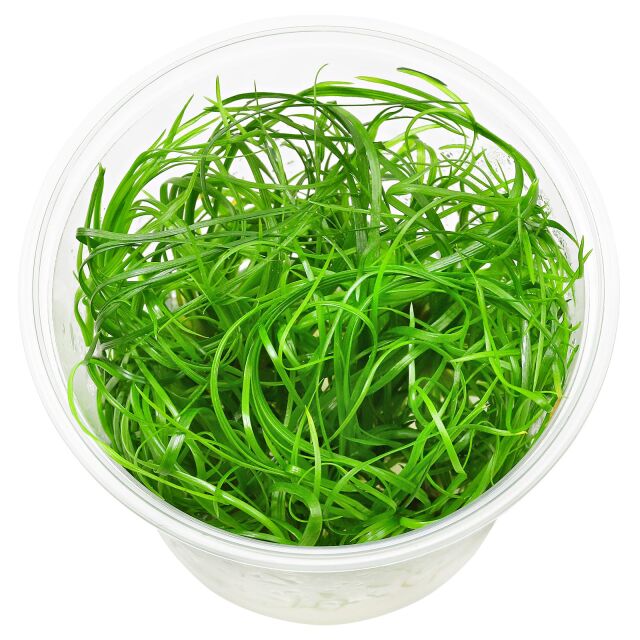
Received in vitro with three large individual plants. Good condition despite a DHL delivery time of 3 days. 10 words?
Show original
Top Qualität
Invitro mit drei großen Einzelpflanzen erhalten. Guter Zustand trotz Lieferzeit DHL 3 Tage. 10 Wörter?
Very satisfied again, lots of plants in one pot
Show original
Schöne Pflanzen
Sind wieder sehr zufrieden, viele Pflanzen in einem Topf drinnen
Received three gorgeous specimens in the in-vitro container (one large and two smaller). I planted them in my new aquarium yesterday. Now it's wait and see how they do ????.
Show original
Wunderschön!
Habe in der in-vitro Dose drei wunderschöne Exemplare erhalten (eine große und zwei kleinere). Ich habe sie gestern in mein neues Aquarium eingesetzt. Jetzt heißt es erstmal abwarten, wie sie sich machen ????.
Similar products


